





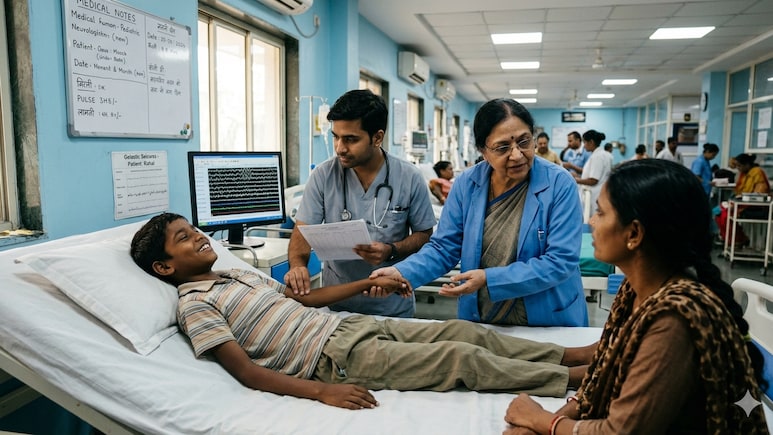
- AIIMS Jodhpur treated four children with rare laughing epilepsy using minimally invasive surgery
- Laughing epilepsy causes sudden, uncontrollable laughter unrelated to emotions or humor
- Condition often resists medication and traditional surgery due to deep brain lesion location
In a remarkable medical achievement, All India Institute of Medical Sciences Jodhpur has successfully treated four children suffering from a rare and distressing neurological condition known as "laughing epilepsy". The condition, medically called gelastic seizures, causes sudden and uncontrollable bouts of laughter that have no emotional trigger. While it may sound unusual, the disorder can severely disrupt a child's daily life, often occurring multiple times a day. Doctors at the AIIMS Jodhpur used a minimally invasive brain procedure to treat the children, marking a major step forward in managing this rare and drug-resistant form of epilepsy.
As per the World Health Organisation (WHO), out of 50 million people living with epilepsy worldwide, about 80% are in developing countries.
What Is "Laughing Epilepsy"?
Laughing epilepsy, or gelastic seizures, is a rare type of epilepsy in which patients experience sudden, inappropriate laughter without any reason. According to a study, about one-third of gelastic seizures are linked to hypothalamic hamartomas, which are noncancerous growths located near the hypothalamus. The hypothalamus is a crucial part of the brain responsible for regulating many vital functions, including hormone production and body temperature control. This laughter is not linked to happiness or humour. Instead, it is caused by abnormal electrical activity in the brain, often originating from a small lesion in a region called the hypothalamus.
Also read: Rare Epilepsy Breakthrough: Why This New Treatment Is Reducing Seizure Frequency In Children By 91%
In many cases, the condition is linked to a benign growth known as a hypothalamic hamartoma, which disrupts normal brain signalling. For affected children, the condition can be extremely challenging. Seizures may occur 10 to 20 times a day, interfering with school, social interactions and overall quality of life.
Why It's Difficult to Treat
One of the biggest challenges with laughing epilepsy is that it is often resistant to medication. Unlike more common forms of epilepsy, standard anti-seizure drugs frequently fail to control these episodes. This leaves many patients with limited options and ongoing symptoms. Because the seizures originate deep within the brain, traditional surgery can also be complex and risky. This makes the condition particularly difficult to manage, especially in young children.
The Breakthrough Treatment
Doctors used an advanced technique known as stereotactic radiofrequency ablation, a minimally invasive procedure that targets the root cause of seizures. Here's how it works:
- A computer-guided system precisely locates the tiny lesion in the brain
- Surgeons insert a probe through a small incision of about one inch
- Heat energy is used to destroy the abnormal tissue causing seizures
This approach avoids the need for open brain surgery, reducing both risk and recovery time.
- Remarkable Results in Just Days
- The outcomes of the procedure have been highly encouraging.
- All four children underwent the surgery successfully
- There were no reported complications
- Patients were discharged within 48 hours
- Most importantly, they are now seizure-free
For families who had been dealing with frequent and unpredictable seizures, the results have been life-changing. Doctors involved in the procedure described it as a significant milestone in paediatric neurosurgery, especially for rare and treatment-resistant conditions.
Also read: Epilepsy: Know Hidden Symptoms & Who Is At A Higher Risk
A Step Forward for Specialised Care in India
This achievement also highlights growing advancements in India's healthcare system. With this procedure, AIIMS Jodhpur has become the only hospital in Rajasthan offering this specialised treatmen and the second AIIMS in India to provide it. The institute has been running a comprehensive epilepsy surgery programme since 2019, performing over 100 surgeries, many of them free under government healthcare schemes. This ensures that even patients from economically weaker backgrounds can access advanced care.
Why Early Diagnosis Matters
Experts say early diagnosis is crucial for conditions like laughing epilepsy. Because the symptoms may appear unusual or even harmless at first, they can sometimes be overlooked. However, repeated seizures can affect brain development, behaviour and learning in children. Recognising the signs early and seeking specialised care can significantly improve outcomes, especially now that minimally invasive treatments are available.
The Bigger Picture
This breakthrough reflects a broader shift in neurology and neurosurgery, where precision-based, minimally invasive treatments are replacing more complex surgical approaches. It also highlights how rare conditions, once considered difficult to treat, are becoming more manageable with advances in technology and expertise. For families dealing with epilepsy, developments like these offer something invaluable: hope. The successful treatment of four children with laughing epilepsy at AIIMS Jodhpur marks a major medical milestone in India. By using a minimally invasive technique, doctors were able to eliminate seizures quickly and safely, dramatically improving the children's quality of life. As awareness and access to such treatments grow, experts believe more patients with rare neurological conditions could benefit from similar breakthroughs in the near future.
Disclaimer: This content, including advice, provides generic information only. It is in no way a substitute for a qualified medical opinion. Always consult a specialist or your own doctor for more information. NDTV does not claim responsibility for this information.
Track Latest News Live on NDTV.com and get news updates from India and around the world

