- Red heatwave alert issued for UP and MP; yellow alert for Delhi, Punjab, Haryana, Rajasthan
- Indoor heat can trap heat causing dehydration, fatigue, or heatstroke, especially in concrete homes
- Elderly, children, and those with chronic illnesses are most vulnerable to indoor heat risks
A red heatwave alert has been issued for Uttar Pradesh and Madhya Pradesh, along with a yellow alert for Delhi, Punjab, Haryana, and Rajasthan. The Indian Meteorological Department has made it mandatory to take extra precautions to deal with the severity of the heatwave. While many people know that they need to be careful while heading out, indoor safety measures also need to be followed if a heatwave has been declared by the state you are living in.
Extreme heat can get trapped indoors, where it affects the environment and causes symptoms such as dehydration, fatigue, or even heatstroke. This is especially true for those who spend their time cooking, as the fumes, heat, and fatigue can altogether form a dangerous combination that can even cause you to lose consciousness and impact your lung health.
Why Indoor Heat Can Be Dangerous
A comprehensive review published in the Temperature journal details that heat gets trapped indoors due to poor ventilation and concrete structures. Concrete tends to act as an insulator that makes heat flow into its structures, making urban apartments into heat-induced chambers. The groups that remain most vulnerable to indoor heat health risks are as follows:
- Elderly people have weaker and slower systems due to age.
- Children, as their heat-dealing capacities are limited.
- Chronic health conditions and their medication usage cause the body temperature to rise, which can further increase their chances of developing heat-related illnesses.
Indoor heat can prove dangerous, as it is directly linked to heat exhaustion and even heatstroke. These heat-related illnesses tend to affect people on a varying scale.
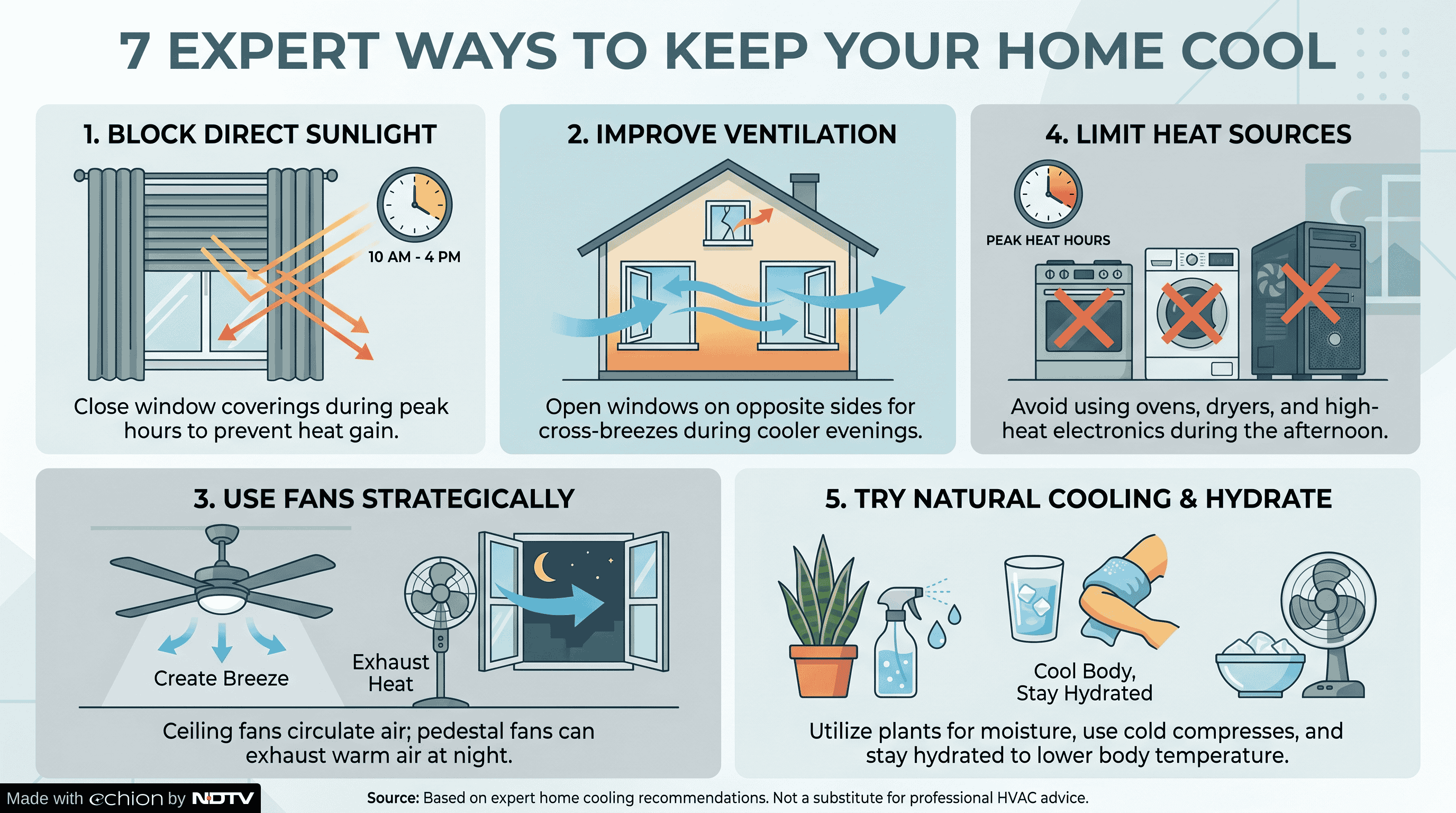
7 Expert-Backed Ways To Keep Your Home Cool
1. Block Direct Sunlight
You need to block direct sunlight, especially during the time that their concentration is at its highest level. You can use curtains, blinds, and even reflective films to make sure that extreme heat doesn't get uncomfortable. Dr Sanjay Verma, Senior Consultant, Internal Medicine, Fortis Escorts, Delhi, explains, "Extreme heat is not just discomfort. It's a multi-organ stressor affecting the heart, brain, kidneys, and metabolism." And blocking direct sunlight is a great way to ensure that your indoor environment doesn't overheat.
2. Improve Ventilation Strategically
Ventilation is needed all season, as your indoor environment needs to replace the stale air that gets heated during a heatwave. You need to open your room's windows in the morning for a brief period before the sunlight gets too much to replace the air and make sure cross-ventilation happens. Make sure this also happens during the evening, as the afternoon's intense heat can get trapped in the concrete walls. A review published in the Indoor Air journal confirms these necessary steps, which need to be followed daily to make sure your room doesn't become a heat chamber.
3. Use Fans The Right Way
Fans should be combined with open windows as the air needs to rotate to make sure the heat-trapped air is replaced. You can even place a bowl of ice in front of the fan to get enhanced cooling when the sun is directly overhead in the afternoons.
4. Limit Heat-Generating Appliances
Heat-generating appliances tend to raise the temperature indoors even further, which means that you may be making your indoor environment hotter if you are using too many appliances at once. You need to avoid using ovens and irons during the day, especially simultaneously as they can increase the indoor temperatures quickly.
Making a switch to LED lights can help control the generated heat indoors.
Also Read: Cooler Vs AC: Which One Is Better For Health During Indian Heatwaves?
5. Stay Hydrated Indoors
Hydration is the foundation to make sure that you are able to cope with the heat induced by the heatwave. You need to make a personalised hydration schedule to make sure you are drinking enough plain drinking water, hydrating drinks that supplement the electrolyte loss, such as coconut water, aam panna, and also general digestive and cooling drinks, such as buttermilk.
Most importantly, you need to regulate your caffeine intake, as too much of it can increase the risk of dehydration.
6. Cool Your Body, Not Just The Room
Along with a cool room, you need to cool your body, which means that you need to take cool showers once or twice. This can help regulate the internal body temperatures that rise when the environment is too hot. If you are feeling extremely hot after being outdoors, then a wet cloth on your neck and wrists can instantly cool your body temperature.
Most importantly, what you wear during a heatwave matters the most as your skin needs to be able to breathe in intense heat. Ideally, wearing breathable cotton clothes is important as the fabric allows your body to perspire but also does not hinder the body's natural temperature-regulating mechanism.
7. Use Natural Cooling Methods
Natural cooling methods such as planting indoor plants, wet curtains or khus mats, earthen pots for cooling water are necessary to make sure the indoor environment and you are cool during a heatwave.
Also Read: How To Handle Heatwave-Related Health Emergencies? A Doctor Explains
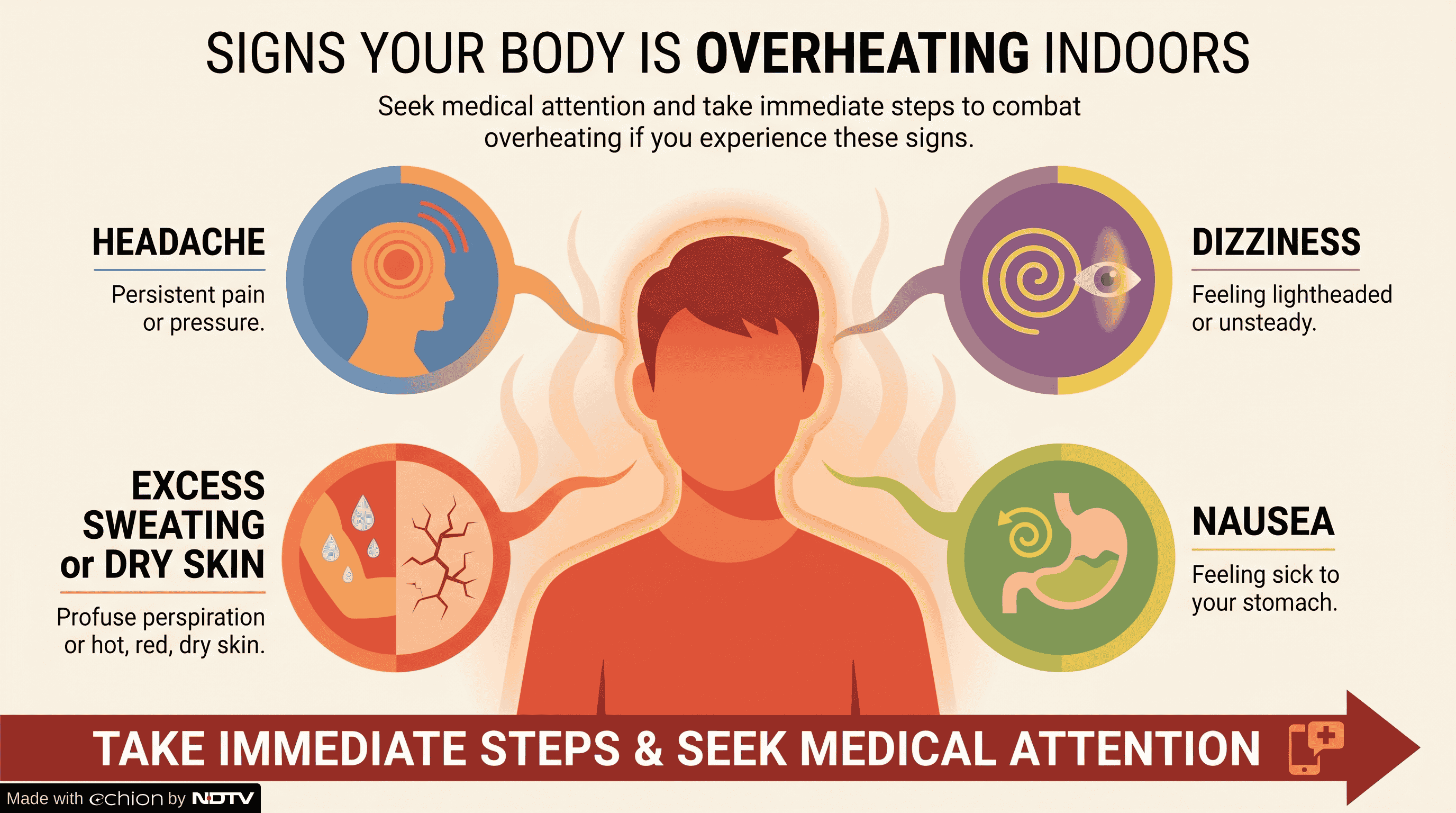
Signs Your Body Is Overheating Indoors
You need to seek medical attention and take immediate steps to combat overheating if you experience these signs:
- Headache
- Dizziness
- Excess sweating or dry skin
- Nausea
Through early recognition, you can help prevent heatstroke or heat exhaustion that can spiral into a severe medical condition.
Who Needs Extra Care During Heatwaves
Extra care needs to be practised by the most vulnerable groups of people who are at risk of developing medical conditions. Here are the people who need extra care during a heatwave to mitigate their risk of indoor overheating:
- Elderly
- Children
- Pregnant women
- People with heart disease or diabetes, as the heat takes a toll on their hearts and blood sugar levels.
When To Seek Medical Help
You need to seek immediate medical help if you experience :
- High body temperature
- Confusion
- Rapid pulse
These are signs that body overheating has spiralled into a severe medical condition.
Indoor heatwave safety is as important as outdoor protection to tackle the onslaught of a heatwave. By making small lifestyle adjustments, you can prevent serious health risks. You need to stay cool at home to protect your health.
Disclaimer: This content, including advice, provides generic information only. It is in no way a substitute for a qualified medical opinion. Always consult a specialist or your own doctor for more information. NDTV does not claim responsibility for this information.