

)
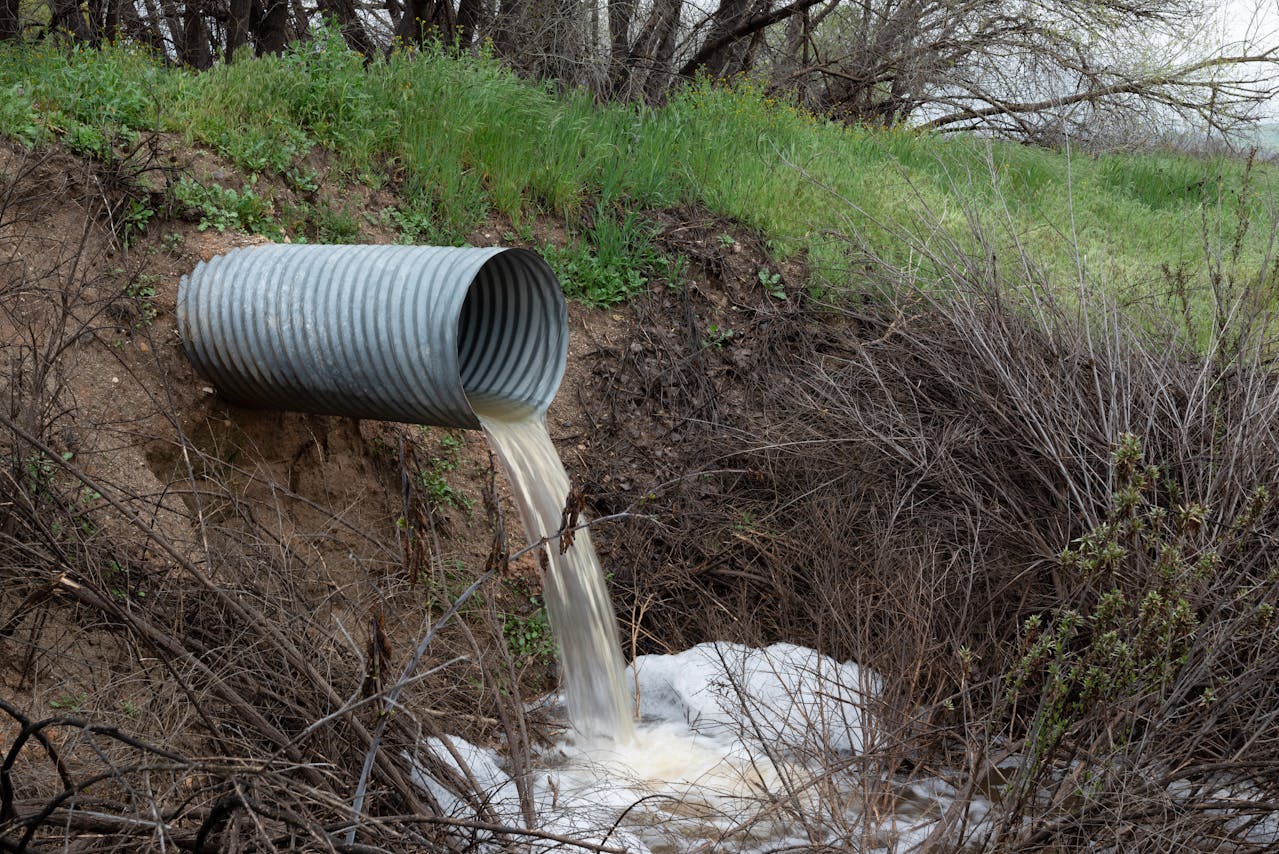
India's urban drainage systems may be silently fuelling one of the world's biggest health threats, antimicrobial resistance (AMR). A new scientific investigation has revealed that sewage flowing through Indian cities contains a complex mix of bacteria, antibiotic residues and resistance genes, creating an ideal environment for the evolution of drug-resistant "superbugs". The study, conducted by researchers from institutions including the BRIC-Translational Health Science and Technology Institute (THSTI), the University of Cambridge, the University of Calcutta and the National Institute of Pharmaceutical Education and Research (NIPER-Guwahati), analysed wastewater samples from several urban areas across India. Scientists found that city drains contain large numbers of antibiotic-resistant genes and bacteria genetically similar to those responsible for hard-to-treat hospital infections.
Experts say the findings highlight the growing environmental dimension of antimicrobial resistance. Antibiotics used in hospitals, households, agriculture and pharmaceutical manufacturing eventually enter sewage systems through human waste or untreated discharge. In these contaminated environments, bacteria are repeatedly exposed to low concentrations of drugs, conditions that allow them to evolve and exchange resistance genes.
With AMR already recognised by global health authorities as a major threat to modern medicine, the discovery that urban wastewater may act as a breeding ground for superbugs raises urgent concerns about sanitation, environmental monitoring and public health in India.
What Are Antibiotic-Resistant Superbugs?
Antibiotic resistance occurs when bacteria evolve mechanisms that allow them to survive exposure to drugs designed to kill them. These resistant microbes are often referred to as superbugs because infections caused by them are difficult to treat. One well-known example is bacteria carrying the NDM-1 (New Delhi metallo-beta-lactamase-1) gene, which makes microbes resistant to several major antibiotics including carbapenems, often considered last-line treatments for severe infections.
Superbugs can lead to longer hospital stays, higher treatment costs and increased mortality. According to global health estimates, antimicrobial resistance already contributes to millions of deaths worldwide each year and is expected to worsen without urgent intervention.
Why Urban Sewage Is A "Genetic Playground"
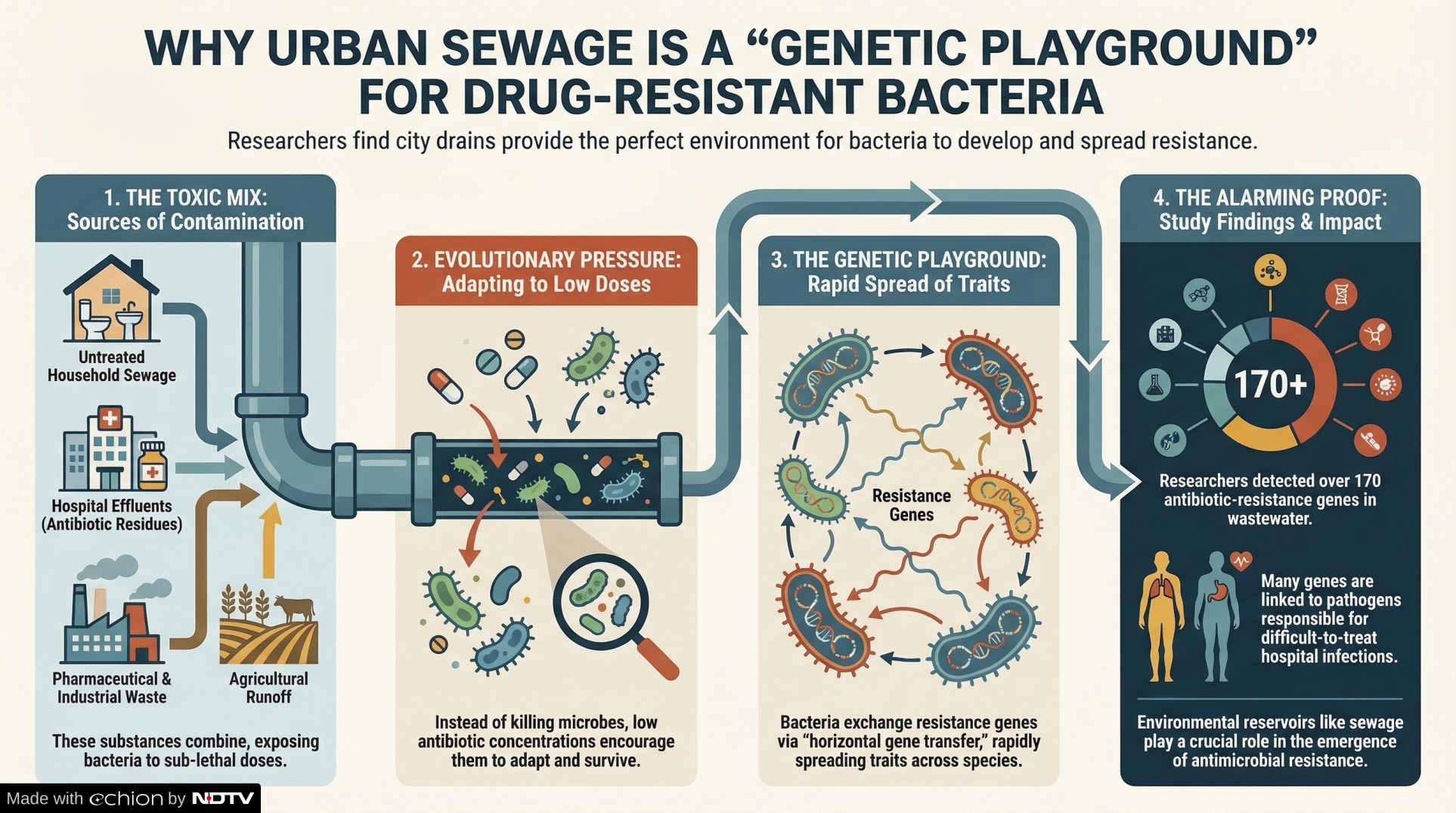
Researchers say India's urban drainage systems provide the perfect environment for bacteria to develop resistance. City drains typically carry a mixture of:
- Untreated household sewage
- Hospital effluents containing antibiotic residues
- Waste from pharmaceutical manufacturing
- Agricultural runoff
- Industrial chemicals
When these substances combine in wastewater, bacteria are exposed to sub-lethal concentrations of antibiotics. Instead of killing microbes, these low doses act as evolutionary pressure, encouraging bacteria to adapt and survive.
Scientists describe sewage ecosystems as "genetic playgrounds" because bacteria living in these environments can exchange resistance genes with one another through a process known as horizontal gene transfer. This enables resistance traits to spread rapidly across different bacterial species.
In the recent study, researchers detected more than 170 antibiotic-resistance genes in wastewater samples, many of which are linked to pathogens responsible for hospital infections. The findings suggest that environmental reservoirs like sewage could play a crucial role in the emergence and spread of antimicrobial resistance.
Evidence From Indian Cities
The link between urban wastewater and antibiotic resistance has been observed in several Indian cities. For example, a study analysing open drains, rivers and lakes in Hyderabad identified 89 pathogens carrying resistance genes across multiple sampling sites. The research showed that untreated sewage from households, farms and hospitals allows microbes from humans, animals and the environment to mix and exchange resistance traits.
Similarly, investigations of urban gutter systems in Uttarakhand found large populations of antibiotic-resistant bacteria thriving in contaminated drainage channels. Researchers warned that these microbes can eventually spread to soil, groundwater and food systems.
Experts say such environmental reservoirs increase the risk that resistant bacteria could re-enter human populations through contaminated water, food or direct exposure.
Why This Matters For Public Health
The discovery of antibiotic-resistant microbes in urban sewage highlights an important reality: antimicrobial resistance is not just a hospital problem, it is also an environmental one. Poor sanitation infrastructure and inadequate wastewater treatment allow untreated sewage to flow into rivers and other water bodies in many parts of India. These contaminated waters may then be used for agriculture, drinking or recreational activities, increasing exposure risks.
Researchers warn that the environment can act as a "silent amplifier" of resistance, allowing bacteria to evolve before they eventually infect humans.
This cycle creates a feedback loop:
- Antibiotics are used in healthcare or agriculture.
- Drug residues enter wastewater systems.
- Bacteria develop resistance in sewage environments.
- Resistant microbes spread back into human populations.
Breaking this cycle will require stronger surveillance systems and improved waste management.
Also Read: How Superbugs Spread In Cities: Contaminated Water, Food, Toilets And Public Spaces
What Experts Say Needs To Change
Public health experts emphasise that tackling antimicrobial resistance requires a "One Health" approach, recognising the links between human, animal and environmental health.
Key steps recommended by researchers include:
- Improved sewage treatment: Expanding wastewater treatment infrastructure can help remove antibiotics and bacteria before they enter rivers or groundwater.
- Monitoring wastewater for AMR genes: Scientists say sewage surveillance could act as an early-warning system to detect emerging superbugs before outbreaks occur.
- Stronger antibiotic stewardship: Reducing unnecessary antibiotic use in healthcare and agriculture remains essential to slowing resistance.
- Environmental regulation: Better control of pharmaceutical and hospital waste discharge could reduce antibiotic contamination in waterways.
The discovery that India's urban drainage networks may function as evolutionary laboratories for superbugs highlights the growing environmental dimension of antimicrobial resistance. While hospitals remain a major battleground against drug-resistant infections, the latest research shows that the fight must also extend beyond clinical settings, into the environment itself. Untreated sewage, antibiotic residues and inadequate sanitation systems are creating conditions where bacteria can evolve faster than modern medicine can keep up.
Addressing this threat will require coordinated action across healthcare, environmental management and public policy. Strengthening wastewater treatment, monitoring environmental reservoirs of resistance and reducing antibiotic misuse could help prevent sewage systems from becoming the next major source of untreatable infections.
Disclaimer: This content including advice provides generic information only. It is in no way a substitute for a qualified medical opinion. Always consult a specialist or your own doctor for more information. NDTV does not claim responsibility for this information.