

)
As global health authorities continue monitoring the ongoing Ebola outbreak in parts of Africa, India has strengthened its airport health surveillance system with the launch of AIR SUVIDHA 2.0, a fully digital and contactless passenger health declaration platform for international arrivals.
The upgraded portal, introduced by the Ministry of Civil Aviation in collaboration with Delhi International Airport Limited (DIAL), comes in response to the World Health Organization's (WHO) declaration of the Ebola/Bundibugyo virus disease outbreak in the Democratic Republic of the Congo (DRC) and Uganda as a Public Health Emergency of International Concern (PHEIC) under the International Health Regulations (IHR) 2005.
Health experts have long emphasised that early detection and monitoring of international travellers play a crucial role in preventing the importation and spread of infectious diseases. With global travel facilitating rapid disease transmission across borders, digital surveillance systems such as Air Suvidha have become an important component of public health preparedness.
The new platform is expected to help authorities identify potentially at-risk travellers more efficiently while ensuring a seamless arrival experience for passengers entering India.
Why AIR SUVIDHA 2.0 Has Been Introduced
According to government officials, the upgraded portal has been launched following concerns surrounding the current Ebola outbreak in the Democratic Republic of the Congo and Uganda.
The WHO declared the outbreak a Public Health Emergency of International Concern on May 17 under the International Health Regulations framework. The current outbreak has been confirmed as Bundibugyo virus disease (BVD), a species of Ebola virus disease known to cause severe illness and outbreaks in affected regions.
Countries bordering the Democratic Republic of the Congo and Uganda, including South Sudan, have also been categorised as high-risk areas for potential transmission according to WHO assessments.
What Travellers Need To Do
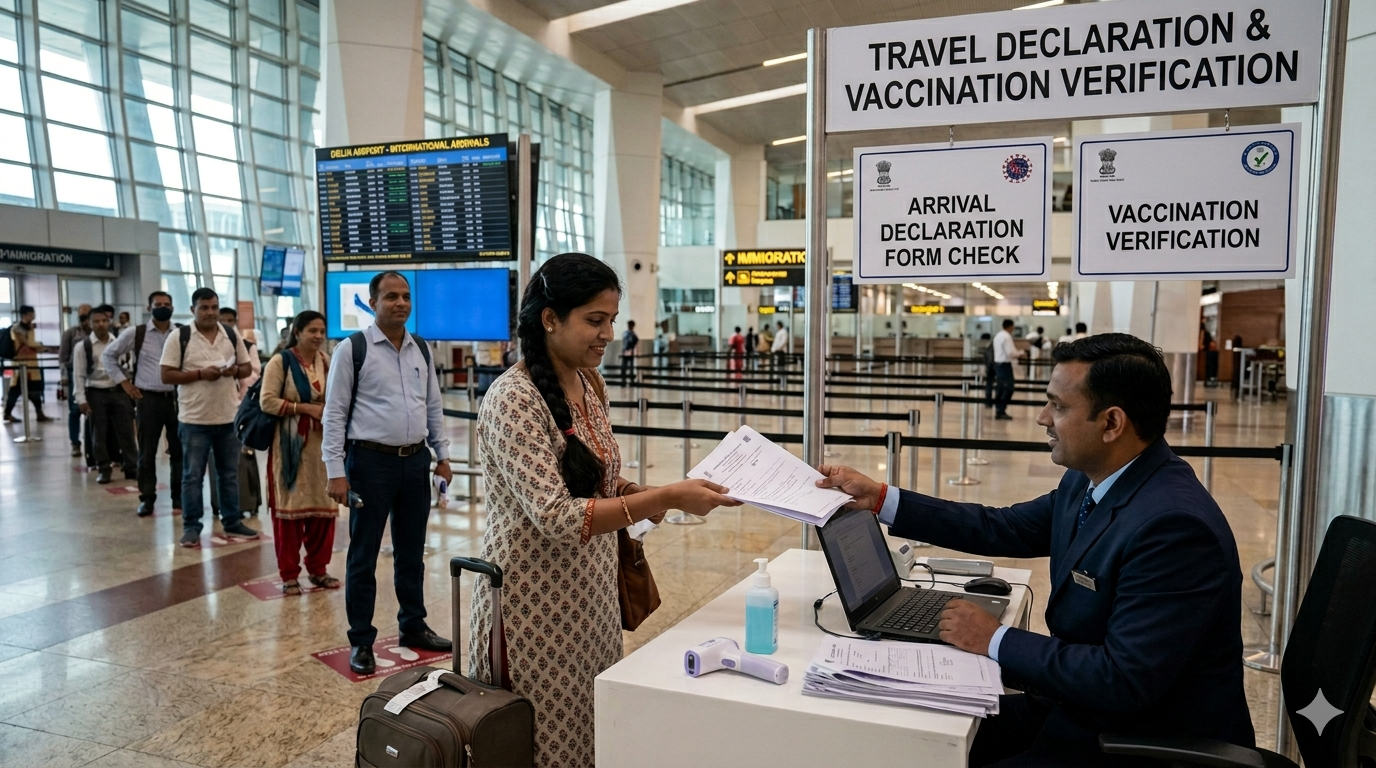
Officials said that the platform, developed in collaboration with the Directorate General of Health Services (DGHS), Ministry of Health and Family Welfare, requires international passengers to submit a mandatory online Health Self-Declaration before immigration clearance.
The declaration includes:
- 21-day travel history
- Exposure history
- Any symptoms related to Ebola infection
"Developed in collaboration with the Directorate General of Health Services (DGHS), Ministry of Health & Family Welfare, the portal enables international arriving passengers to submit a mandatory online Health Self-Declaration -- covering 21-day travel history, exposure history and related symptoms, if any -- prior to immigration clearance," officials said.
The form can be completed up to 24 hours before arrival in India and travellers have been advised to submit it before boarding, preferably during web check-in.
Once completed, passengers only need to present the downloaded Self Declaration Form at the International Travel Health Desk or Immigration Counter.
How The System Strengthens Public Health Surveillance
One of the key features of AIR SUVIDHA 2.0 is its real-time data-sharing capability.
Authorities said the upgraded system allows passenger information to be shared instantly with multiple agencies, including:
- Airport Health Officer (AHO)
- Bureau of Immigration
- Integrated Disease Surveillance Programme (IDSP)
- State Surveillance Officers
Officials noted that this integrated mechanism will help authorities rapidly identify travellers who may be at risk and facilitate timely referral, monitoring, testing, and other public health interventions where necessary.
"The integrated data-sharing mechanism will help authorities rapidly identify travellers who may be at risk and ensure timely referral, monitoring and necessary public health interventions," officials said.
Understanding Ebola And Why Surveillance Matters
According to the WHO, Ebola virus disease is a severe and often life-threatening illness transmitted through direct contact with the blood, bodily fluids, or tissues of infected individuals or animals.
Symptoms can include:
- Sudden fever
- Severe weakness
- Muscle pain
- Headache
- Sore throat
- Vomiting
- Diarrhea
- Internal and external bleeding in severe cases
The incubation period ranges from two to 21 days, which is why travel history and exposure monitoring are critical components of outbreak control.
WHO states that rapid identification, isolation, contact tracing, and surveillance remain among the most effective strategies for preventing international spread during outbreaks.
The launch of AIR SUVIDHA 2.0 represents an important step in India's efforts to strengthen public health preparedness amid concerns over the ongoing Ebola outbreak in parts of Africa. By enabling digital health declarations, real-time data sharing, and rapid risk assessment of incoming travellers, the platform aims to support early detection and timely intervention while maintaining a smooth and contactless airport experience. Public health experts say such surveillance measures remain essential in an era where infectious diseases can cross borders rapidly through international travel.
(With inputs from IANS)
Disclaimer: This content including advice provides generic information only. It is in no way a substitute for a qualified medical opinion. Always consult a specialist or your own doctor for more information. NDTV does not claim responsibility for this information.