

)
Kidney disease can progress silently, often remaining undetected until substantial damage has occurred. Now, researchers from the Indian Institute of Technology Madras (IIT Madras) and Christian Medical College (CMC), Vellore, have developed three artificial intelligence (AI)-based technologies that could help doctors detect and assess kidney conditions earlier.
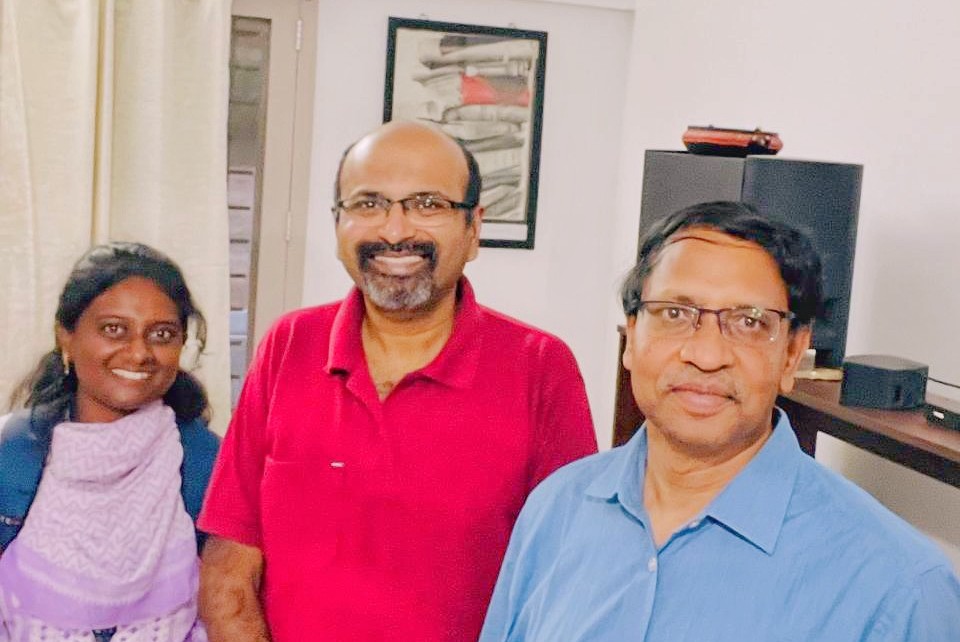
The research team, led by Prof G.L. Samuel of IIT Madras and research scholar Jennifer Delighta, in collaboration with Prof Santosh Varughese of CMC Vellore, has developed tools covering three different stages of kidney assessment: predicting chronic kidney disease (CKD) risk using clinical and laboratory data, classifying kidney abnormalities on CT scans, and creating patient-specific 3D kidney models to measure tumour burden.
The approach is significant because CKD is frequently asymptomatic in its early stages. The World Health Organization (WHO) estimates that around 674 million people globally have CKD, and recommends simple blood and urine tests for early detection. (World Health Organization)
Three AI tools for kidney disease
The first technology is a machine-learning model designed to predict CKD risk using clinical and laboratory information. The researchers have also developed a user-friendly prototype interface, with efforts to make its predictions more accurate and understandable to clinicians.
The second is a deep-learning CT image classifier trained using more than 12,000 kidney images. It is designed to distinguish four categories: a normal kidney, kidney cyst, kidney stone and kidney tumour. The team's work on CT-based multiclass kidney classification was presented at the International Society of Nephrology's World Congress of Nephrology.
The third technology uses CT scans to create 3D models of individual kidneys, allowing researchers to estimate tumour volume and the percentage of the kidney affected.
Prof G.L. Samuel said: "The team aimed to develop intelligent systems that would help clinicians make quicker and more informed decisions. We used machine learning along with clinical knowledge to develop tools that would assist in the earlier detection of kidney diseases and give more detailed information specific to the patient."
Towards personalised kidney care
The researchers say the technologies could eventually contribute to a kidney Digital Twin, a patient-specific virtual representation that could potentially help clinicians monitor disease, forecast changes and plan treatment.
Jennifer Delighta said: "Early detection is of paramount importance when dealing with kidney diseases; these AI tools can help detect at-risk patients early and plan their treatment more effectively. The patient-specific imaging framework is of significant promise as it goes beyond the standard measurements to give a more comprehensive picture of the extent of the disease."
However, these technologies are still being developed and require validation using larger and additional patient datasets before routine clinical deployment.
Why early detection matters
Current KDIGO guidance identifies people with diabetes, hypertension and cardiovascular disease, including heart failure, among those at highest priority for CKD detection. Early testing can help identify disease before advanced kidney damage develops. (KDIGO) The IIT Madras-CMC Vellore work therefore represents an important research step towards using AI to supplement, not replace, clinical judgement in kidney care.
From predicting CKD risk to analysing CT scans and quantifying kidney tumours in three dimensions, the three technologies take different approaches to a common goal: earlier, more precise and potentially more personalised kidney care. Further validation will determine how effectively these tools can move from research settings into everyday clinical practice.
Disclaimer: This content including advice provides generic information only. It is in no way a substitute for a qualified medical opinion. Always consult a specialist or your own doctor for more information. NDTV does not claim responsibility for this information.