

)
Most people view weekends as a much-needed break from the rigid constraints of the workweek. It is easy to stay up late under the assumption that you can simply "sleep in" on Sunday to make up for it. However, this common habit disrupts your body's natural internal clock far more than you might realise. Staying up late all weekend often leads to a phenomenon known as social jetlag. You might wake up on Monday morning feeling heavy-headed, irritable, brain-fogged, and sluggish, struggling to focus even after a full cup of coffee. If this sounds familiar, your circadian rhythm is calling for a reset.
Why Staying Up Late On Weekends Throws Off Your Sleep Cycle
Your body's internal clock, or circadian rhythm, relies heavily on consistency. Located in the brain's hypothalamus, this central clock controls the timed release of essential hormones: melatonin (which promotes sleep) and cortisol (which drives morning alertness).
When you delay your bedtime by even two to three hours on Friday and Saturday nights, you induce a temporary phase delay in your biological clock. Research published in PMC's Journal of Circadian Rhythms reveals that shifting your sleep schedule on work-free days mimics the biological effects of crossing multiple time zones.
When your social schedule conflicts with your internal biological clock, it leads to metabolic friction, hormone imbalances, and unrefreshing sleep. For every two consecutive nights of delayed sleep, your body's internal timing shifts, leaving you stranded in a state of weekend sleep debt.
"People often try to catch up on sleep over the weekend to repay the 'sleep debt' accumulated over the week," explains Dr Charlene Gamaldo, Professor of Neurology and Sleep Medicine Specialist at Johns Hopkins Medicine.
"While this can help temporarily, one weekend of increased sleep is not enough to repay that debt. Establishing a consistent daily routine is essential for truly restorative rest."
Signs Your Sleep Schedule Needs A Reset
If you encounter any of the following warning signs, your internal body clock is likely out of sync:
- Sunday night insomnia: Staring at the ceiling for hours because your body does not feel tired at your regular weekday bedtime.
- Unrefreshing sleep: Waking up tired on Monday morning despite spending 7-8 hours in bed.
- Midday energy crashes: Experiencing severe drowsiness between 2:00 PM and 4:00 PM.
- Mood swings and irritability: Feeling short-tempered due to altered neurotransmitter balance.
- Increased sugar and carb cravings: Elevated ghrelin (hunger hormone) caused by disrupted sleep drives cravings for high-calorie, quick-energy foods.
Doctor's Sleep Reset Plan To Get Back On Track
When your circadian rhythm gets misaligned, relying on sleep recovery over the weekend is not enough. Here is a step-by-step, doctor-approved reset plan to recalibrate your body clock effectively.
1. Wake Up At The Same Time Every Morning
Fixing your wake-up time is the single most powerful anchor for your circadian rhythm. Even if you went to sleep late, resist the urge to sleep for more than 30-45 minutes. A strict wake-up time sets the master clock, signalling to your brain exactly when to start counting down to evening melatonin release.
2. Get Morning Sunlight Within 30 Minutes Of Waking
Step outside into natural sunlight shortly after waking. Sunlight triggers specialised photoreceptors in your eyes that signal your brain to stop melatonin production immediately while boosting morning cortisol.
A study published in the Journal of Sleep Research found that exposure to morning bright light significantly improves sleep efficiency, reduces sleep latency (time taken to fall asleep), and elevates next-day alertness.
"Healthy sleep encompasses three major things: how much sleep you get, sleep quality, and maintaining a consistent sleep schedule," emphasises Dr Marishka Brown, Director of the National Center on Sleep Disorders Research at the NIH.
She says, "Light exposure in the morning is a primary signal the circadian system uses to synchronise the body clock."
3. Avoid Naps Longer Than 20-30 Minutes
While taking a 3-hour weekend afternoon nap feels tempting, it drains your "sleep pressure" which is the natural buildup of adenosine that makes you feel sleepy at night. If fatigue hits hard during the day, limit your power nap to 20-30 minutes before 3:00 PM.
4. Move Your Body Early In The Day
Engaging in moderate physical activity such as a brisk morning walk, light jogging, or yoga that can boosts daytime alertness and helps regulate core body temperature, laying the groundwork for deeper, restorative sleep at night.
5. Eat Meals At Regular Times
Your liver, stomach, and metabolic organs have their own peripheral circadian clocks. Eating meals at consistent times helps synchronise these clocks with your central brain clock. Avoid heavy, late-night meals, as digestion elevates body temperature and disrupts deep sleep phases.
6. Create A Sleep-Friendly Evening Routine
Help your brain transition into rest mode at least an hour before bed:
- Dim overhead lights and switch to warm lamps.
- Put away smartphones, tablets, and laptops to minimise blue light exposure.
- Practice calming activities such as reading, gentle stretching, or deep breathing exercises.
What To Eat And Drink To Support Better Sleep
Your daily diet plays a direct role in how easily your brain produces sleep-regulating neurotransmitters.
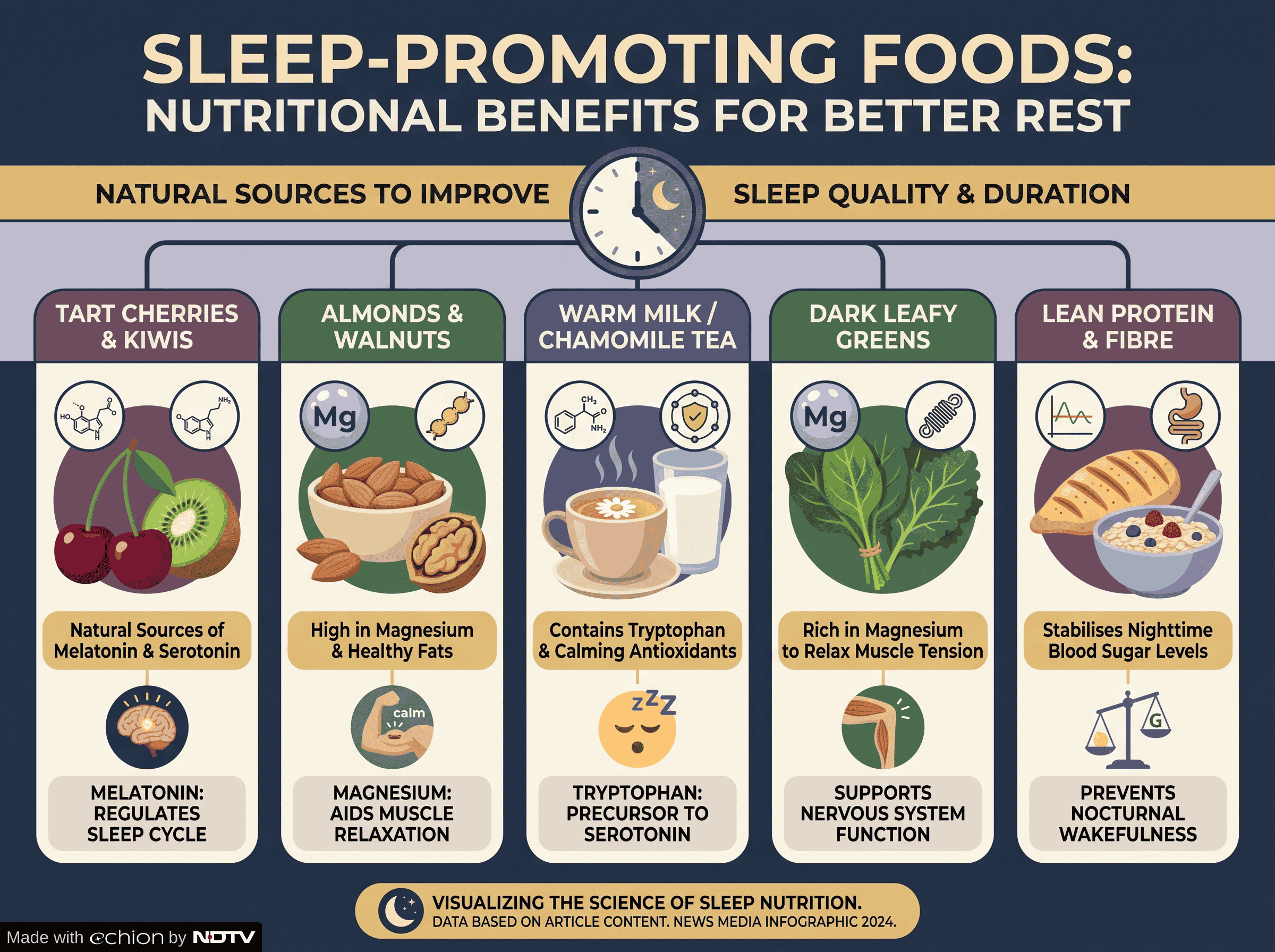
Habits To Limit For A Stable Sleep Cycle
- Caffeine after 12:00 PM or 2:00 PM: Caffeine has a half-life of 5 to 7 hours, meaning half of it remains in your system well into the evening.
- Alcohol close to bedtime: While alcohol may induce drowsiness, it fragments REM sleep and causes frequent night awakenings.
- Energy drinks and sugary late-night snacks: These cause sudden blood sugar spikes followed by nighttime crashes that wake you up.
Timeline: How Long Does It Take To Fix A Disrupted Sleep Cycle?
Resetting your circadian rhythm takes time, consistency, and discipline. Here is what you can expect during the recovery process:
- Day 1 - Day 2: Acute fatigue begins to subside as waking times normalise.
- Day 3 - Day 5: Sleep onset becomes smoother, and falling asleep gets easier.
- Day 5 - Day 7: Daytime alertness and natural energy levels improve significantly.
- Week 2 Onwards: The circadian rhythm fully stabilises; social jet lag symptoms vanish.
Common Mistakes People Make When Resetting Their Sleep Schedule
- Sleeping all day on Sunday: This guarantees late-night insomnia on Sunday and a miserable Monday morning.
- Using alcohol as a sleep aid: Alcohol destabilises sleep architecture, leaving you feeling groggy the next day.
- Overusing caffeine on Monday: Relying on excessive coffee creates a vicious cycle of nighttime restlessness and morning fatigue.
- Abruptly shifting bedtime by hours: Trying to go to bed 3 hours earlier than usual rarely works; shift your bedtime in gradual 15-30-minute increments instead.
A Simple 3-Day Sleep Reset Routine
Day 1: The Anchor
Wake up at your target weekday time (no snoozing).
Get 15-20 minutes of direct morning sunlight.
Avoid daytime naps completely; stop caffeine intake by noon.
Day 2: The Consolidation
Stick firmly to the fixed wake-up time.
Do 30 minutes of light-to-moderate exercise in the morning or early afternoon.
Turn off screen lights 60 minutes before bed.
Day 3: The Rhythm Lock
Maintain your consistent wake-up and bedtime schedule.
Follow a soothing 30-minute pre-bed wind-down routine.
Enjoy a light, protein-balanced dinner at least 3 hours before sleep.
When To See A Sleep Doctor
While occasional weekend sleep disruption is manageable through lifestyle adjustments, chronic sleep difficulties require medical evaluation. Consult a healthcare provider or sleep expert if you experience:
1. Persistent insomnia lasting longer than 3 to 4 weeks.
2. Frequent nighttime awakenings accompanied by gasping or choking.
3. Loud, chronic snoring or signs of sleep apnoea.
4. Unmanageable daytime sleepiness despite spending 7 to 9 hours in bed.
Staying up late on the weekend shouldn't cost you your precious quality sleep. You can fix your sleep cycle by making sure your sleep matches your circadian rhythm.
Also Read: Weekend Sleep Cannot Undo A Week Of Sleep Loss: Doctor Shares Why
Disclaimer: This content including advice provides generic information only. It is in no way a substitute for a qualified medical opinion. Always consult a specialist or your own doctor for more information. NDTV does not claim responsibility for this information.