





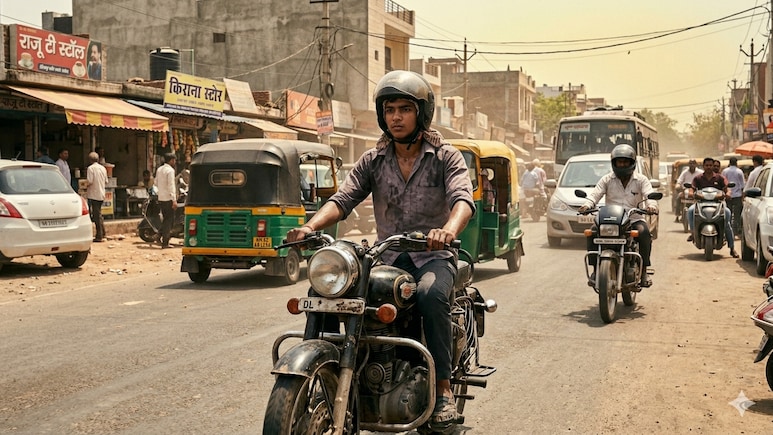
- North India faces a severe heatwave, with Banda hitting 48°C, 4.5°C above average
- Delhi's Ridge recorded 45.8°C, the hottest spot in the city amid peak heat season
- Bike riders face higher heat risks due to direct sun, hot winds, and engine heat exposure
North India is facing a severe heatwave since Wednesday, with Banda district in Uttar Pradesh emerging as the hottest spot in the country at 48 degree C, a staggering 4.5 degrees above the seasonal average. In the national capital, Delhi's Ridge weather station recorded a maximum of 45.8 degree C, marking it as the hottest location across the city. Amid the peak season of scorching heat, bike riders are among the groups most vulnerable to heat-related illnesses during daily travel. Bike riders not only include office goers but also the delivery partners and gig workers, all of whom need safeguards against heatwaves. Unlike people travelling in air-conditioned vehicles, two-wheeler riders remain directly exposed to extreme heat, hot winds, traffic pollution, and dehydration for prolonged periods. Doctors warn that intense heat exposure while riding can quickly lead to dehydration, dizziness, exhaustion, headaches, muscle cramps, and in severe cases, heatstroke. The risk becomes even higher during afternoon hours when roads radiate additional heat, and hot dry winds accelerate fluid loss from the body.
Why Bike Riders Face Higher Heat Risk
Riding a motorcycle or scooter during a heatwave exposes the body continuously to:
- Direct sunlight
- Hot winds
- Engine heat
- Traffic congestion
- High humidity in some regions
Protective riding gear, while important for safety, may also trap heat and increase sweating. During summers, excessive sweating can lead to rapid loss of fluids and electrolytes. Dr. Gourdas Choudhuri, Chairman-Gastroenterology, Fortis Memorial Research Institute Gurugram, says, "stomach-related illnesses become significantly more common during summer months."
Also read: Here's Why Just Water Isn't Enough During Intense Heatwave
"Loose stools, fever, abdominal pain, vomiting, and sometimes even blood in stools is very common during the summer season," he explains. "During these hot periods, germs multiply rapidly in food and water. Food gets stale and ferments much faster compared to winter months," he adds.
Dehydration Can Build Up Quickly
Doctors say many riders underestimate how quickly dehydration develops during extreme summer travel. Early signs include:
- Dry mouth
- Thirst
- Fatigue
- Dark urine
- Headaches
- Muscle cramps
If ignored, dehydration may worsen concentration and reaction time while riding.
Avoid Peak Afternoon Heat When Possible
Experts recommend limiting long rides during peak heat hours, usually between: 12 PM and 4 PM. Road surfaces and traffic zones become significantly hotter during this period. If travel is unavoidable:
- Take short breaks in shaded areas
- Rehydrate frequently
- Avoid standing under direct sunlight unnecessarily
Hydration Is Extremely Important
Bike riders should drink water regularly even before feeling thirsty. Experts recommend:
- Carrying water bottles
- Using oral rehydration salts during long rides
- Replacing electrolytes lost through sweating
Excess tea, coffee, sugary drinks, or alcohol may worsen dehydration in extreme heat.
Wear Breathable But Protective Clothing
Doctors advise riders to balance ventilation with sun protection. Helpful measures include:
- Light-coloured full-sleeve clothing
- Breathable riding jackets
- UV-protective helmets with proper ventilation
- Sunglasses to reduce glare exposure
- Cotton inner layers to absorb sweat
Loose but protective clothing may help reduce direct heat exposure.
Watch For Warning Signs Of Heat Exhaustion
Heat exhaustion may develop gradually during long rides, and it may cause heat storke. Dr. Parinita Kaur, Director and Unit Head of Internal Medicine at Max Super Speciality Hospital, Dwarka, emphasises that heat stroke isn't limited to long hours under direct sunlight. "In extremely hot conditions, the body can lose its ability to regulate internal temperature," she explains. One of the greatest risks of heat stroke is that its initial symptoms may seem harmless. According to Dr. Kaur, many people confuse the early stages with simple tiredness or dehydration. "The onset of heat stroke can bring excessive heat sensation, restlessness, dizziness, headaches, nausea, and vomiting," she notes. Recognizing these signs early is crucial to preventing the condition from escalating. If symptoms worsen or the person stops sweating despite intense heat, emergency medical care may be needed immediately because this could indicate heatstroke.
Also read: Impact Of Rising Heatwave Conditions On Heart Attacks And Stroke-Related Emergencies In India
Nutrition Also Matters During Heatwaves
Experts recommend avoiding:
- Heavy oily meals before riding
- Excessively spicy foods during peak heat exposure
Instead, riders should focus on:
- Fruits with high water content
- Light meals
- Electrolyte-rich foods
- Proper hydration throughout the day
Don't Ignore Sleep And Fatigue
Poor sleep combined with extreme heat can worsen:
- Fatigue
- Reduced focus
- Slower reflexes
- Risk of accidents
Heat stress also places extra strain on the body's cardiovascular system. Bike riders are particularly vulnerable during North India's severe heatwave because of prolonged direct exposure to heat, dehydration, and hot winds. Experts say staying hydrated, avoiding peak afternoon travel, wearing breathable protective gear, and recognising early warning signs of heat illness can help reduce the risk of dangerous heat-related complications.
Disclaimer: This content, including advice, provides generic information only. It is in no way a substitute for a qualified medical opinion. Always consult a specialist or your own doctor for more information. NDTV does not claim responsibility for this information.
Track Latest News Live on NDTV.com and get news updates from India and around the world

