

)
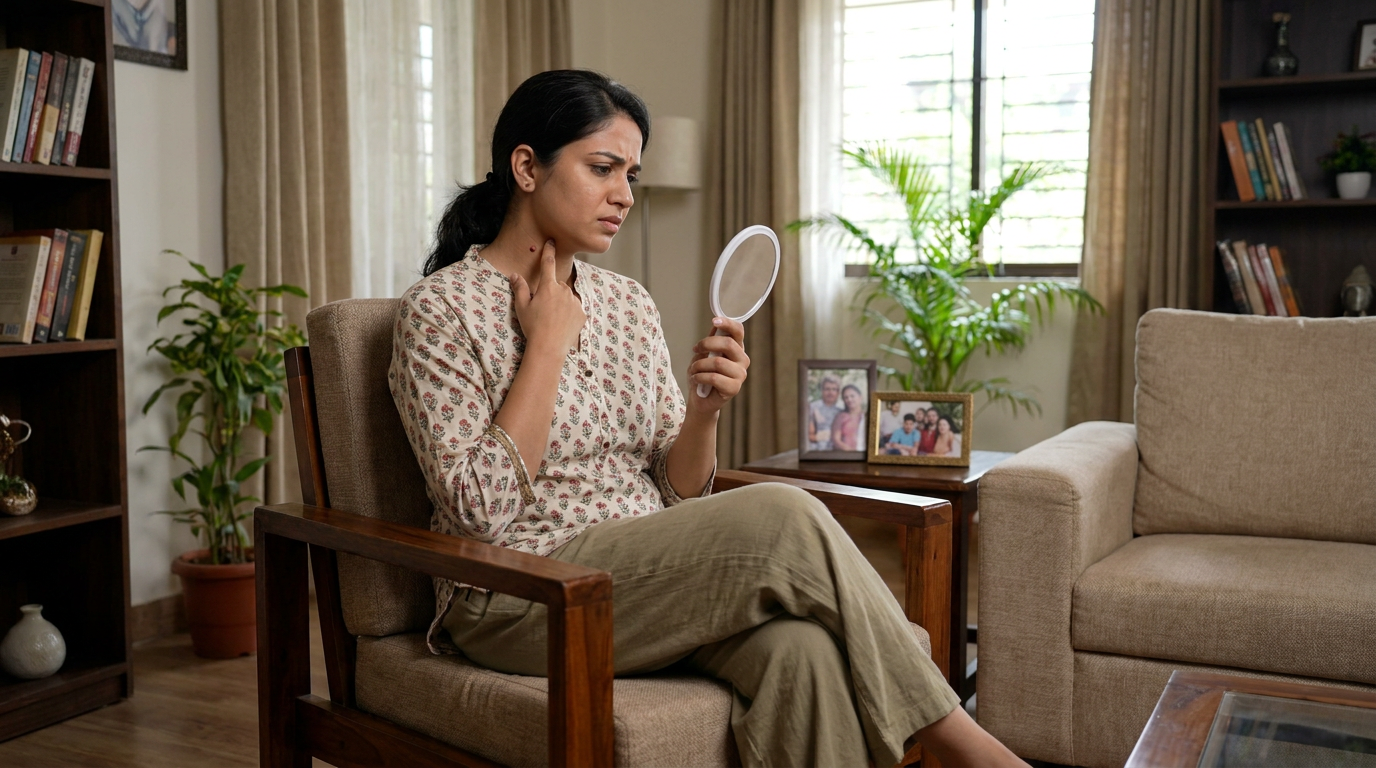
A small bump on the skin may seem harmless, especially when it looks like a pimple or cyst. However, changes such as itching, growth, redness or scabbing should not be ignored. Tracy Rider, a 44-year-old mother of two, discovered that a small bump had appeared on her collarbone. She was initially told that it was a cyst, which later became inflamed and scabbed. She was then referred to dermatology, where the growth was removed and tested. The results showed that the "pimple" was actually squamous cell carcinoma (SCC), a common type of skin cancer.
According to a report in Mirror, speaking to Talk to the Press, Tracy said, "The first doctor said it was just a cyst, but I didn't think that was right and I went back 10 days later because it had scabbed even though I hadn't touched it since. I hoped they would reassure me again that it was nothing to worry about, but I knew it was more sinister. In my teens and early 20s, everyone used sunbeds, including me, so the damage must have been done years ago."
She added, "It never bled, but it scabbed and it looked unpleasant. I didn't touch it after the first time, but it got bigger."
What Is Squamous Cell Carcinoma?
Squamous cell carcinoma is a type of skin cancer that begins in squamous cells, which are thin, flat cells found in the outer layer of the skin. It is one of the most common types of non-melanoma skin cancer. It usually develops in areas that receive a lot of sunlight, such as the face, ears, neck, scalp, hands and arms. However, it can occur on other parts of the body too.
Most SCCs can be treated successfully when they are detected at an early stage. However, some can grow deeper into nearby tissues and, in more advanced cases, spread to other parts of the body.
Symptoms Of Squamous Cell Carcinoma
SCC can look different from person to person. It may appear as a new growth, sore or patch that does not heal normally. Possible warning signs include:
- A firm, raised lump or bump
- A rough or scaly patch of skin
- A sore that does not heal
- A growth that becomes larger over time
- Redness, swelling or inflammation
- Persistent itching or tenderness
- Crusting or scabbing
- Bleeding from a skin lesion
Importantly, SCC does not always look like a mole. It can resemble a pimple, wart, cyst or other harmless skin problem. Any growth that changes, persists or behaves differently from an ordinary spot should be tested.
Types Of Squamous-Cell Carcinoma
SCC can be classified based on how it develops and looks under a microscope. Common forms include cutaneous SCC, which develops on the skin, and in-situ SCC, also called Bowen's disease, where abnormal cells are limited to the top layer of the skin. Some SCCs are more aggressive than others.
What Causes Squamous Cell Carcinoma?
The biggest risk factor for SCC is exposure to ultraviolet (UV) radiation. This can come from sunlight as well as artificial sources such as tanning beds and sunbeds. UV exposure can damage the DNA inside skin cells. Over many years, this damage can build up and lead to cancer. Other factors that may increase the risk include:
- Having fair or easily sunburned skin
- Frequent or long-term sun exposure
- Previous use of tanning beds
- A history of skin cancer
- A weakened immune system
- Certain long-lasting skin conditions or scars
- Increasing age
- Previous radiation exposure
When Should You Get Skin Growth Checked?
Not every pimple, cyst or scab is skin cancer. However, a growth that does not heal, becomes larger, changes appearance, repeatedly scabs, bleeds, hurts or feels unusual deserves medical attention. Most importantly, do not assume that skin cancer will always look like a mole. An ordinary bump can sometimes be something more serious, so persistent or changing skin lesions should be checked by a doctor.
How Is Squamous Cell Carcinoma Diagnosed?
Your doctor will usually examine the area and ask about when it appeared and whether it has changed. If they suspect SCC, the growth may be removed or a small sample may be taken through a biopsy. The tissue is then examined under a microscope by a specialist. This confirms whether cancer cells are present and can provide information about the type and characteristics of the tumour.
In some cases, additional scans or tests may be needed, particularly when doctors believe the cancer may have grown deeper or spread.
Treatment For Squamous Cell Carcinoma
Treatment depends on the size, location, depth and risk level of the cancer. Surgical removal is one of the most common treatments. The aim is to remove the cancer completely along with a margin of healthy-looking tissue.
Another technique, Mohs surgery, may be recommended for certain cancers, particularly those in areas where preserving as much healthy tissue as possible is important.
Other treatments can include cryotherapy, topical medicines, curettage and cautery, radiation therapy or medicines that stimulate or control the immune system. Advanced SCC may require systemic treatments such as immunotherapy.
Disclaimer: This content including advice provides generic information only. It is in no way a substitute for a qualified medical opinion. Always consult a specialist or your own doctor for more information. NDTV does not claim responsibility for this information.