

)
Yoga includes many standing poses that help improve strength, balance, flexibility, and body awareness. One such pose is Virabhadrasana I, also known as Warrior I Pose. It is a yoga pose that strengthens the legs, opens the chest and hips, and improves overall stability. The pose is named after Virabhadra, a fierce warrior from Hindu mythology, symbolising strength, courage, and determination. Despite its strong appearance, the pose can be practised by beginners.
Regular practice of Virabhadrasana I can benefit people of different age groups by improving posture and supporting better movement in daily life. Like every yoga pose, it should be done with the correct technique to avoid strain or injury. People with certain health conditions may also need to modify the pose or avoid it altogether.
What Is Virabhadrasana I?
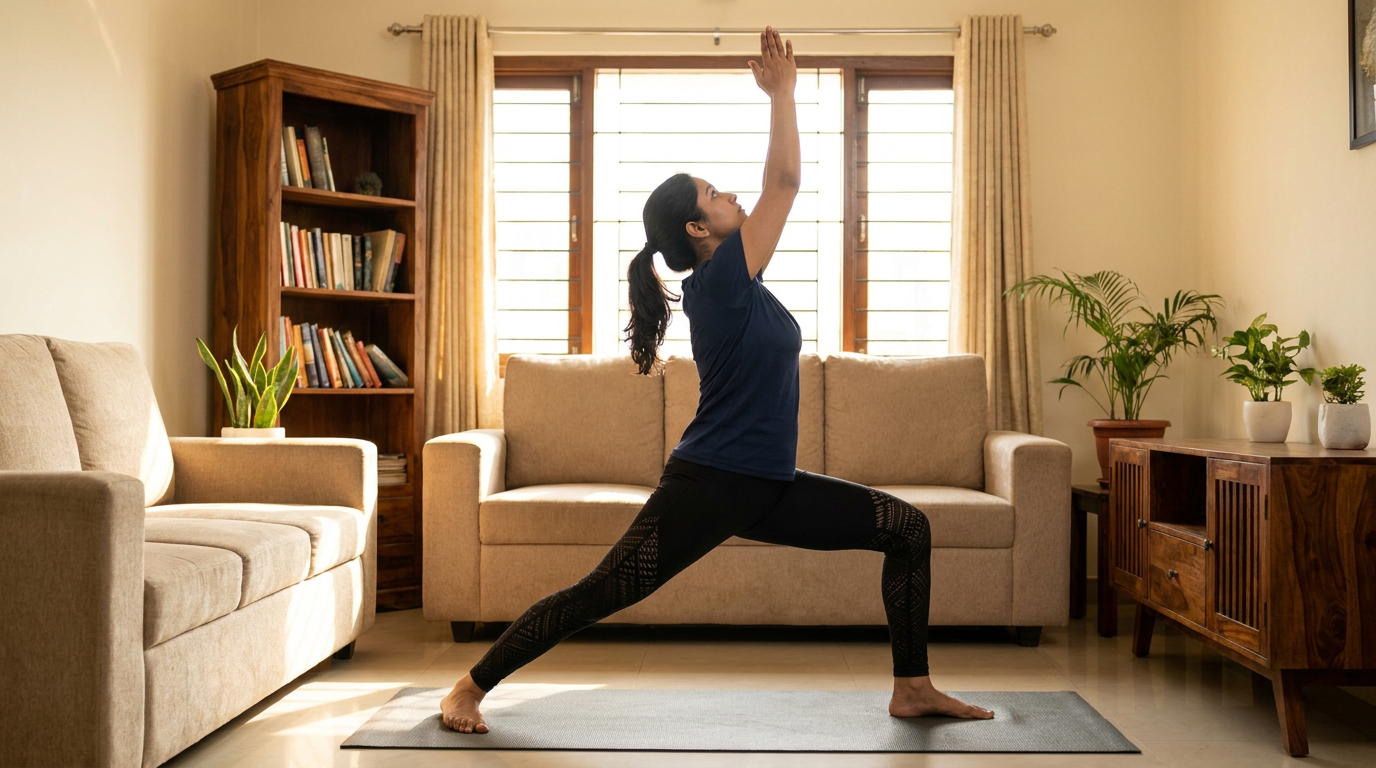
Virabhadrasana I is a standing yoga pose where one leg steps forward while the other stretches behind. The front knee bends, the back leg stays straight, and both arms are raised overhead. The chest lifts while the hips are gently turned forward. This asana improves balance, flexibility in the hips and shoulders and builds lower-body strength.
Benefits Of Virabhadrasana I
1. Strengthens The Legs
The pose works the thighs, calves, ankles, and hips. Holding the position helps build muscle strength and improves endurance in the lower body.
2. Improves Balance And Stability
This asana requires you to maintain balance while keeping your body aligned. Regular practice improves coordination and helps develop better body control.
3. Opens The Chest And Shoulders
Raising the arms overhead and lifting the chest stretches the shoulders and chest muscles. This can help reduce stiffness caused by sitting for long hours.
4. Increases Hip Flexibility
The pose stretches the hip flexors, especially in the back leg. Improved hip flexibility supports better movement and may reduce tightness caused by a sedentary lifestyle.
5. Improves Posture
Practising this pose encourages proper spinal alignment and strengthens the muscles that support the back. Over time, it may help improve posture.
6. Stretches The Entire Body
This asana provides a gentle stretch to the arms, shoulders, chest, abdomen, hips, and legs, improving overall flexibility.
How To Do Virabhadrasana I
- Stand straight in Mountain Pose (Tadasana) with your feet together
- Step one foot back by about 3 to 4 feet
- Turn the back foot slightly outward while keeping the front foot facing forward
- Bend the front knee until it is roughly above the ankle
- Keep the back leg straight and press the back heel firmly into the floor
- Turn your hips as much as possible towards the front
- Raise both arms overhead with your palms facing each other or touching
- Lift your chest, lengthen your spine, and look forward or slightly upward
- Breathe normally and hold the pose for 20 to 30 seconds
- Return to the starting position and repeat on the opposite side
Limitations Of Virabhadrasana I
Although the pose offers several benefits, it also has some limitations.
- It may feel difficult for beginners because it requires balance and flexibility
- People with tight hips or shoulders may find it challenging
- The pose should not be forced, as poor technique can place extra pressure on the knees or lower back
Who Should Do Virabhadrasana I?
This pose may be suitable for:
- Beginners learning standing yoga poses with proper guidance
- People looking to improve leg strength and flexibility
- Individuals who spend long hours sitting and want to stretch the hips and chest
- Those aiming to improve balance, posture, and overall body stability
- People who want to include a full-body strengthening pose in their yoga routine.
Who Should Avoid Virabhadrasana I?
Some people should avoid the pose or practise only after consulting a healthcare professional or qualified yoga instructor.
- People with recent knee, ankle, hip, or shoulder injuries
- Those suffering from severe lower back pain or spinal problems
- People with uncontrolled high blood pressure should avoid holding the arms overhead for long periods unless advised otherwise
- People with balance disorders should practise with support
- Anyone recovering from surgery should wait until they receive medical clearance.
Tips For Safe Practice
- Warm up before attempting the pose
- Keep the front knee aligned with the ankle
- Avoid arching the lower back excessively
- Breathe slowly and evenly throughout the pose
- Focus on proper alignment rather than stretching too deeply
- Stop immediately if you feel sharp pain or dizziness.
Disclaimer: This content including advice provides generic information only. It is in no way a substitute for a qualified medical opinion. Always consult a specialist or your own doctor for more information. NDTV does not claim responsibility for this information.