

)
Every morning in fitness centres across metropolitan India, a familiar debate plays out. On one side are the early risers who swear by lacing up their running shoes immediately after rolling out of bed, claiming that working out on an empty stomach melts stubborn fat faster. On the other are those who cannot imagine lifting a weight or stepping on a treadmill without first downing a banana, an oatmeal bowl, or a protein shake. So, can you, and more importantly, should you, work out on an empty stomach? The short answer is yes, you can. But whether it will accelerate your health goals or leave you dizzy on the gym floor comes down to the science of energy systems, the intensity of your session, and your individual metabolic baseline.
The Science Behind Exercising On An Empty Stomach
When you wake up after an eight-to-ten-hour overnight fast, your body's glycogen (stored carbohydrate) reserves in the liver are significantly depleted, and baseline insulin levels are low. To fuel physical movement, your metabolism must adapt by relying more heavily on stored fatty acids for immediate energy production.
This metabolic state forms the basis for "fasted cardio", which is a strategy long popularised by bodybuilders and endurance athletes aiming for lean muscle definition.
During low-to-moderate intensity movement, such as steady-state walking, light jogging, or gentle yoga, working out fasted encourages your body to burn a higher percentage of fat for fuel rather than carbohydrates. Eating carbohydrates immediately before a session raises blood glucose and insulin levels, which naturally suppresses lipolysis (the chemical breakdown of fat tissue) during exercise.
However, fitness enthusiasts often confuse acute fat oxidation during a workout with total overall fat loss. What ultimately dictates long-term body fat reduction is your 24-hour energy balance and maintaining a consistent, healthy caloric deficit, rather than purely what fuel source you burn during a 45-minute window.
Here Is What A Doctor Says And Peer-Reviewed Research Suggests
Medical experts emphasise looking at your overall training goals before skipping a pre-workout meal.
"Working out in a fasted state can enhance acute fat oxidation during low-to-moderate intensity exercise, making it a viable option for light cardiovascular sessions," explains Dr Pushpinder Singh Bajaj, Senior Consultant, Arthroscopy and Sports Medicine, Max Super Speciality Hospital, Saket. "However, for high-intensity training, heavy weightlifting, or athletic conditioning, exercising without adequate glycogen stores can compromise peak power output, accelerate muscular fatigue, and increase the risk of injury due to compromised form."
This clinical perspective aligns closely with findings published across medical journals:
First, a comprehensive systematic review published in BMC Proceedings Journal examining time-restricted feeding and fasted exercise confirmed that while training in a fasted state significantly increases reliance on fat oxidation during submaximal aerobic exercise, it does not produce statistically superior long-term fat loss or changes in body composition compared to fed exercise when total daily calorie intake is matched.
The Hidden Risks: When Fasted Workouts Backfire
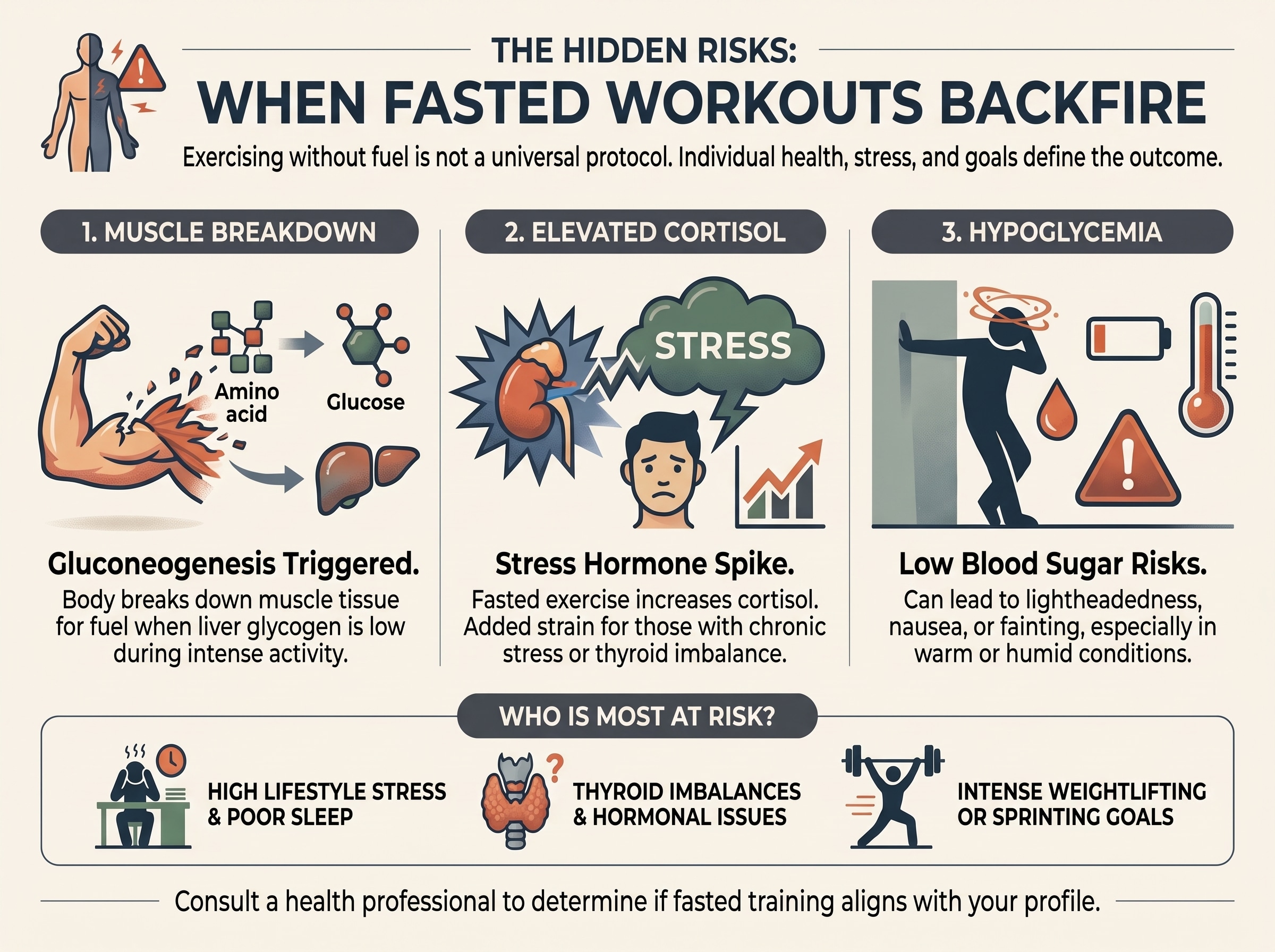
Exercising without fuel is far from a universal protocol. Depending on your health profile, lifestyle stress, and fitness goals, it can introduce distinct physiological drawbacks:
- Muscle Breakdown: When liver glycogen stores are low and you push through intense weightlifting or sprinting, your body may initiate gluconeogenesis breaking down muscle tissue to convert amino acids into usable glucose for fuel.
- Elevated Cortisol: Exercising on an empty stomach triggers a spike in cortisol, your primary stress hormone. For individuals managing chronic stress, poor sleep, or thyroid imbalances, this added strain can trigger prolonged exhaustion.
- Hypoglycemia: Exercising with low blood sugar can lead to lightheadedness, nausea, or fainting, especially in warm climates or humid conditions.
Fasted vs Fed: Matching Food To Your Workout Type
If your regimen consists of low-intensity steady-state movement such as brisk morning walking, light stationary cycling, or gentle mobility work, exercising fasted is generally safe and utilises fat as a primary energy source without placing heavy metabolic stress on your muscles.
Conversely, if your routine involves heavy strength training, powerlifting, high-intensity interval training (HIIT), or endurance runs lasting over 60 minutes, a fed state is essential. High-intensity efforts demand fast-burning carbohydrates to sustain anaerobic energy pathways, prevent premature muscle fatigue, and support post-workout recovery.
If you prefer exercising first thing in the morning and feel energised and clear-headed on an empty stomach, low-to-moderate fasted movement is completely safe for healthy adults. However, if your training demands speed, better performance, or heavy resistance, eating a light carbohydrate-rich snack 30 to 45 minutes prior will optimise performance, protect muscle tissue, and help you train harder.
Also Read: Your Waistline May Tell You More About Your Metabolic Health Than Your Weight
Disclaimer: This content including advice provides generic information only. It is in no way a substitute for a qualified medical opinion. Always consult a specialist or your own doctor for more information. NDTV does not claim responsibility for this information.