

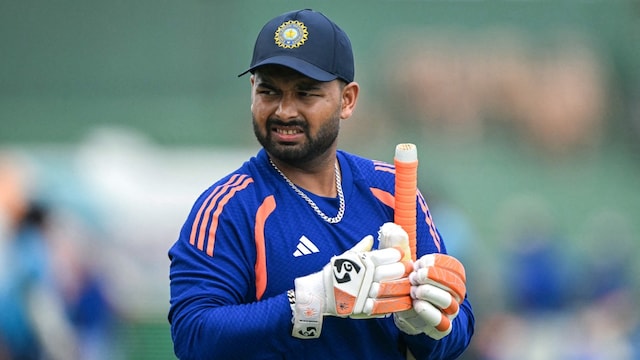
Indian wicketkeeper-batter Rishabh Pant has been ruled out of the first two unofficial Tests of India A's tour of New Zealand later this month after sustaining a left-side strain. The Board of Control for Cricket in India (BCCI) has named 21-year-old Jharkhand wicketkeeper Kumar Kushagra as his replacement. Pant sustained the injury during the recent Irani Cup while captaining Rest of India, reportedly experiencing discomfort while playing a sweep shot in the first innings. He returned to bat at No. 8 in the second innings while also dealing with flu symptoms and did not keep wicket during Jammu and Kashmir's chase. The cricketer is recovering under the supervision of the BCCI medical team, with a decision on his availability for the third and final unofficial Test, scheduled for November 7, expected to be taken later. Earlier, the Delhi and Districts Cricket Association (DDCA) had confirmed that Pant would miss the Ranji Trophy opener beginning on October 11. But what exactly is a left-side strain, which muscles can be affected, and how long can such an injury take to heal? According to Dr Pushkar Chawla, director and unit head, orthopaedics, ShardaCare-Healthcity, the recovery period depends on the severity of the strain, the muscles involved and the physical demands placed on the injured area.
What Is A Left-Side Strain?
A left-side strain generally refers to an injury involving muscles on the left side of the torso. Depending on the precise location, it may affect the intercostal muscles between the ribs, the oblique muscles of the abdomen or other muscles involved in trunk movement. "These muscles are particularly important for cricketers because batting, wicketkeeping, throwing and running require repeated twisting, bending and sudden changes in movement," says Dr Chawla. A muscle strain occurs when muscle fibres are overstretched or develop small tears because of excessive force, repetitive activity or a sudden movement.
In cricket, batting involves rapid trunk rotation, particularly when playing shots that require the batter to twist or reach across the body. Such movements can place considerable demands on the abdominal and torso muscles. However, the term 'left-side strain' alone does not establish the exact muscle involved or the seriousness of Pant's injury. The specific diagnosis and severity would need to be confirmed by his medical team.
What Are The Symptoms Of A Side Strain?
The symptoms depend on the location and severity of the injury. Common signs of a muscle strain may include:
- Localised pain on the affected side of the torso.
- Tenderness or discomfort when the area is touched.
- Stiffness or restricted movement.
- Pain while twisting, bending or turning the body.
- Discomfort during coughing or taking a deep breath, particularly when the muscles between the ribs are involved.
- Difficulty performing sport-specific movements such as batting, throwing or sprinting.
A mild strain may cause discomfort without significantly restricting movement, whereas a more severe injury involving a larger tear can cause considerable pain and weakness.
The symptoms may also overlap with those of other conditions, so persistent or severe pain should be medically evaluated rather than automatically attributed to a muscle strain.
How Can A Cricket Shot Cause A Muscle Strain?
Cricket requires repeated movements involving trunk rotation, sudden acceleration and changes in body position. While these movements are part of normal play, they can strain the muscles if the force applied exceeds their capacity. A sweep shot, for example, requires the batter to coordinate the movement of the hips, torso, shoulders and arms while maintaining balance. Depending on the technique and position of the body, the movement can place stress on the muscles around the abdomen and ribs. Fatigue, inadequate recovery between matches, previous muscle injuries and a sudden increase in physical demands may also contribute to the risk of muscle strains. However, the precise mechanism of Pant's injury cannot be established from the description of the incident alone.
How Serious Is A Left-Side Strain?
The severity of a muscle strain generally ranges from mild overstretching to a more significant tear. A mild strain may improve with relative rest and appropriate rehabilitation, while a more substantial tear may require a longer recovery period and a structured physiotherapy programme. Dr Chawla explains that the term 'left-side strain' does not, by itself, indicate how serious the injury is. The exact location, extent of muscle damage, symptoms and response to rehabilitation all influence recovery. For a professional cricketer, even an injury that does not cause significant discomfort at rest can become problematic during competitive play. Batting, throwing, sprinting and wicketkeeping all require the torso muscles to work repeatedly and sometimes explosively. Consequently, a player may need to miss matches even when the injury does not prevent ordinary daily activities.
How Is A Side Strain Treated?
Treatment depends on the severity of the injury and the muscles involved. The initial approach generally includes relative rest and avoiding movements that aggravate the pain. A gradual rehabilitation programme may then help restore mobility, strength and coordination. According to Dr Chawla, treatment may involve:
- Relative rest: Temporarily avoiding activities that place excessive stress on the injured muscles.
- Physiotherapy: Using guided exercises to restore movement and improve muscle function.
- Mobility exercises: Gradually reintroducing comfortable trunk movements as symptoms improve.
- Progressive strengthening: Building the capacity of the affected muscles before returning to demanding physical activity.
- Medical supervision: Using pain relief or other medication only when recommended by a healthcare professional.
Complete and prolonged inactivity is not necessarily required for every muscle strain. The rehabilitation plan should be tailored to the injury, with activities reintroduced progressively as tolerated. Returning to intense exercise or competitive sport before the muscle has recovered sufficiently can aggravate the injury and potentially prolong the rehabilitation period.
How Long Does A Side Strain Take To Heal?
There is no single recovery timeline for every side strain. The duration depends on whether the injury involves mild overstretching, a partial muscle tear or more extensive damage. Mild strains may improve within days to a few weeks, while more significant injuries can take several weeks or longer to recover. These are general estimates and should not be treated as a prediction of Pant's individual recovery. For a professional cricketer, the decision to return to play depends on more than the number of days since the injury occurred.
The medical team must assess whether the player can perform the movements required by the sport without pain or significant restriction, and whether the injured muscles can tolerate the intensity of competitive cricket.
When Can Rishabh Pant Return To Cricket?
Pant's return will depend on the progress of his recovery and the assessment of the BCCI medical team. "Returning to competitive cricket too early can worsen the injury or delay recovery," says Dr Chawla. He explains that a professional cricketer must be able to twist, sprint, bat, throw and perform wicketkeeping movements without discomfort before returning to competition.
A gradual return-to-play programme may begin with controlled movements and conditioning before progressing to sport-specific drills and more demanding training sessions. The player must demonstrate adequate strength, mobility and functional capacity before being cleared for competition.
As Pant is recovering under the supervision of the BCCI medical team, his availability for the third unofficial Test against New Zealand A will depend on his clinical progress and readiness to resume play. A left-side strain can range from a mild muscle injury to a more significant tear, and the name alone does not reveal its severity. For cricketers, the injury can be particularly challenging because batting, throwing, running and wicketkeeping place repeated demands on the torso muscles. Adequate recovery, guided rehabilitation and a gradual return to sport are important to reduce the risk of aggravating the injury. In Pant's case, the decision to resume competitive cricket will depend on the assessment of the BCCI medical team rather than a fixed recovery timeline.
Disclaimer: This content including advice provides generic information only. It is in no way a substitute for a qualified medical opinion. Always consult a specialist or your own doctor for more information. NDTV does not claim responsibility for this information.