- Muscle loss affects metabolism and increases chronic disease risk in sedentary lifestyles
- Heavy water bottles can replace dumbbells for resistance training at home
- Bicep curls, shoulder presses, squats, bent-over rows, and lunges build muscle strength
Muscle loss is a growing concern that is affecting a significant portion of the population as people are living sedentary lifestyles. According to the research published in the American Journal of Clinical Nutrition, muscles are important as they play a central role in overall metabolism. To keep major chronic diseases at bay, your body needs a certain portion of muscle. And preservation of muscles is important, as it holds the key to metabolism, strength, and ageing.
While making sure your muscle mass is maintained and maintaining your metabolic rate, you need to practise exercises that strengthen their functioning. You can do so easily without much equipment to make your fitness routine even easier. This is important, as the simpler the exercise routine, the higher the chance of maintaining the healthy habit of exercising. This is key to reducing the risk of weakness and injury that becomes common when enough muscles aren't present to preserve mobility.
Can Water Bottles Replace Dumbbells?
Heavyweight water bottles with an average weight of 500 ml or above can replace dumbbells. They act as effective resistance training tools, as their weight is adjustable, and you can even reduce the weight by removing a certain level of water from them. You can start doing resistance exercises with 500 ml-2 L bottles, which are ideal for beginners and home workouts.
5 Resistance Exercises To Fight Muscle Loss
1. Bicep Curls With Water Bottles
Bicep curls are an exercise that targets the arms and need to be performed in the right form to get maximum benefits. You can use a 1-litre water bottle to start and improve muscle tone, but the key lies in keeping the elbows close to the body to ensure the muscles of the arm are stretched in the right manner.
2. Shoulder Press
A shoulder press involves strengthening your deltoids, the muscles that cover the shoulder joint. With repetitive sets of shoulder presses, you can strengthen your upper body and build functional strength. The position of your shoulders and arms needs to be in line with the weight of the water bottle, and you need to avoid locking elbows to engage your arms and shoulders. There are three ways you can do shoulder presses to preserve your muscle mass: you can practise rows, overhead presses, and lateral raises to build your upper body strength.
3. Squats Holding Water Bottles
Squats are a full-body resistance training exercise that engages your core and works on your legs and glutes. If you want to improve your balance and core strength, then you can do squats or deep squats that involve going low and holding the position and then coming up in the right form over and over again to engage the knees, hands, heels, and buttocks.
- With squats, you need to make sure that you keep your knees aligned with your toes to keep your form correct.
- You can use heavyweight water bottles and hold them in your hands to perform weighted squats for building strength.
Also Read: How To Make Your Legs Stronger: Diet And Lifestyle Tips To Follow
4. Bent-Over Rows
Bent-over rows are a back-strengthening exercise that needs to be made a part of your daily fitness routine. You need to stand with a water bottle in your left hand and take the support of a bench or chair at your right side. Then, you need to place your right hand and knee in alignment on the bench or chair seat.
- The next step involves letting your left arm hang directly under your left shoulder and extending it towards the floor. Make sure your spine is in a neutral position, and your shoulders and hips are squared.
- Movement: Squeeze your shoulder blades together, then bend your elbow to slowly lift the weight or water bottle towards your ribs.
- Return to the starting position. Finish all reps, then repeat with the opposite arm. This completes one set.
- This exercise helps improve back muscles and overall balance.
5. Lunges With Resistance
Lunges are a functional exercise that builds lower-body strength and enhances stability. Your posture needs to be upright to make sure the exercise is engaging the muscles in the lower part of your body. You can use a water bottle and place it on either side of the body, and do a lunge and carry the bottle forward with every move performed. It is important that you keep your back and legs in alignment to avoid any possible injury.
Also Read: Walking 10,000 Steps vs 20 Minutes Of Yoga: Which Is Better For Reducing Insulin Resistance?
How Often Should You Do These Exercises?
You can practise resistance training exercises at least 2-3 times per week and gradually increase them. If you have problems with your mobility and are looking for safe exercises to preserve your muscle function, then you need to consult a medical professional.
You can even combine these resistance training exercises with walking or cardio to get maximum health benefits.
Note: Don't overdo resistance training if you are seeking to build muscles; instead, focus on gradually increasing repetitions to prevent muscle loss.
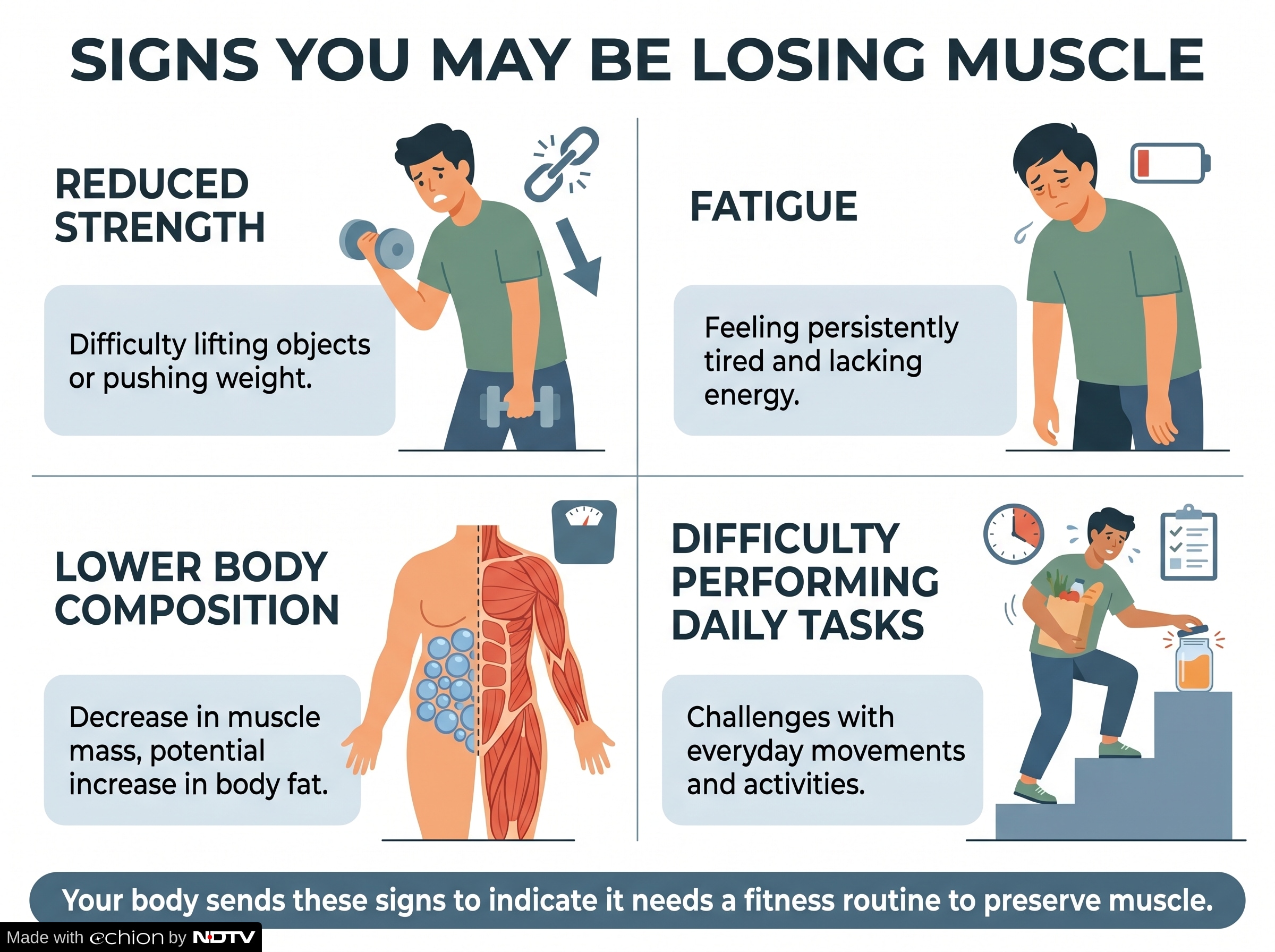
Signs You May Be Losing Muscle
Your body sends signs that can indicate that it may be losing muscle and needs a fitness routine that can preserve it. If you are experiencing the following:
- Reduced strength
- Fatigue
- Lower body composition
- Difficulty performing daily tasks
Then, you need to rethink your fitness routine and make sure to practise resistance training exercises for better muscle preservation.
Simple resistance training at home is effective and can be followed consistently. You need to focus your efforts on maintaining consistency instead of focusing on intensity. For long-term muscle health, you need a fitness routine that balances practical fitness solutions and an exercise regimen that can work for you.
Disclaimer: This content including advice provides generic information only. It is in no way a substitute for a qualified medical opinion. Always consult a specialist or your own doctor for more information. NDTV does not claim responsibility for this information.