

)
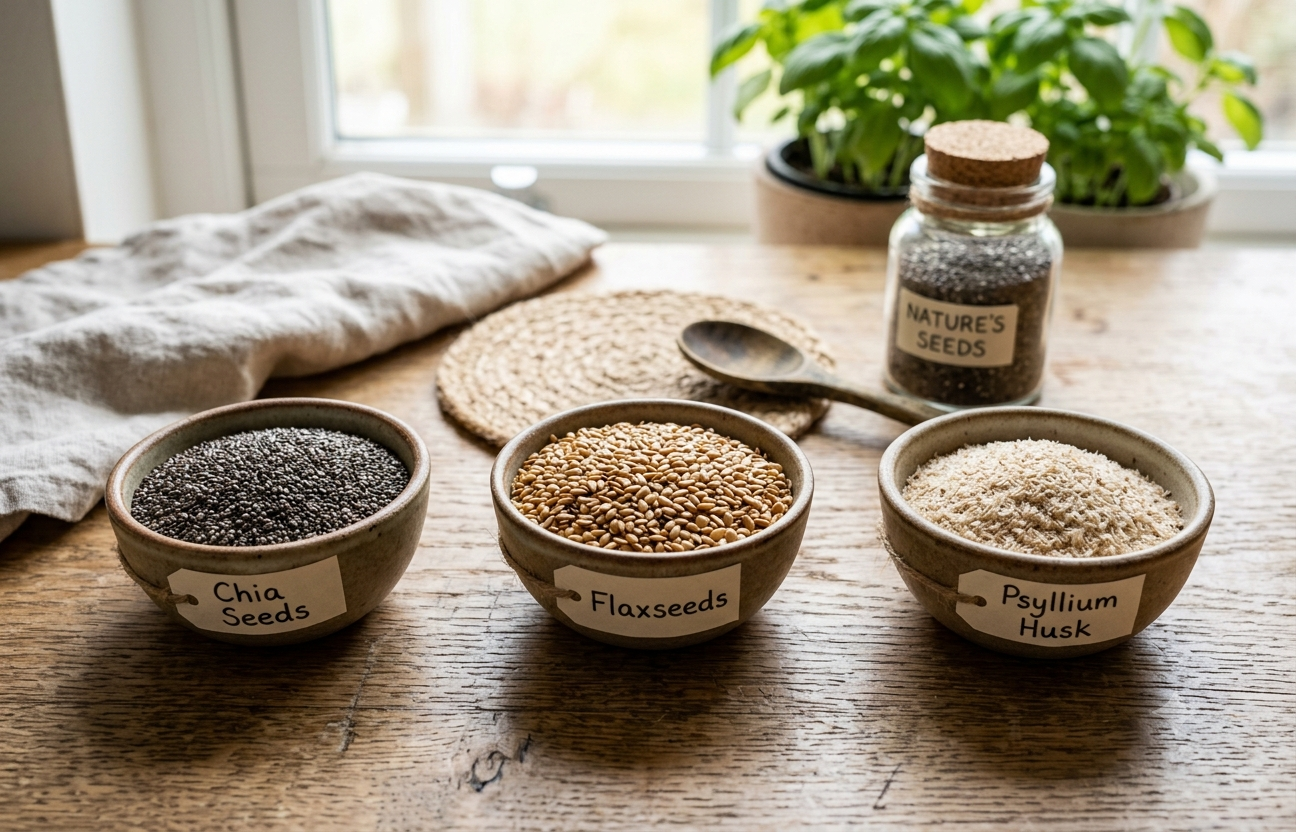
Fibre is an essential aspect for digestion and heart health, as well as metabolic health. People need to keep their fibre intake balanced if they want to keep their physical health in top shape. But how they receive this fibre solely depends on their daily dietary choices. Consuming a combination of foods that are rich in insoluble and soluble fibre is essential for the body to function. Each of these high-fibre sources present in chia seeds, flaxseeds, and psyllium husk is responsible for providing fibre in varying qualities.
The exact composition of fibre in each of these seeds affects the body differently, and some people may not be suitable for the health benefits of these foods, as they have pre-existing digestive challenges. Recently, the trend of fibre maxing for maximum health benefits is gaining traction, and rightly so, as most Indians are efficient in their daily fibre intake and don't know it. But how you receive this fibre, as well as how you regulate the dose of the fibre according to the type, needs to be understood.
What Is Fibre, and Why Does Your Body Need It?
Research published in Nature Food Journal mentions that fibre needs to be a daily part of your diet, as it is a carbohydrate that supports heart health and gut health, as well as overall fullness. Fibre can be in the form of insoluble and soluble fibre, which is needed in the body as it helps in multiple bodily functions.
Fibre mainly functions as an essential nutrient that can reduce the risk of developing chronic disease. Consuming a fibre-rich diet is important for your gut microbiome, as it actively helps in keeping your intestines healthy and supports normal digestive function.
Understanding The Two Main Types Of Fibre
Mainly, your body needs two types of fibre that are present in chia seeds, flaxseeds, and psyllium husk in maximum amounts. When soluble fibre is concerned, it tends to dissolve in water, forming a gel-like substance that could coat the intestinal lining and act as a barrier for unwanted substances that enter your digestive system.
The Journal of Food Biochemistry details that chia seeds and flax seeds function as healthy dietary choices that could lower cholesterol and improve heart risk factors. Overall, the lipid profiles could see an improvement with the timely and effective addition of chia seeds and flax seeds to your diet.
Insoluble Fibre
Unlike its soluble counterpart, insoluble fibre does not dissolve in water and remains largely intact as it travels through the gastrointestinal tract. Here is how it helps:
- Adds bulk to stool: It acts as a structural sponge, attracting water to add volume and soft texture to waste material.
- Supports bowel movements: By increasing stool bulk, it stimulates peristalsis, which is the continuous muscular contractions of the intestines, which speed up transit time.
- Helps prevent constipation: Efficient transit time prevents waste from remaining in the colon for too long, reducing the risk of dry, hard stools and chronic constipation.
Chia Seeds: The Fibre That Expands In Water
Chia seeds (Salvia hispanica) possess a distinct mucilaginous coating that absorbs up to 10-12 times their weight in water, forming a thick, gelatinous gel when exposed to liquid. Chia seeds comprises of roughly 80% insoluble and 20% soluble fibre, chia seeds provide dual-action support for the digestive tract. The outer hull swells rapidly in fluids, creating a high-volume gel that coats the stomach lining and slows gastric emptying.
A study published in the journal Nutrients demonstrates that the soluble mucilage in chia seeds forms a viscous matrix in the gut, which significantly delays carbohydrate digestion, improves postprandial glycaemic control, and fosters a favourable environment for beneficial gut microbiota.
Potential Benefits Of Chia Seeds
- Increased Satiety: The expanding gel expands inside the stomach, signalling fullness to the brain and delaying hunger pangs.
- Digestive Support: The combination of gel and insoluble husk sweeps through the intestines smoothly, aiding regularity without harsh irritation.
- Blood Sugar Regulation: Slowed gastric absorption prevents sudden glucose spikes after carb-heavy meals.
- Weight Management Support: Prolonged fullness reduces overall daily caloric intake when integrated into a calorie-controlled diet.
Best For:
- Long-lasting fullness between meals
- Balanced daily fibre intake
- Weight-loss diets requiring appetite suppression
Flaxseeds: Fibre-Plus Plant-Based Omega-3s
Flaxseeds (Linum usitatissimum) offer a uniquely dense concentration of functional lipids alongside dietary fibre. However, whole flaxseeds often pass through the digestive system undigested due to their tough outer hull; grinding them is essential to unlock their nutritional bioavailability. Here is how flaxseeds help:
- Rich Fibre Matrix: Ground flaxseed delivers a roughly 2:1 ratio of insoluble to soluble fibre.
- Alpha-Linolenic Acid (ALA): One of the richest plant-based sources of ALA, an essential omega-3 fatty acid known for reducing systemic inflammation.
- Phytoestrogenic Lignans: Contains up to 800 times more lignans than other plant sources, offering potent antioxidant and hormone-balancing properties.
According to research published in the Journal of Food Science and Technology, regular consumption of ground flaxseeds significantly reduces total cholesterol and low-density lipoprotein (LDL) cholesterol, while its lignan content helps mitigate markers of systemic metabolic inflammation.
Benefits Of Flax Seeds
- Gut Health Support: Forms a soothing mucilage that calms the intestinal lining while feeding healthy microbiome strains.
- Heart-Health Benefits: Reduces vascular inflammation and supports arterial flexibility via essential omega-3 fatty acids.
- Cholesterol Support: Soluble mucilage binds intestinal bile salts, facilitating cholesterol excretion.
Best For:
- Cardiovascular protection and lipid management
- Hormonal health and endocrine support
- Every day, dietary fibre enhancement in daily meals
Psyllium Husk: The Fibre Supplement A Doctor Often Recommends
Derived from the seed coats of the Plantago ovata plant, psyllium husk is an almost pure form of soluble, gel-forming fibre. Unlike chia or flax, psyllium is a concentrated non-starch polysaccharide material with minimal caloric, fat, or protein value.
Benefits Of Psyllium Husk
- Supports Bowel Regularity: Its non-fermentable nature means it retains water throughout the entire length of the colon without producing excessive gas or flatulence.
- Helps Soften Stools: Soaks up fluid in the bowel to form a soft, easily passable mass, alleviating pain in conditions like haemorrhoids or anal fissures.
- May Help Cholesterol Management: Consistently documented to lower serum LDL cholesterol levels when taken daily before meals.
- May Support Blood Sugar Control: Forms a dense intestinal matrix that dampens glucose spikes, particularly in individuals with type 2 diabetes.
A clinical trial published in the American Journal of Clinical Nutrition confirmed that therapeutic doses of psyllium husk significantly improve glycaemic control and lipid profiles in diabetic and hypercholesterolemic patients, outperforming many non-pharmacological dietary interventions.
Best For
- Clinical constipation relief and irritable bowel syndrome (IBS)
- Targeted therapeutic fibre supplementation
- Managing chronic digestive motility issues
Which Fibre Is Best For Constipation?
When addressing sluggish bowel movements and constipation, psyllium husk consistently demonstrates superior clinical efficacy.
"Psyllium husk remains our primary clinical recommendation for constipation because it is a non-fermentable viscous fibre," explains Dr Shubham Vatsya, Senior Consultant, Gastroenterology, Fortis Hospital, Vasant Kunj, New Delhi. "Unlike highly fermentable fibres that gut bacteria break down rapidly, which often causes excessive gas, severe bloating, and abdominal cramps, psyllium retains water all the way through the colon. It creates a bulkier, softer stool that moves smoothly through the bowel."
While chia and flaxseeds also aid bowel regularity when taken with abundant hydration, their high fat and protein content requires more complex digestive processing, making them better suited for daily maintenance rather than acute constipation relief.
Is Psyllium Husk Better Than Chia Seeds For Constipation?
Yes. Psyllium husk is clinically more effective than chia seeds for relieving constipation. Psyllium consists predominantly of non-fermentable soluble fibre that retains moisture throughout the entire colon, creating bulkier and softer stools with a lower risk of gas and bloating. Chia seeds aid general regularity but rely heavily on high water intake to prevent compacting in the GI tract.
Which Fibre Is Best For Weight Loss?
No single dietary fibre directly burns fat; rather, fibre supports weight management by promoting satiety, stabilising blood sugar, and curbing calorie intake.
- Chia Seeds: Excellent for satiety. Their ability to expand up to 12 times their weight in fluid fills physical volume in the stomach, delaying hunger signals.
- Psyllium Husk: Slows gastric emptying significantly when taken 20-30 minutes before meals, reducing post-meal insulin spikes and appetite.
- Flaxseeds: Combines plant-based fats with soluble fibre, providing sustained metabolic energy and fullness.
Chia seeds offer the strongest satiety signal per serving due to their gel-expansion property, making them ideal for weight-loss meal plans.
Which Fibre Is Best For Heart Health?
While all three sources support cardiovascular health through soluble fibre's lipid-binding action, flaxseeds hold a slight edge for overall vascular protection.
Flaxseeds combine cholesterol-binding soluble fibre with high levels of alpha-linolenic acid (ALA) and antioxidant lignans, targeting arterial inflammation alongside blood lipid levels. Psyllium husk, however, remains the most potent tool specifically for lowering elevated LDL cholesterol.
Can You Take All Three Together?
Yes, combining chia seeds, flaxseeds, and psyllium husk is safe and can provide a comprehensive spectrum of soluble, insoluble, and anti-inflammatory nutrients.
"Combining small amounts of different fibre sources can be beneficial for gut diversity," notes Dr Shubham Vatsya. "However, the golden rule is moderation and gradual introduction. Throwing large amounts of three different fibrous seeds into your digestive tract overnight will almost certainly lead to severe bloating, cramping, and paradoxical constipation if your water intake isn't sufficient."
Start Small: Begin with half a teaspoon of one source and increase gradually over 2-3 weeks.
Hydrate Constantly: Fibre absorbs water rapidly; inadequate fluids can cause intestinal blockage.
How Much Fibre Do Adults Need Daily?
Health authorities, including the World Health Organization (WHO) and ICMR, recommend that adults consume between 25 and 30 grams of dietary fibre daily. Most modern urban diets deliver less than half of this requirement.
When increasing fibre intake through seeds or supplements, fluid consumption must increase proportionally, aiming for at least 2.5 to 3 litres of water daily to allow fibre to pass smoothly through the digestive system.
Common Mistakes People Make With Fibre
1. Increasing Intake Too Quickly: Doubling fibre intake overnight causes bacterial fermentation overload, resulting in gas, pain, and flatulence.
2. Inadequate Hydration: Consuming dry or semi-hydrated psyllium or chia without sufficient fluid can lead to faecal impaction or oesophageal obstruction.
3. Relying Solely on Supplements: Fibre supplements lack the essential vitamins, minerals, and phytonutrients found in whole fruits, vegetables, and whole grains.
4. Consuming Whole Flaxseeds Unchewed: Whole flaxseed hulls resist digestive enzymes and pass through the body completely unabsorbed.
You need to balance your intake of all three to ensure your fibre intake is adequate.
Also Read: "Fibre Is Your Gut's Primary Fuel," Says Doctor; Tips To Increase Fibre Intake
Disclaimer: This content including advice provides generic information only. It is in no way a substitute for a qualified medical opinion. Always consult a specialist or your own doctor for more information. NDTV does not claim responsibility for this information.