

)
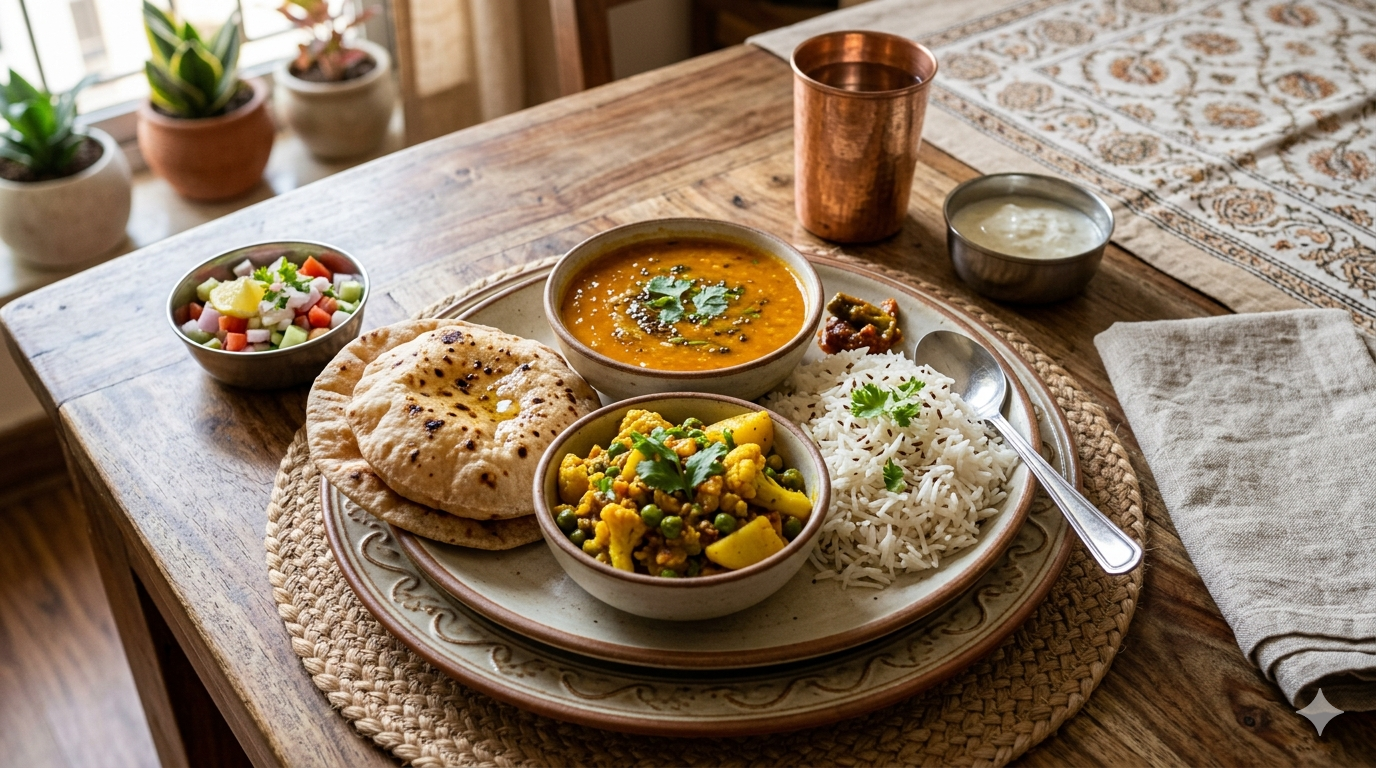
Poha or upma in the morning. Dal, sabzi, roti, and curd packed for lunch. Rice and curry at night. Maybe a salad alongside. No Swiggy order. No packet from the freezer. By every measure most Indian families use to judge themselves, this is eating well. And yet the kurtas keep getting altered. The annual check-up throws up numbers that weren't there before. The weight crept in quietly, over months, over years, and nobody can quite explain when or how.
The ICMR's biggest-ever national food study, published in Nature Medicine last September, surveying over 1.2 lakh adults across all 36 states, did not find that Indians are gaining weight because they are eating badly in the obvious sense. It found that Indians are gaining weight because of how home food is structured, how much of it there is, and when it lands in the body. The food being made at home is not the villain. But the assumptions surrounding it may well be.
ICMR-INDIAB Study
The ICMR-INDIAB study found that 62% of total daily calories in Indian diets come from carbohydrates, which is one of the highest proportions recorded anywhere in the world. Not from mithai or cold drinks. From white rice, milled grains, and the low-grade sugar that runs quietly through Indian cooking: the spoon in the chai, the sweetness in the sabzi, the refined flour in the biscuit that appears at every office desk at four in the afternoon. Twenty-one of thirty-six states had already crossed national sugar guidelines. Protein, meanwhile, sat at just 12% of daily calories, which is roughly half of what the body needs to stay metabolically stable.
What struck the most in the study's findings was this: swapping white rice for millets made no meaningful difference to metabolic risk when the total carbohydrate load stayed the same. This is the part the wellness industry does not want to say clearly. The grain is not the problem. The proportion is. Every meal, every day, from the first chai to the last roti, is built around carbohydrates, and the body, after years of this, stops managing that load efficiently.
India's Oil Consumption
India's per capita edible oil consumption has nearly doubled over the past two decades, from roughly 8-9 kilograms per person per year in the early 2000s to close to 20 kilograms today, according to NITI Aayog data. In the 1950s, that number was 3.4 kilograms. FSSAI has formally flagged that most Indians are consuming well above the safe daily limits, and that one tablespoon of oil contains 120 calories.
In Indian home kitchens, oil is not measured. It is poured. It goes into the base of the sabzi, the tadka of the dal, the tawa under the roti, the shallow fry for the papad. Nobody is being careless. This is simply how the food is made. But a thoughtfully prepared dinner for a family of four can carry 360 to 480 calories from oil alone before the rice is served. That is not a problem with the cooking. It is a problem with never having counted.
Meal Timing
The body does not treat a 7 PM meal and a 10:30 PM meal the same way. Insulin sensitivity, the body's ability to process carbohydrates cleanly and efficiently, is highest in the morning and declines steadily throughout the day. By late evening, the same plate of dal and rice that the body would have handled well at lunch is now arriving at a liver that is winding down, not ramping up.
Most urban professionals in India eat dinner after nine at night. It is understood why. The commute, the workday, the children, the kitchen. None of that is optional. But the body has no mechanism for adjusting its internal clock to accommodate a delayed train. Late-night eating pushes a glucose and fat load onto the liver exactly when it should be in repair mode. This is the most plausible explanation for why one in three urban Indians now has fatty liver. A number that has no meaningful relationship to junk food and every meaningful relationship to when the food arrives, and in what volume, after dark.
Tracking Calories
A full plate in an Indian home is an act of love. Offering seconds is hospitality. Sending someone away without offering more food is almost considered rude. These are not things to discard. They are part of what makes Indian food culture warm and generous. But generosity at the table collides with a body that is spending ten to twelve hours a day seated, and that arithmetic does not work in the body's favour.
An aloo paratha is roughly 350 calories. Chole bhature clears 500. A ghee dosa lands between 400 and 500 depending on size. None of these feels like treats. They feel like regular meals, because they are. The deeper issue is that foods carrying the 'healthy' tag- that is the dal, curd, ghee, rice- are consumed without any sense that volume matters for them too. It does. Healthy is not a synonym for limitless, and in a body that is no longer moving the way bodies once moved, the surplus finds somewhere to go regardless of how it was cooked.
I am not asking anyone to stop eating home food or to start treating dinner like a pharmaceutical calculation. I am suggesting three specific changes that require no new ingredients, no abandoned traditions, no unfamiliar recipes.
- First: Put a real protein source on every plate. Could be a larger portion of dal or pulses or edamame or soya or paneer or tofu with some curd or hung curd (more protein and calcium dense than regular curd) for vegetarians. For non vegetarians they could add to the above mentioned options - two egg white or chicken or fish (not fried though) for non vegetarians. The purpose is to create a well demarcated, non negotiable place for proteins rather than letting carbohydrates fill the plate by default.
- Second: Eat the biggest meal at midday, when the body's metabolic engine is running at full capacity, not at ten at night when it is not. And for dinner ensure you consume protein and a generous amount of fiber in the form of veggies without fail.
- Third: Measure your oil once. Just once, for a week and find out what you are actually pouring versus what you think you are.
Home food is not the problem. The idea that home food needs no attention is. The body does not award points for good intentions or clean kitchens. It works with what it receives. The composition, the timing, the volume. The families gaining weight on dal and roti are not doing anything wrong by any cultural measure. They simply haven't been told that even the right food, at the wrong time, in the wrong proportion, asks the same questions of the body that any other food does.
Disclaimer: The opinions expressed within this article are the personal opinions of the author. NDTV is not responsible for the accuracy, completeness, suitability, or validity of any information on this article. All information is provided on an as-is basis. The information, facts or opinions appearing in the article do not reflect the views of NDTV and NDTV does not assume any responsibility or liability for the same.