

)
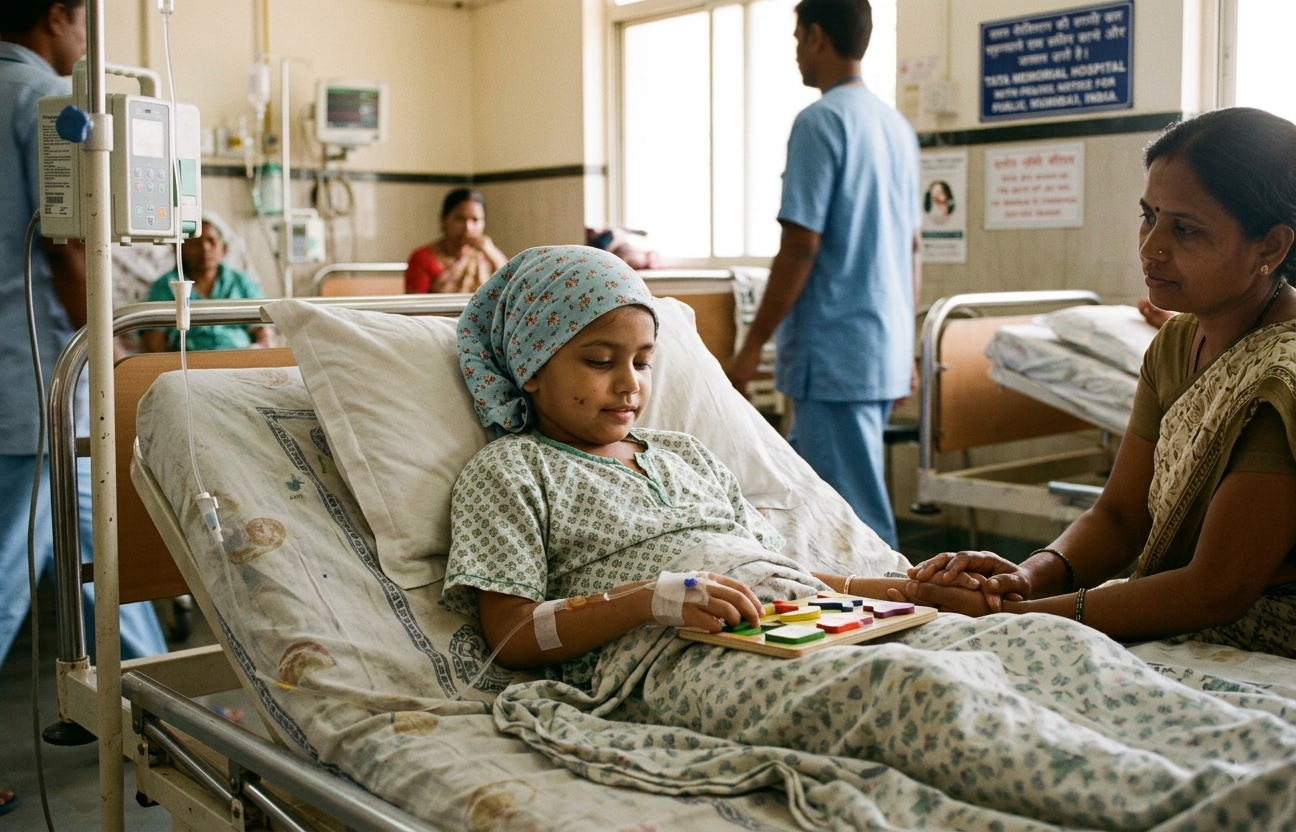
Every September, as Childhood Cancer Awareness Month comes around, I return to a truth I have carried through more than a decade of practice. In India, childhood cancer is, more often than not, a curable disease that fails its patients for reasons that have nothing to do with medicine. The protocols exist. The drugs exist. The evidence is settled. What is missing, time and again, is early diagnosis. A family and a doctor recognising, soon enough, that something is not quite right.
If there is one thing I want every parent to understand, it is this: a child is not a small adult, and childhood cancer rarely announces itself the way we expect illness to. There is no dramatic collapse, no single unmistakable symptom. It arrives quietly, dressed up as things every child experiences. A bit of tiredness. A fever that comes and goes. A bruise that seems a little too easy to explain away.
So what should parents watch for?
-
Unexplained, persistent fatigue
Every child gets tired. But a child who is consistently pale, listless, or uninterested in play for weeks, without an obvious cause, deserves a blood count, not reassurance alone.
-
Fevers that don't behave like ordinary infections
A fever that keeps coming back without a clear source, lingers beyond the usual course of a viral illness, or comes along with bone or joint pain is worth investigating rather than waiting out.
-
Unusual bruising or bleeding
Children fall, and bruises are part of childhood. But bruises that appear without any injury, bruises in unusual places like the back or trunk, or tiny red spots on the skin can point to a falling platelet count and need to be checked.
-
A lump or swelling that persists
Most swollen glands in children are reactive and settle on their own. One that keeps growing, does not go away in a few weeks, or appears alongside other symptoms should be examined.
-
Bone or joint pain without an injury
In young children especially, pain severe enough to affect walking or sleep, without a fall or a fever to explain it, should never be dismissed as growing pains without a closer look.
-
Unexplained weight loss or loss of appetite
A child who is eating less and losing weight over weeks, for no obvious reason, is telling you something. The growth chart will confirm it.
-
Changes in vision or balance, or headaches that wake a child from sleep
These can be signs of tumours in the brain or spine and need prompt evaluation.
Let me be clear about one thing. None of these symptoms, on their own, means cancer. The vast majority of children with a fever, a bruise, or a lump will turn out to be perfectly fine, and that is, mercifully, the rule rather than the exception. But paediatrics is built on knowing which child in the waiting room cannot be sent home. That knowing starts with parents who trust their instinct enough to ask for a simple blood test when something feels off for too long. Early diagnosis is not a matter of luck. It is a matter of access, awareness, and a system willing to listen the first time.
This Childhood Cancer Awareness Month, my message to parents is simple. Don't wait for certainty before asking for a test. The children I treat teach me every day what it means to hope.
(Dr. Silky Jain, Chief, Paediatric Haematology and BMT, and Founder-CEO of Lavender Lane)
Disclaimer: The opinions expressed within this article are the personal opinions of the author. NDTV is not responsible for the accuracy, completeness, suitability, or validity of any information on this article. All information is provided on an as-is basis. The information, facts or opinions appearing in the article do not reflect the views of NDTV and NDTV does not assume any responsibility or liability for the same.