

)
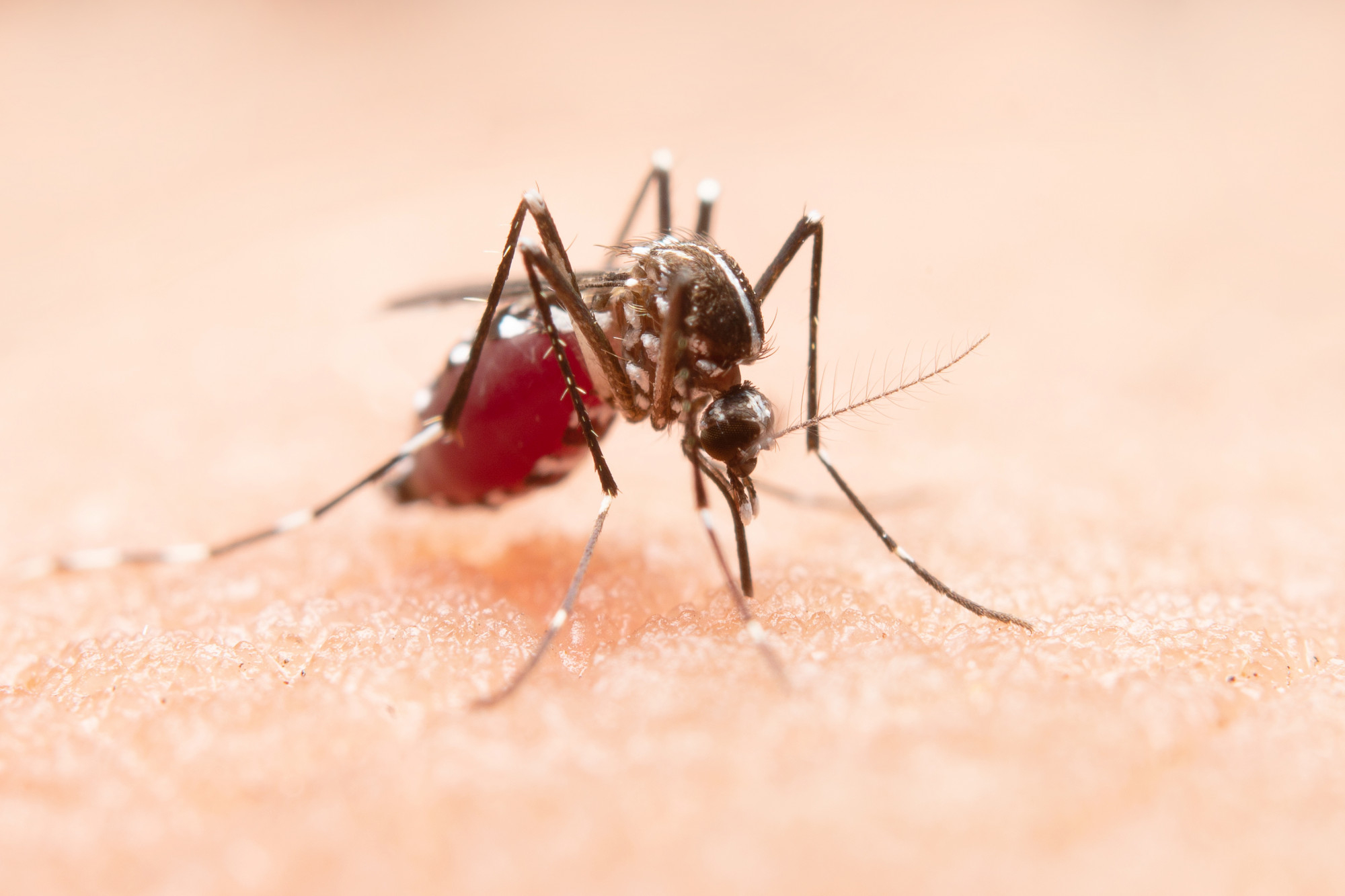
Brazilian scientist Luciano Moreira tenderly handles a glass box of swarming mosquitoes infected with a bacterium that blocks the transmission of dengue. These mosquitoes have protected millions in Brazil, but the debilitating disease is spreading faster than the insects can be bred and shipped around the immense country. Climate change "accelerates the spread of the virus. In the south of the country, which used to be much colder, there was no dengue before, but now there is," Moreira, 59, told AFP. The world's largest breeding factory for the mosquitoes -- nicknamed "wolbitos" after the Wolbachia bacterium they were injected with -- is located in the southern city of Curitiba.
Employees drip with sweat in the breeding room, set to an ideal temperature for the Aedes aegypti mosquitoes, which are confined in large, brightly lit cages made of translucent fabric.
The "wolbitos" are fed a pungent combination of warm horse blood and sugar water.
The bio-factory, inaugurated in 2025, can produce up to 100 million eggs per week that are stored in capsules and shipped to their final destinations in urban areas where they will hatch.
Over the next months these "wolbitos" -- which also have a reproductive advantage over normal mosquitoes -- slowly displace those that transmit dengue, as well as Zika and chikungunya, other mosquito-borne viral diseases.
- 'A decisive moment' -
The method of infecting the mosquitoes was first developed in Australia in 2008 by a team which included the entomologist Moreira.
He was recognized in 2025 by Nature magazine as one of the world's top 10 scientists, and this year was named one of Time magazine's 100 most influential people.
To protect the secrets of the method, no photographs can be taken of equipment in the bio-factory.
The anti-dengue mosquitoes have been introduced to 15 countries, but nowhere have they protected as many people as in Brazil -- an estimated six million people since 2011, when Moreira first began testing the method.
However, more than 200 million are still at risk in the vast nation, where more than 6,000 people died during a 2024 outbreak of dengue, which causes joint and bone pain, earning it the nickname "breakbone fever."
The virus can provoke hemorrhagic fever in severe cases, and even death.
"We are at a decisive moment to expand in Brazil," said Moreira.
In two cities where the method was scientifically tested -- Niteroi, near Rio de Janeiro, and Campo Grande in central‑western Brazil -- dengue cases fell by 89 percent and 63 percent, respectively.
The left-wing government of Luiz Inacio Lula da Silva has recognized the "wolbitos" as a public health measure, but state bureaucracy has failed to match the pace of breeding.
"The factory had to scale back production because demand (from the health ministry) wasn't that high," said Moreira.
- No 'magic bullet' -
Biologist and epidemiologist Ludimila Raupp, a professor at the Pontifical Catholic University of Rio, said there is an "urgent need" to expand the project but it "is not easy."
She said in Rio de Janeiro, for example, implementation of the project has suffered "serious flaws" and "institutional lack of coordination."
Local health teams hampered its effectiveness with heavy use of larvicides that are harmful to the Wolbachia-infected mosquitoes, said Raupp.
Meanwhile, violence linked to organized crime has interfered with the release of the mosquitoes in the city's sprawling favelas, said Moreira.
Expanding this program presents "technical, operational, logistical, and financial" challenges, Brazil's Health Minister Alexandre Padilha told AFP.
Nevertheless, the Wolbachia method is set to be implemented in 54 new cities this year, bringing the total number of participating municipalities to 70.
Moreira said the method is not a "magic bullet" against dengue, but rather a strategy that is "complementary" to other measures, such as vaccines.
Brazil last year developed the world's first single-dose vaccine against dengue, and India is in the final stages of testing another.
(Except for the headline, this story has not been edited by NDTV staff and is published from a syndicated feed.)