

)
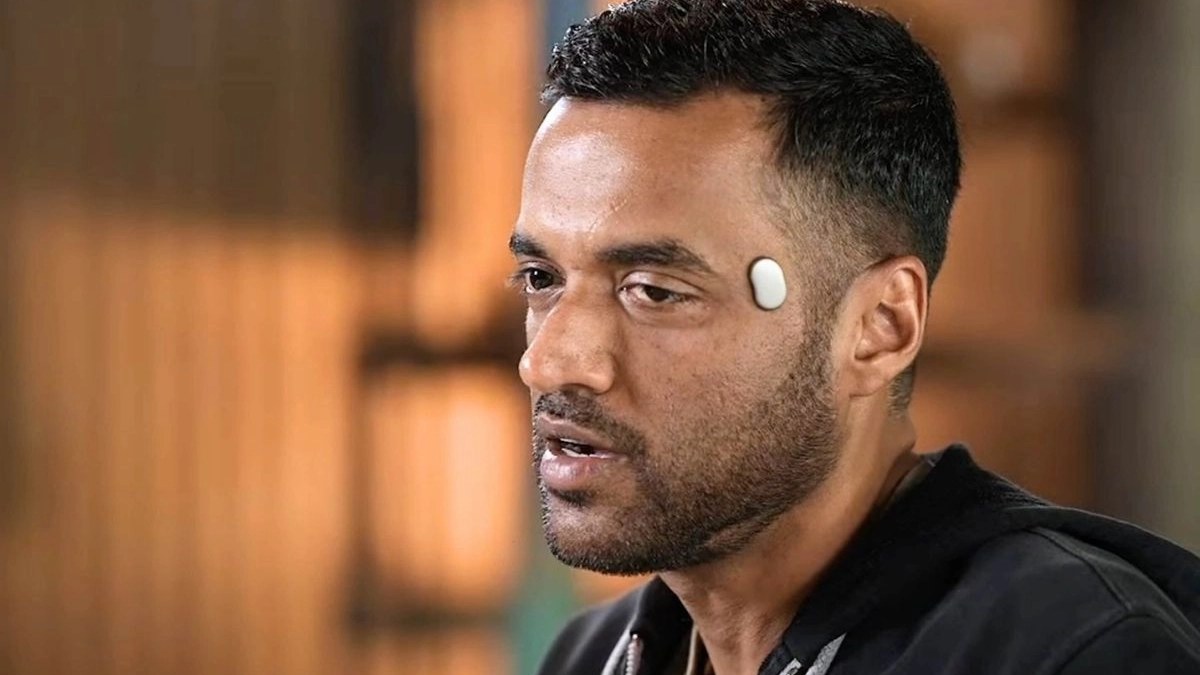
Temple wearable is creating significant buzz in the fitness industry. Deepinder Goyal, founder of Zomato and Eternal, recently announced that the Temple device will soon be available in six colours. Unlike conventional smartwatches or fitness trackers that are worn on the wrist, Temple is a pill-shaped device that is worn on the side of the head, near the temple area. It employs light-based sensing technology to track cerebral blood flow and oxygenation in real time, marketed as BrainFlow. Till now, Goyal, PV Sindhu and a handful of people have been spotted wearing the device ahead of its commercial launch.
While Goyal has been constantly sharing updates on the Temple wearable, its functioning and features on X, in one of the comments on his post, he has clarified the age restrictions for using the Temple device.
"Does it have any age restriction of sorts - like minimum of 22 yrs or something? Because if the temple is going to detect brain signals & monitor the waves etc - doesn't it need at least a maturing lobe rather than a developing one?" an X user asked in the comments.
To which Goyal replied, "We use a PPG sensor. Same as Apple Watch and other wearables. Nothing in there which can hurt a developing brain. Having said that, I don't see why anybody less than 18 years would need a Temple, unless they are aiming to go to the Olympics."
@VivanVatsa @temple We use a PPG sensor. Same as Apple Watch, and other wearables. Nothing in there which can hurt a developing brain. Having said that, I don't see why anybody less than 18 years would need a Temple, unless they are aiming to go to the olympics.
— Deepinder Goyal (@deepigoyal) October 4, 2026
Legally, the company's official Temple Terms of Use state that users must be at least 18 years of age to possess the legal capacity to register for the platform and use the device.

Photo Credit: Temple's Official Website
What is a PPG sensor?
Photoplethysmography (PPG) is a simple, non-invasive optical technique that uses light to measure changes in blood volume inside your body's blood vessels near the skin's surface. It is used in Apple Watch and other mainstream fitness trackers to monitor blood flow. While it does not emit anything that could harm a child's developing brain, Goyal mentioned that he doesn't see much reason for anyone under the age of 18 to wear a Temple device, unless they are an elite young athlete training for massive competitions like the Olympics.
READ | Deepinder Goyal Explains What The Temple Device Does, How To Use It
Does an under-18 brain need a wearable?
Wearables are designed to help individuals monitor health parameters and make necessary lifestyle changes. However, with the growing popularity on social media and endorsements by celebrities, wearables have become trendy items rather than just health trackers. As a result, individuals under 18 years old are increasingly inclined to buy or wear one.
"Your child's brain does not need a wearable to develop. I have seen parents buy a smartwatch thinking it will improve focus. It usually does the opposite. Most bands and watches use low-power Bluetooth. That signal is too weak to damage brain tissue. Research so far has not shown a direct risk there, though long-term data in kids is still limited," says Dr. Amlan Tapan Mohapatra, Associate Consultant - Neurology at Manipal Hospital, Bhubaneswar.
READ | Temple Device To Be Launched In 6 Colours, Says Deepinder Goyal: What Does The Device Measure?
How do they affect sleep and attention?
"If your child wears it to bed, the buzzing and the sleep score can keep them up. Losing even 45 minutes of sleep will affect recall and mood the next day at school. If notifications stay on, your child will check it every few minutes, and this habit is hard to break."
"Data is another issue. Many companies store your child's location and heart rate. That data gets shared," Dr. Tapan adds.
What should parents do?
"If you want to use one, do this. Turn off everything except calls from you. Remove the device after 8 pm. Keep it off during homework. Pick one that has no browser or social feed."
"Use it only if there is a medical reason or for safety while travelling," he advised.
Earlier, Dr Arun L Naik, an AIIMS-trained neurosurgeon, pointed out that it primarily tracks superficial scalp arteries rather than deep brain arteries, meaning it cannot replace clinical medical investigations.
Disclaimer: This content including advice provides generic information only. It is in no way a substitute for a qualified medical opinion. Always consult a specialist or your own doctor for more information. NDTV does not claim responsibility for this information.