

)
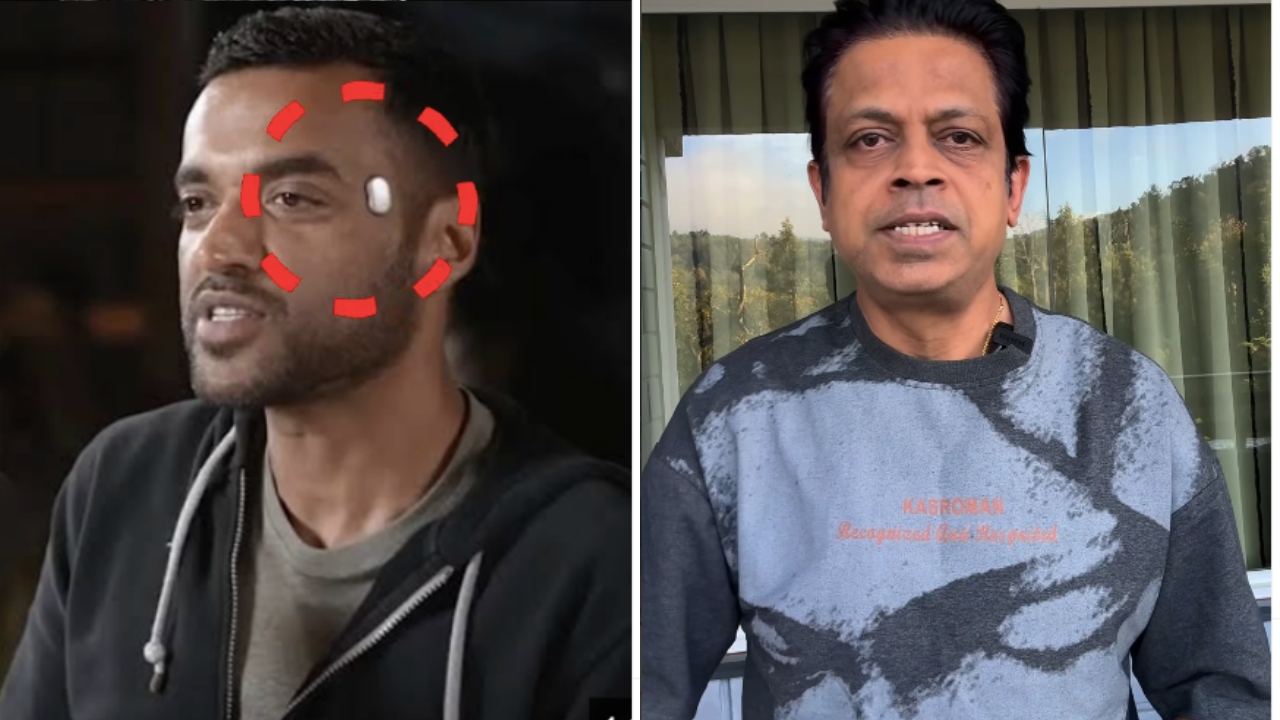
Deepinder Goyal, Zomato founder and former CEO, launched Temple as the smallest wearable on the market. The device claims to measure cerebral blood flow and calculate a proprietary metabolic metric called "Entropy" to help track cognitive load, stress, and signs of brain ageing. It has been promoted as a revolutionary leap in personal health. It attaches to your temple and connects to your phone via Bluetooth. Temple promises to monitor blood flow to the brain and enhance longevity. However, medical experts are urging consumers to look closely at the underlying clinical science before relying on the gadget for their neurological well-being.
Dr. Arun L. Naik, an AIIMS-trained neurosurgeon, recently took to Instagram to explain the device's reliability and called it a "Bluetooth bindi with a business plan of 500 crores." According to Dr. Naik, while the device is an impressive piece of consumer tech, it cannot replace actual clinical investigation.
Tracking the scalp, not the brain
Dr. Naik highlights that neurosurgeons routinely use light-based sensors while operating to measure brain oxygen. However, applying this technology to a consumer wearable introduces significant anatomical limitations.
"Put your finger on your temple. Feel that pulse? That's your superficial temporal artery. It feeds your scalp," Dr. Naik explains. "Your brain runs on deep arteries-the internal carotids and the vertebrals. None of them is sitting under your skin waiting to be measured."
According to the expert, for the device's light sensors to actually read brain blood flow, the light travels through the skin, scalp, blood vessels, muscle, and skull, and then bounces all the way back out. Dr. Naik describes this process not as a clean measurement, but as an "obstacle course" where every single anatomical layer adds noise. As a result, "many a time you are tracking your temple artery and calling it your brain, and then the app will tell you your brain is relaxed or tense," he said.
The doctor says that these devices may claim that "standing upright ages your brain faster. Please sit down. It's for your longevity." However, "The moment you get up, sensors in your neck fire, your heart adjusts, and your brain vessels regulate themselves to keep blood flow beautifully steady," he says. "Evolution installed this software for free, no subscription required," he added.
The company published its first study. It tracked 23 healthy adults and found that the device's readings matched an ultrasound of a major brain artery while the participants cycled and lay down. While encouraging, Dr. Naik points out a massive catch: "When healthy people exercise or lie down, scalp blood flow and brain blood flow usually rise together anyway. This means the sensor could simply be right for the wrong reason, like a student copying the topper."
Furthermore, he adds that a sample size of just 23 healthy volunteers is not a rigorous clinical validation study.
Brain blood flow naturally fluctuates all day due to sleep, coffee, stress, or a bad meeting. "Will I buy one? No. It's not FDA or CDSCO approved. Why? Because it's a wellness product, not a medical device."
"So at this stage, Temple should not be considered a replacement for validated neurological investigations. It has also NOT yet been proven to diagnose dementia, predict brain ageing, detect inadequate cerebral perfusion, or prove that gravity is slowly reducing blood supply to your brain. The technology may be promising. But promising technology is not the same as a clinically validated medical test," he concluded.
Disclaimer: This content including advice provides generic information only. It is in no way a substitute for a qualified medical opinion. Always consult a specialist or your own doctor for more information. NDTV does not claim responsibility for this information.