

)
The new COVID-19 subvariant, known as BA.3.2 and nicknamed the 'Cicada' variant, has raised a new health concern, especially for children. The Cicada variant, with more than 70-75 spike protein mutations, poses a health threat that needs to be addressed. According to a recent report, the variant has spread to 23 countries and is found in wastewater from 25 US states, according to the US Centers for Disease Control and Prevention, but its projected numbers may be higher as the testing has been scaled back. It was first detected in a respiratory sample collected on November 22, 2024, in South Africa. So, the number of actual infection cases may be higher than recorded.
Despite the mutated protein spikes, the World Health Organization and Ministry of Health and Family Welfare (MoHFW), along with ICMR (India), state that there is no immediate threat to public health. But the variant could pose a risk to children, as the variant is known to escape the developed antibodies from the vaccine previously administered. So, people should update, get a booster, and maintain the general health advisory practices, such as hand washing, maintaining hygiene by hand washing, and masking in public places.
While adults have fully developed immune systems that can be strengthened by the timely administration of the available vaccine, people need to take special care of their children, as the new subvariant is known to infect children five times higher rate than adults. This is becacuse with children who have an underdeveloped immune system, children and the at-risk immuno-compromised population also needs to pay special attention when they step out in public.
Why Children Are More Vulnerable
When it comes to existing research, reviews, and studies, such as Plos One, indicate that the SARS-CoV-2 infection affects children and adolescents more than adults, as their immune systems haven't been fully developed. Similarly, the case is with the new subvariant that has a mutation in its protein spikes, about 70 plus more mutations, which has escaped the current antibodies created by the vaccine administered.
There are significant immune system differences in children, as it is difficult to make them understand the seriousness of the disease. As well, their exposure to the outside environment is far greater as they play outdoors, go to school, and tend to be less mindful of the surfaces they are touching.
There is existing low coverage among the precautionary booster dose among kids, as the data remains self-reported, since the first two doses were administered with a specific time interval. This is why paying special attention to children's vulnerability should be the focal point for parents, guardians, paediatricians, and authorities. However, currently, the data, based on the most recent cumulative data from the Press Information Bureau (PIB) and the MoHFW Dashboard, shows the following figures are recorded for children aged 12-14:
- First Dose: 33,011,876
- Second Dose Precautions (Booster Dose): 14,474,859
While the exact population of children between the ages of 3 and 15 years of age exceeds 25 crore (250 million) in 2026, as per the Census of India data. Hence, a large portion of the Indian population is potentially vulnerable, and parents, guardians, paediatricians, and authorities need to take proactive measures to protect them from disease.
Official records specifically for a "third dose" in the 12-14 group are not currently isolated in general public press releases but are tracked via individual health IDs on the Immunization platform COWIN.
Also Read: Covid-19 Cicada Variant: Can Current Vaccines Protect Against BA.3.2 Subvariant?

Symptoms To Watch For
When it comes to the new subvariant, the symptoms of infection are similar and need to be taken seriously if you notice them in children. The symptoms of infection can be as follows:
- Cough
- Sore throat
- Congestion
- Shortness of breath
- Loss of taste and smell
- Vomiting
- Nausea
While these symptoms don't cause severe illness, if they occur after international travel or persist, you need to get your child tested.
Tips To Safeguard Children
As the new subvariant tends to spread faster in crowded indoor settings, people need to follow the following tips to safeguard the children:
- Masking in crowded indoor spaces is essential, not only to avoid infection, but the general rate of the common cough and cold is also reduced when you mask up.
- Hand hygiene and surface cleaning are pivotal to beat the spread of this virus; you need to keep your surroundings clean.
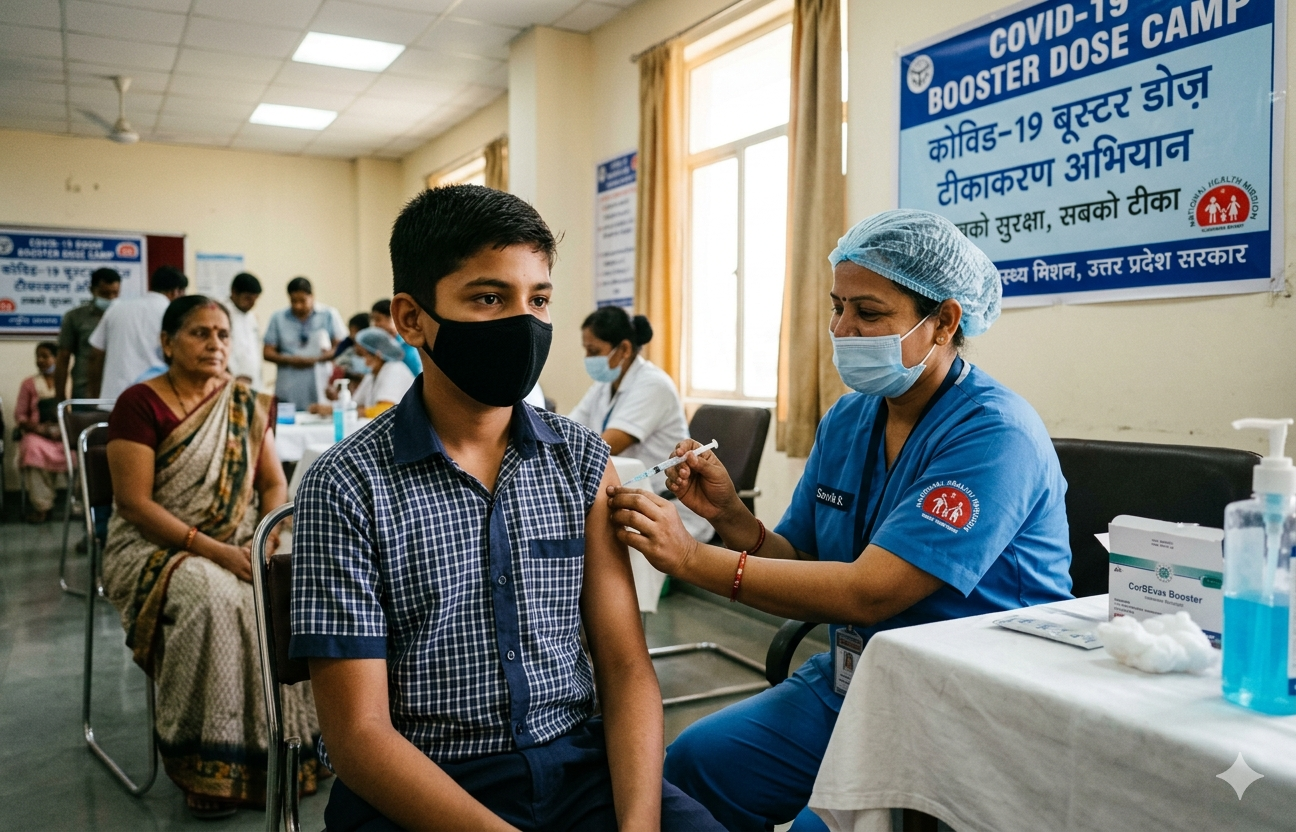
- Vaccination updates and booster eligibility should be checked as a priority, and get your child the booster dose if it has been skipped to build their immunity.
- School-level awareness is important so that children take the potential virus spread seriously, and ventilation is necessary as infections become common in non-ventilated spaces.
Also Read: Cicada Vs Previous Omicron Strains: What's Truly Different Between The Covid-19 Variants?
What Parents Should Know
Parents, guardians, and caretakers of children should know the exact timeline of when to seek help to prevent their child from suffering from the infection. While there are no reports as of April 6th, 2026, of any hospitalisations due to the new subvariant, people need to stay vigilant and be on guard.
- Seek medical help when there is a combination of symptoms that occur in children, and their severity matters for treatment.
- Home care can be used to manage symptoms, but if there is a chance of actual infection from travel and the severity is low, it is always better to consult a medical professional, as they can better guide parents on when children need hospital care for management of their symptoms.
- Mental health and reassurance are necessary to deal with the panic that is associated with the Covid virus. You need to keep yourself and your children safe from the infection and its fallout by keeping the medical protocol of vaccination up to date and keeping track of the development from the spread of the disease.
You need vigilance, not panic, as panic clouds logical judgement clouded. The community-level prevention strategies need to be deployed proactively to keep the children safe. There is currently no reported cases and a close watch is being paid by the WHO.
Disclaimer: This content, including advice, provides generic information only. It is in no way a substitute for a qualified medical opinion. Always consult a specialist or your own doctor for more information. NDTV does not claim responsibility for this information.