)
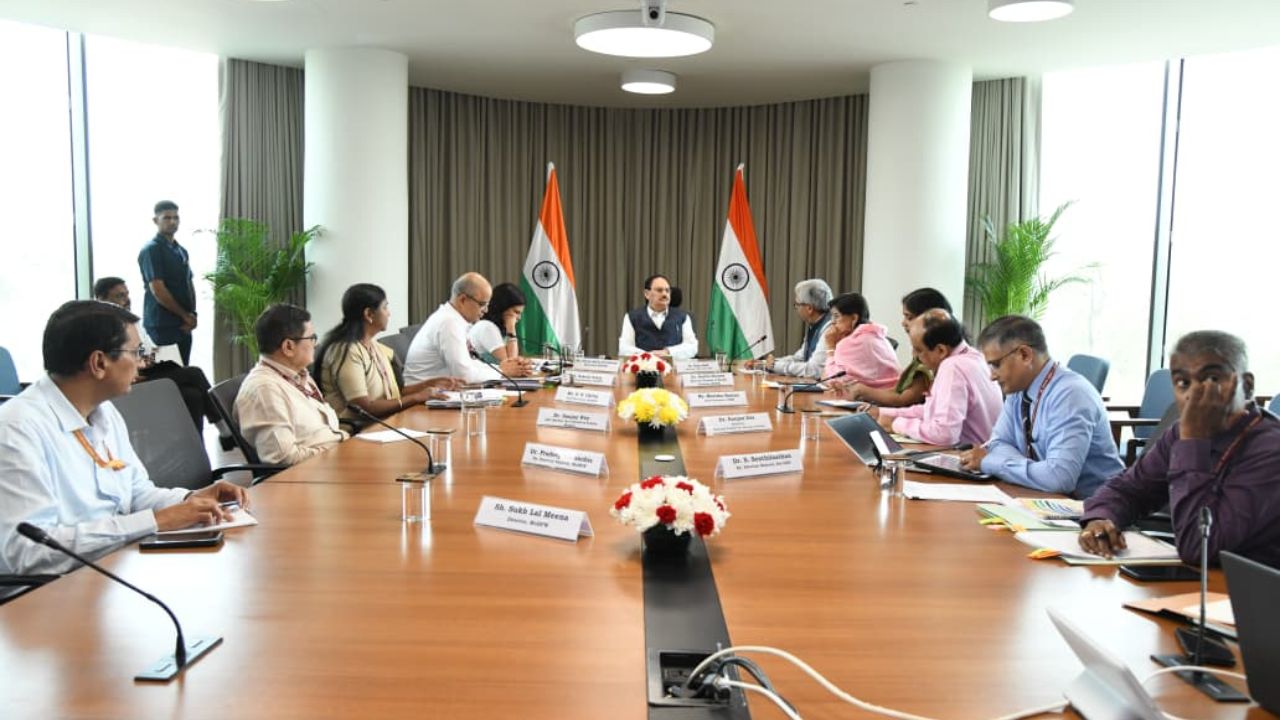
Union Health Minister J P Nadda unveiled a series of healthcare and digital health initiatives at the 16th Central Council of Health and Family Welfare (CCHFW) Conference on Monday, including a new digital platform for small clinics, an interoperable health network, a national drug registry, revamped anaemia guidelines, a roadmap to reduce maternal and newborn deaths, a unified child health programme and new standards for ambulance services.
Digital Health programs under National Health Authority
eSushrut@Clinic For Small Healthcare Facilities
Among the key announcements was the launch of eSushrut@Clinic, a government-backed, cloud-based Hospital Management Information System (HMIS) developed by C-DAC for small outpatient clinics, Primary Health Centres (PHCs), Health and Wellness Centres (HWCs), sub-centres and private clinics.
The lightweight platform has been designed to help smaller healthcare facilities digitise patient registration, billing, reporting and clinical workflows without the cost and complexity of conventional hospital management systems. It supports Ayushman Bharat Digital Mission (ABDM) services such as ABHA integration, Scan and Share, Clinical Decision Support System (CDSS), speech-to-text and digital health records.
The software will be free for the first three months, after which it will cost Rs 299 per month for five users under the subsidised scheme, with each additional user charged Rs 50. It can only be used by Healthcare Professional Registry (HPR)-verified doctors, while onboarding also includes the Health Facility Registry (HFR).
More than 800 health facilities have already been onboarded, generating over 680 health records. C-DAC is also implementing its larger eSushrut software across more than 15 AIIMS and several state government hospitals.
Unified Health Interface (UHI)
Nadda also launched the Unified Health Interface (UHI), an open digital network under ABDM that enables patients and healthcare providers to connect across different digital platforms instead of being restricted to a single application.
Built on open protocols using ABHA, the Healthcare Professionals Registry (HPR) and Health Facility Registry (HFR), UHI allows users to discover and book healthcare services irrespective of the application they use. The network permits participation only by verified healthcare providers.
Services currently available include doctor consultation bookings, ambulance discovery and booking, blood bank searches, Jan Aushadhi Kendra discovery and PM-JAY empanelled hospital searches.
The next phase will add laboratory diagnostics, vaccination booking, pharmacy discovery and access to services across government health programmes.
National Drug Registry
Another digital initiative unveiled at the conference was the Drug Registry, a standardised national database of medicines developed under ABDM in collaboration with the Central Drugs Standard Control Organisation (CDSCO) and the National Resource Centre for EHR Standards.
The registry becomes the fourth core ABDM registry after ABHA, the Healthcare Professionals Registry and Health Facility Registry. Built using international standards such as SNOMED CT, it currently includes more than 1.23 lakh branded medicines, 10,000 generic drugs and 29,000 substances. It supports searches by generic name, brand, manufacturer and substance, and offers open APIs for integration with hospital management systems, e-prescription platforms and other digital health applications.
Ayushman Sarathi WhatsApp Chatbot
The Health Minister also launched Ayushman Sarathi, a WhatsApp chatbot that provides round-the-clock access to PM-JAY services.
Beneficiaries can check eligibility, apply for or download Ayushman cards, complete eKYC, link Aadhaar, lock or unlock cards, access Ayushman Vaya Vandana services for those aged 70 years and above, view wallet balance and treatment history, locate empanelled hospitals, register grievances and submit feedback after discharge without visiting government offices or calling helplines.
Anaemia Strategy Expanded
The conference also saw the release of operational guidelines for the revamped Anaemia Mukt Bharat Abhiyaan, replacing the existing programme with a broader strategy that goes beyond iron supplementation to include testing, treatment, dietary interventions, digital tracking and community participation through Jan Bhagidari.
The programme expands the existing 6x6x6 strategy into a 7x7x7 framework by adding low birth weight babies as a beneficiary group, introducing the "Eating Right" initiative as an additional intervention and strengthening monitoring through digital tracking.
The strategy also shifts from the T3 approach-Test, Treat and Talk-to T4, adding beneficiary tracking for referral and follow-up. It introduces intravenous iron therapy using Ferric Carboxymaltose and Iron Sucrose for severe anaemia and non-responders among pregnant and lactating women, while integrating monitoring through the JANANI, U-WIN and RBSK platforms under a unified AMB portal.
Integrated Child Health Programme
Nadda launched the Samagra Shishu Bal Swasthya Karyakram (SSBSK), which merges the Home-Based Newborn Care and Home-Based Care for Young Child programmes into a single framework covering children from birth to 36 months.
The programme introduces a risk-stratified approach under which at-risk newborns will receive up to nine home visits during the first 42 days, while vulnerable children will receive up to eight home visits up to the age of three years. It also provides for joint home visits by ASHAs, Auxiliary Nurse Midwives, Community Health Officers and Anganwadi workers.
The programme incorporates maternal mental health screening, nurturing care for early childhood development, Well-Baby Sessions during Village Health, Sanitation and Nutrition Days, monthly Shishu Shivirs at Ayushman Arogya Mandirs and digital tracking through the JANANI, U-WIN, RBSK and POSHAN Tracker platforms using ABHA and Baal-ABHA IDs.
It also includes tailored strategies for urban slums and migrant populations and promotes age-appropriate play while discouraging excessive screen time in early childhood.
SUMAN Roadmap 2030
The Health Minister also released the SUMAN Roadmap 2030, a strategic framework aimed at reducing the Maternal Mortality Ratio to below 70 per one lakh live births by 2030, while also lowering neonatal and infant mortality rates.
The roadmap proposes customised interventions for 130 districts across 13 high-focus states-Assam, Bihar, Chhattisgarh, Haryana, Jharkhand, Karnataka, Madhya Pradesh, Odisha, Punjab, Rajasthan, Uttar Pradesh, Uttarakhand and West Bengal-while outlining strategies for all states and Union Territories.
It introduces structured tracking of high-risk pregnancies across antenatal, intrapartum and postnatal stages, pre-pregnancy folic acid supplementation, comprehensive nutrition interventions and a dedicated SUMAN Package for pregnant women.
Community-based measures include bi-weekly ASHA visits during the eighth and ninth months of pregnancy, SUMAN Panchayats and a "Mothers' Picnic" initiative to promote maternal and newborn health awareness.
The roadmap also proposes financial support for caregivers accompanying mothers after childbirth, strengthened referral transport, Birth Waiting Homes, Maternal and Child Health Wings, obstetric HDUs and ICUs in underserved areas, AI-enabled labour rooms, Non-Pneumatic Anti-Shock Garments for managing obstetric haemorrhage, enhanced maternal death surveillance, a climate-responsive action plan and a centralised SUMAN Call Centre.
National Ambulance Standards
Operational Guidelines for National Ambulance Services (NAS) 2026 were also released to establish uniform standards for emergency medical transport across states and Union Territories.
The guidelines prescribe norms for ambulance categorisation, population-based deployment, staffing, equipment, medicines, infection control, Emergency Medical Technician (EMT) training, vehicle maintenance, performance monitoring and grievance redressal, while mandating compliance with AIS-125 standards.
They also propose GPS-enabled Integrated Command and Dispatch Centres, GIS-based mapping of hospitals, ambulance bases and accident-prone areas, scientific deployment based on traffic patterns and emergency call volumes, and phased integration with the national emergency response number 112 to improve response times and referrals.
Disclaimer: This content including advice provides generic information only. It is in no way a substitute for a qualified medical opinion. Always consult a specialist or your own doctor for more information. NDTV does not claim responsibility for this information.