

)
The Centre has stepped up Ebola preparedness measures across the country after the World Health Organization declared the ongoing outbreak a Public Health Emergency of International Concern (PHEIC), with Union Health Minister JP Nadda reviewing surveillance and response mechanisms amid global concerns over the spread of the virus.
Officials said no Ebola case has been reported in India so far, but the government has intensified monitoring and preparedness as a precautionary measure.
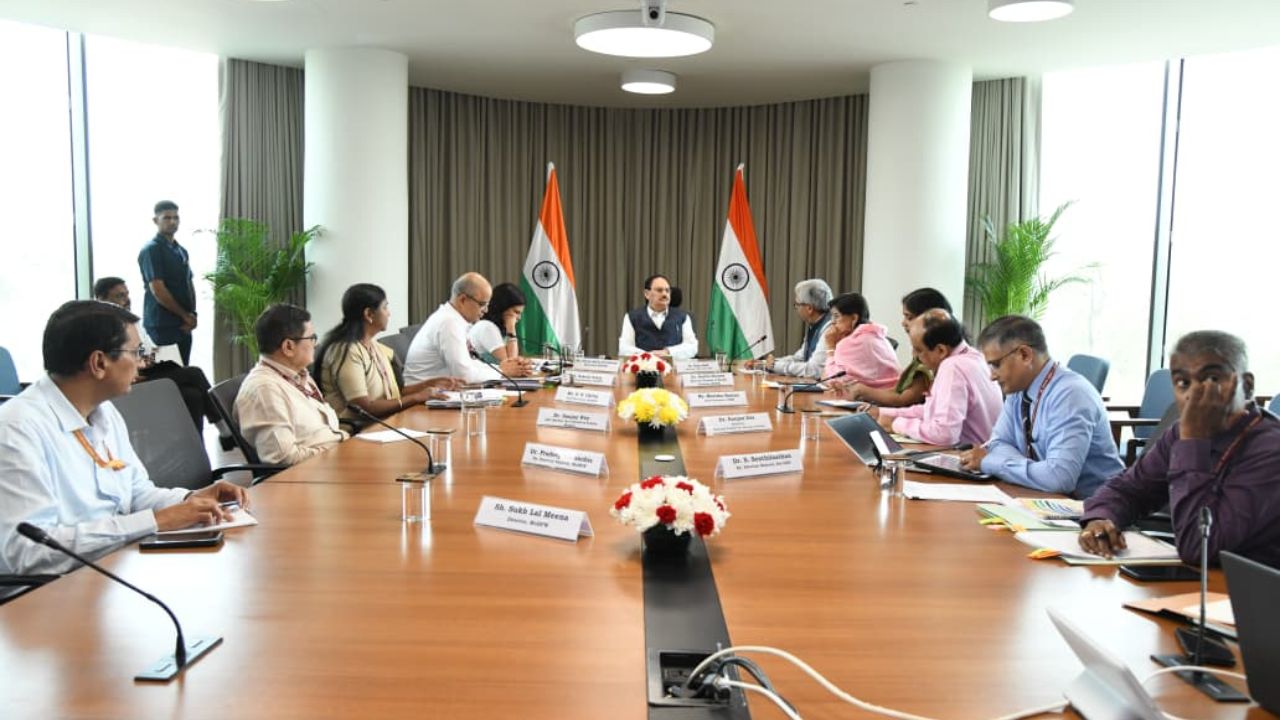
Nadda on Monday held a high-level review meeting with senior officials of the Union Health Ministry to assess the country's readiness to deal with any potential threat from the disease. Following his directions, the Health Secretary also chaired a joint review meeting involving officials from multiple ministries and concerned agencies to coordinate response measures.
The Health Minister directed authorities to ensure that Ebola screening arrangements at all points of entry, including airports, seaports and land border crossings to remain "fully vigilant and robust".
He also instructed the Indian Council of Medical Research and the National Centre for Disease Control to keep testing, tracking and surveillance systems in a constant state of readiness.
According to officials, surveillance at international entry points is being closely monitored, while health systems have been asked to maintain preparedness protocols in case of any suspected case.
The advisory asking Indians to avoid non-essential travel to the three African nations follows temporary recommendations issued by the WHO's International Health Regulations (IHR) Emergency Committee to enhance disease surveillance at international entry points and discourage travel to affected regions.
The current outbreak involves the Bundibugyo strain of the Ebola virus, for which there is no approved vaccine or specific treatment yet, according to WHO. The outbreak has primarily affected eastern DRC, with imported cases reported in Uganda. WHO said transmission risks are being heightened by cross-border movement and challenges in contact tracing in conflict-hit regions.
The Africa Centres for Disease Control and Prevention has separately designated the outbreak a Public Health Emergency of Continental Security (PHECS), enabling continent-wide coordination and emergency response measures.
WHO data released this week showed hundreds of suspected cases and deaths linked to the outbreak across affected regions in Central Africa.
Ebola Virus Disease is a severe and often fatal illness that spreads through direct contact with infected bodily fluids and contaminated materials. Authorities, however, maintained that there is currently no indication of domestic transmission risk in India and stressed that the measures are preventive in nature.
Disclaimer: This content including advice provides generic information only. It is in no way a substitute for a qualified medical opinion. Always consult a specialist or your own doctor for more information. NDTV does not claim responsibility for this information.