

)
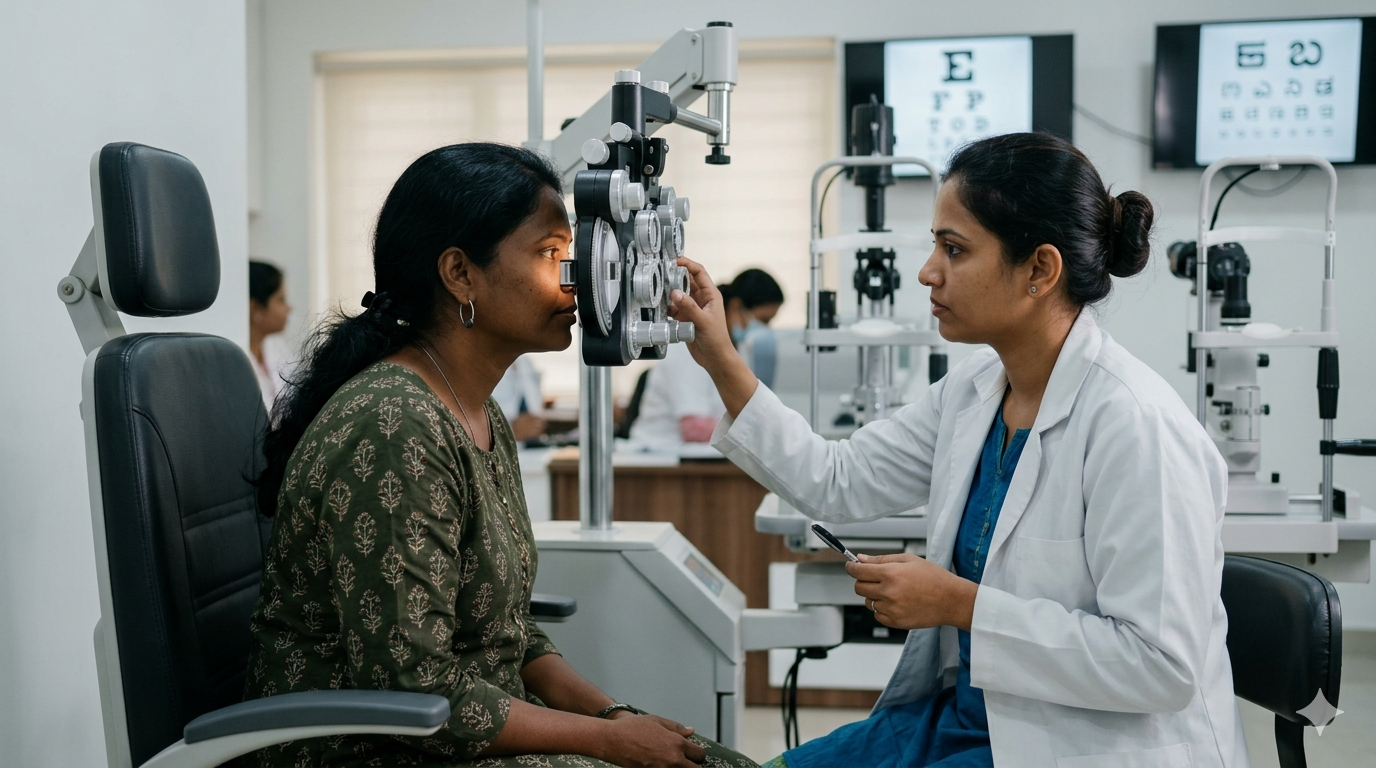
Your eyes may offer doctors clues about what is happening inside your body, including the health of your blood vessels. But can an eye scan actually detect heart disease? The answer is more nuanced than a simple yes or no. The retina, located at the back of the eye, contains a network of tiny blood vessels that can be viewed directly during an eye examination. Since blood vessel changes can be associated with conditions such as high blood pressure and diabetes, which are also major risk factors for cardiovascular disease, researchers are exploring whether retinal imaging could help identify people at higher risk of heart problems. With advances in retinal photography and artificial intelligence (AI), researchers are also studying whether subtle patterns in retinal blood vessels can provide additional information about cardiovascular risk. However, an eye scan should not be considered a test for blocked heart arteries or a replacement for conventional cardiac evaluation, says Dr Sanjay Kumar, Senior Director, Cardiology, Fortis Hospital, Faridabad.
What can your eyes reveal about your blood vessels?
The retina is unusual because it allows doctors to directly observe small blood vessels without surgery. According to Dr Kumar, changes in the size, shape and condition of retinal blood vessels may sometimes be associated with diseases such as hypertension, diabetes mellitus and vascular disease. These conditions are important because they can increase the risk of cardiovascular disease. "The retina is one of those few instances where doctors have a direct view of small blood vessels without having to operate. Changes in the size, shape, and state of these blood vessels might, at times, be associated with certain diseases like hypertension, diabetes mellitus, and vascular disease, which are important risk factors for heart disease," he explains.
This means that an eye examination can sometimes provide clues about a person's overall vascular health. However, seeing a change in a retinal blood vessel does not automatically mean that the person has heart disease.
Can an eye scan detect blocked arteries?
A retinal scan cannot look inside the coronary arteries and determine whether they are narrowed or blocked. This distinction is important because heart disease can develop without obvious changes in the eyes. Similarly, abnormalities seen during retinal imaging can have several possible causes and do not necessarily indicate coronary artery disease.
Dr Kumar stresses that an eye scan does not substitute for a cardiac assessment. "Finding an anomaly in the eyes does not automatically mean clogged arteries and impending heart attack. Conversely, a clear eye scan result does not rule out heart ailment," he says. Therefore, someone experiencing symptoms suggestive of a heart problem should not rely on an eye scan for reassurance.
How could artificial intelligence change retinal screening?
Retinal photography has been used to document and examine the blood vessels at the back of the eye. Researchers are now investigating whether AI can extract additional information from these images. AI systems can analyse large numbers of retinal images and look for subtle patterns that may not be easily recognised by the human eye. "Some artificial intelligence models can interpret retinal imaging data to recognise slight vascular abnormalities that cannot be spotted by the human eye. It can help to identify people who would benefit from further cardiovascular testing," Dr Kumar says. The potential application is therefore not necessarily to diagnose heart disease from an eye photograph, but to use retinal information as one piece of the cardiovascular risk assessment puzzle.
What is the link between the retina and heart health?
The retina contains small blood vessels that are affected by several systemic conditions. For example, persistently high blood pressure can damage blood vessels, while diabetes can also affect the small vessels supplying the retina. Both hypertension and diabetes are established cardiovascular risk factors. This is why retinal changes may sometimes provide clues about a person's vascular health. However, cardiovascular disease is complex. Risk depends on multiple factors, including blood pressure, blood sugar, cholesterol, smoking, body weight, physical activity, age and family history. An eye scan therefore cannot capture the complete picture.
Who should be more careful about heart health?
People with established cardiovascular risk factors should discuss appropriate screening with their doctor. Dr Kumar lists several factors that can increase cardiovascular risk, including:
- Hypertension
- Diabetes mellitus
- High cholesterol
- Obesity
- Smoking
- Strong family history of heart disease
- Physical inactivity
For such individuals, cardiovascular evaluation may involve checking blood pressure, blood glucose and cholesterol levels. Depending on the person's age, symptoms and risk profile, a doctor may also recommend an ECG or other cardiac investigations.
Does a normal eye scan mean your heart is healthy?
This is perhaps the most important takeaway. A normal retinal examination cannot rule out heart disease. A person can have cardiovascular disease even when there are no obvious abnormalities in the retina. Likewise, an abnormal retinal finding does not automatically mean that the coronary arteries are blocked. This is why retinal imaging, even as AI technology develops, should be viewed as a potential risk-assessment tool rather than a standalone heart test.
The future of eye scans and heart disease
The growing interest in retinal imaging comes from the possibility of using the eye as a non-invasive window into vascular health. "The exciting thing about retinal imaging is that eventually it can become a way to identify patients who are more prone to cardiovascular complications, especially if it is combined with other medical data. Currently, it is considered a possible means of assessing the risks associated with the development of cardiovascular diseases," says Dr Kumar. In the future, combining retinal images with other health information could potentially help doctors identify people who may benefit from a more detailed cardiovascular assessment. For now, however, an eye scan should be seen as a possible source of additional information, not a replacement for heart-health screening. If you have symptoms such as chest discomfort, breathlessness, unexplained sweating, dizziness or pain spreading to the arm, jaw or back, seek medical attention rather than relying on an eye examination.
Disclaimer: This content including advice provides generic information only. It is in no way a substitute for a qualified medical opinion. Always consult a specialist or your own doctor for more information. NDTV does not claim responsibility for this information.