

)
Born with congenital hearing loss, 17-year-old Vidhita Gupta had long dreamt of becoming a doctor. After clearing the National Eligibility cum Entrance Test (NEET), she has now secured admission to MP Shah Government Medical College in Jamnagar, Gujarat. As per a report by Indian Express, Vidhita received a cochlear implant when she was four years old. However, when she began preparing to enter medical college, one important challenge remained: how would she use a conventional stethoscope to listen to a patient's heartbeat and other sounds? A conventional stethoscope relies on sound travelling through its tubing to the user's ears. For someone using a cochlear implant, this can make auscultation, or listening to internal body sounds, difficult. Technology, however, is offering a possible solution. A wireless electronic stethoscope can capture body sounds, process them electronically and transmit the audio to a compatible cochlear-implant system, allowing Vidhita to perceive sounds such as heartbeats and breathing sounds. But how exactly does this technology work, and can it be used throughout medical training and clinical practice? In conversation with NDTV Lifeline, Dr Ravi Bhatia, Director - ENT & Cochlear Implant, Sarvodaya Hospital, Faridabad, explains.
How Does A Wireless Stethoscope Work With A Cochlear Implant?
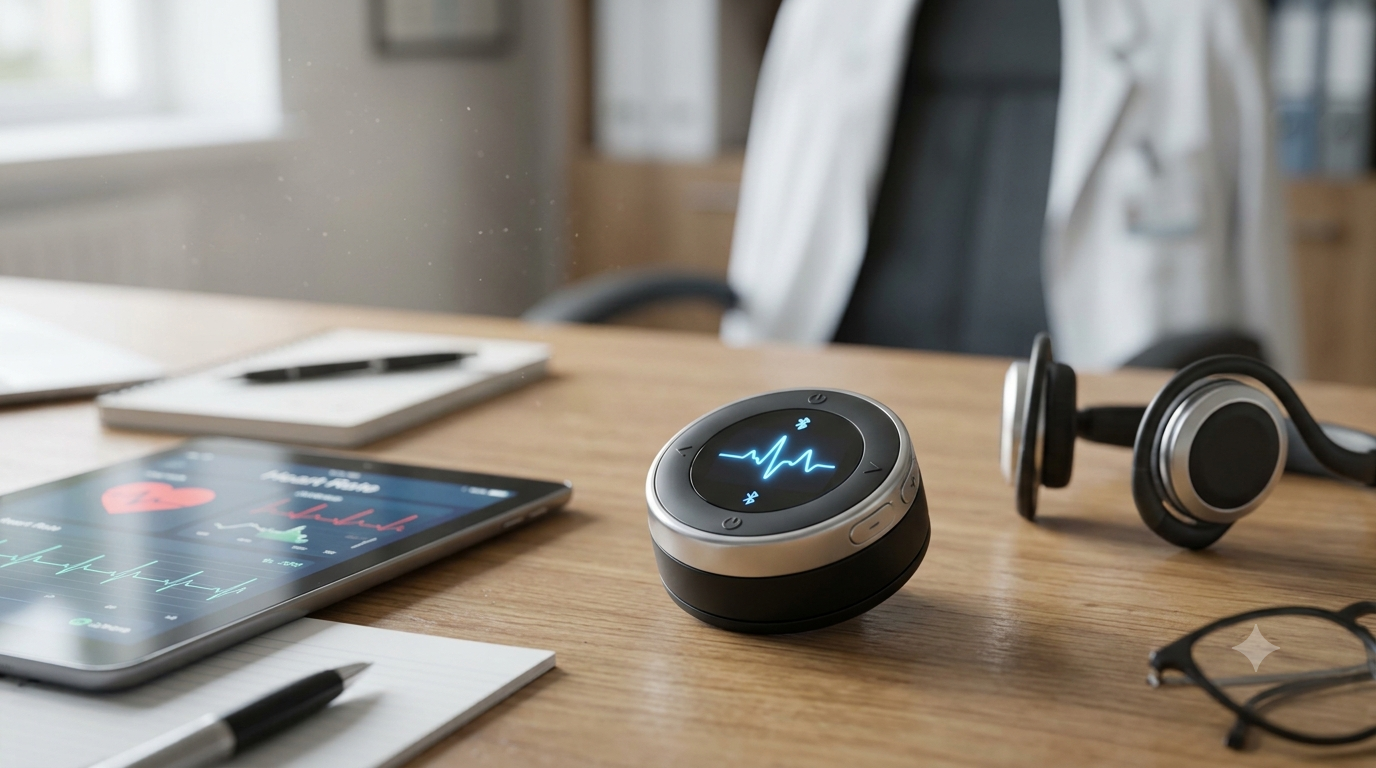
The technology essentially creates a digital pathway between the patient's body sounds and the cochlear implant.
1. The stethoscope captures the sound
The chestpiece of an electronic stethoscope contains an electronic sensor or microphone. When it is placed on a patient's chest, the sensor detects vibrations produced by the heart, lungs and other internal organs. Unlike a conventional stethoscope, the sound is not simply transmitted through hollow tubing.
2. The sound is converted into an electrical signal
The vibrations detected by the sensor are converted into an electronic audio signal. This is important because the signal can then be digitally processed before it reaches the person using the cochlear implant.
3. The signal is amplified and filtered
Electronic stethoscopes can amplify certain frequency ranges and reduce background noise. This can make relatively faint body sounds easier to perceive, which may be particularly useful when a student is learning to distinguish different heart or lung sounds.
4. The processed audio is transmitted wirelessly
Depending on the equipment being used, the processed audio can be transmitted through Bluetooth or another wireless connection. The signal may be sent directly to a compatible cochlear-implant sound processor or may pass through an intermediary device, such as a smartphone or dedicated streaming accessory.
5. The cochlear implant processes the audio
The cochlear implant's sound processor receives the incoming audio and converts it into coded electrical signals. These signals are then delivered to the implant, which stimulates the auditory nerve. The brain interprets this stimulation as sound. In other words, the wireless stethoscope is not changing the way the cochlear implant works. It is providing the implant with a processed audio signal that can be perceived through the person's existing cochlear-implant system.
Can A Person With A Cochlear Implant Use A Stethoscope Long-Term?
According to Dr Bhatia, there is no general rule that using an electronic stethoscope with a cochlear implant damages the implant or makes it less effective over time. However, long-term clinical use depends on whether the particular devices work reliably together. "Compatibility is important. The stethoscope and cochlear-implant processor should support the required wireless or streaming connection," explains Dr Bhatia.
For a medical student, this becomes particularly important because auscultation is not simply about hearing a sound. Students must learn to identify subtle differences between normal and abnormal heart and lung sounds.
What Are The Challenges?
While the technology can provide an important assistive pathway, it is not entirely plug-and-play. One consideration is battery dependence. Both the electronic stethoscope and cochlear-implant processor may require batteries or charging. Having a backup becomes important during clinical training. Sound quality is another factor. The student needs appropriate training to recognise clinically relevant heart and lung sounds through the implant. There can also be issues with latency and connectivity. A delay in transmission, interference or an unexpected connection failure could interfere with a clinical examination. The settings may also need to be adjusted over time. Amplification and frequency settings could require modification as the student's clinical requirements change.
Why Training Is Important
For a medical student using a cochlear implant, simply being able to hear through a wireless stethoscope may not be enough. Auscultation requires training and repeated exposure. Students need to learn what normal heart sounds, murmurs, breath sounds and other findings sound like, and how these sounds differ from one another. This means the technology should ideally be integrated into the student's medical training rather than treated as a separate device. Dr Bhatia also points out the importance of having a conventional or alternative method available if the wireless system stops working. "For medical education, it is sensible to have an alternative method for auscultation if the wireless system fails," he says.
Is This An Assistive Technology Or A Temporary Solution?
For a student such as Vidhita, the wireless stethoscope can be viewed as an assistive clinical technology rather than something that is inherently temporary. The key question is not simply whether a cochlear implant user can connect to a wireless stethoscope. What matters is whether the specific combination of devices allows the student to consistently and accurately perceive clinically relevant sounds.
As technology advances, such solutions could potentially make certain aspects of medical education more accessible to students with hearing loss. For Vidhita, the technology could help bridge a very specific challenge: enabling her to listen to the sounds doctors routinely use a stethoscope to assess. Her cochlear implant does not prevent her from pursuing medicine. Instead, with the right assistive technology, one traditional clinical tool can be adapted to work through the hearing system she already uses.
Disclaimer: This content including advice provides generic information only. It is in no way a substitute for a qualified medical opinion. Always consult a specialist or your own doctor for more information. NDTV does not claim responsibility for this information.