





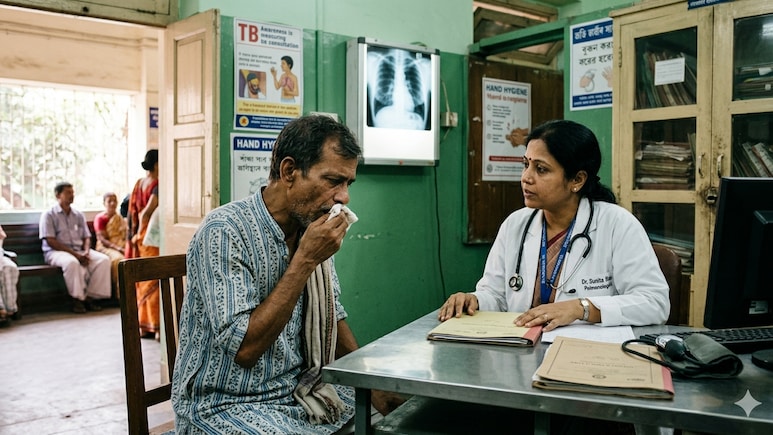
- India launches next phase of 100-day TB Mukt Bharat campaign to eliminate tuberculosis
- Campaign targets over 1.5 lakh villages and urban wards, focusing on vulnerable groups
- New phase uses AI diagnostics and symptom-agnostic screening for early TB detection
India has renewed its push to eliminate tuberculosis (TB) with the launch of the next phase of the 100-day TB Mukt Bharat campaign, a focused and intensified national initiative aimed at closing critical gaps in detection and treatment. Announced by Union Health Minister Jagat Prakash Nadda on the occasion of World TB Day 2026, the campaign marks a decisive step towards achieving the country's ambitious goal of eliminating TB ahead of global targets. The initiative builds on earlier phases and will now cover over 1.5 lakh villages and urban wards, with a strong emphasis on vulnerable populations such as migrant workers, tribal communities, and the urban poor.
India continues to bear the highest burden of tuberculosis globally, making sustained and targeted interventions crucial. According to the World Health Organization, TB remains one of the leading infectious disease killers worldwide.
The government's latest push reflects a shift towards more granular, data-driven, and community-focused strategies, aimed at improving early detection, ensuring treatment adherence, and strengthening last-mile healthcare delivery. With innovations such as AI-enabled diagnostics and symptom-agnostic screening, the campaign represents a significant evolution in India's fight against TB.
What Is The 100-Day TB Mukt Bharat Campaign?
The 100-day TB Mukt Bharat campaign is part of India's broader National Tuberculosis Elimination Programme, which aims to eliminate tuberculosis as a public health problem. The newly launched phase is designed to accelerate progress through a "mission-mode" approach. It focuses on intensive screening, especially in high-risk populations, and aims to bridge last-mile gaps in healthcare access.
Each targeted district, village, or urban ward will implement locally tailored micro-plans, ensuring interventions are adapted to specific community needs. This decentralised strategy is expected to improve both efficiency and outcomes.
Also Read: Persistent Cough Isn't Always A Cold: Early Tuberculosis Signs People Ignore
Key Features And Strategy Of The New Phase
The intensified campaign introduces several critical measures:
- Large-scale screening: Over 20 crore individuals from vulnerable groups have already been screened under earlier phases.
- Early detection focus: The campaign emphasises identifying TB cases even among asymptomatic individuals
- Advanced diagnostics: Use of portable X-rays, molecular testing, and AI-based tools
- Community participation: Encouraging a "whole-of-society" approach involving local stakeholders
- Improved treatment adherence: Strengthening follow-up care and support systems
A key insight driving the campaign is that nearly 50% of TB patients may not show classic symptoms, making traditional symptom-based screening inadequate. This has led to a shift towards symptom-agnostic screening, where individuals are tested even without obvious signs of illness.
India's Progress In Tackling Tuberculosis
India has made measurable progress in reducing TB burden over the past decade. According to government data and WHO estimates:
- TB incidence has declined by around 21%
- TB-related deaths have reduced by approximately 25%
- Treatment coverage has reached over 90%
Additionally, the number of "missing" or undiagnosed cases has dropped significantly, from over 10 lakh annually to less than one lakh. These gains reflect improvements in surveillance, diagnostics, and treatment delivery under national programmes. However, experts caution that India still accounts for a substantial share of the global TB burden, highlighting the need for continued, intensified efforts.
Why Early Detection And Treatment Matter
Tuberculosis is a contagious bacterial infection that primarily affects the lungs but can also impact other organs. Without timely diagnosis and treatment, it can be fatal and easily spread within communities. The World Health Organization emphasises that early detection and uninterrupted treatment are critical to reducing transmission and improving survival rates.
Delayed diagnosis not only worsens patient outcomes but also increases the risk of drug-resistant TB, a growing global health concern.
The new campaign's focus on proactive screening and rapid diagnosis is therefore a crucial step in breaking the chain of transmission.
Technology And Innovation In India's TB Fight
One of the defining aspects of the latest campaign is the integration of technology into public health efforts. Innovations include:
- AI-powered diagnostic tools for faster and more accurate detection
- Digital tracking systems to monitor treatment adherence
- Portable diagnostic devices to reach remote and underserved areas
Additionally, the government has introduced initiatives like the TB Mukt Bharat App to streamline patient management and improve coordination between healthcare providers. These tools aim to make TB care more accessible, efficient, and patient-centric.
Challenges That Still Remain
Despite progress, several challenges continue to hinder TB elimination efforts in India:
- High population density and urban overcrowding
- Stigma associated with the disease, leading to delayed care
- Gaps in awareness and healthcare access in rural areas
- Rising cases of drug-resistant TB
Addressing these issues will require sustained investment, policy support, and community engagement. The launch of the next phase of the 100-day TB Mukt Bharat campaign signals India's renewed determination to eliminate one of its most persistent public health challenges. By combining large-scale screening, advanced diagnostics, and community-driven strategies, the initiative aims to detect cases earlier, treat patients effectively, and reduce transmission.
While significant progress has been made, the road to a TB-free India will require continued vigilance, innovation, and collaboration. With focused efforts and sustained momentum, the goal of eliminating tuberculosis may be closer than ever.
Disclaimer: This content including advice provides generic information only. It is in no way a substitute for a qualified medical opinion. Always consult a specialist or your own doctor for more information. NDTV does not claim responsibility for this information.
Track Latest News Live on NDTV.com and get news updates from India and around the world

