

)
In the fast-paced world of wellness trends, morning "detox" drinks, herbal cleanses, and green juices have become the norm. They are often promoted as effortless quick fixes to flush out toxins, clear up skin, and shed stubborn weight; these drinks often come disguised as simple, natural wellness habits. What seems like a harmless morning routine might actually be forcing your vital organs, especially your kidneys, to work overtime. Here is what leading medical specialists want you to know about how herbal detox drinks affect kidney health, along with what medical science actually says.
Are Herbal Detox Drinks Bad For Your Kidneys?
Medical science as mentioned in the Journal of Herbal Medicine mentions that a healthy human body already possesses a natural, highly efficient detox system. Here is how the liver and kidneys act as natural detox systems:
- Acts as the primary metabolic processing centre, breaking down chemicals, medications, and bodily waste products.
- Function as advanced biological filters, processing nearly 120 to 150 quarts of blood every single day to clear out waste and balance fluid levels via urine.
Wellness drinks do not "cleanse" these organs. In reality, commercial detox products are a marketing construct rather than a medical necessity.
Doctor Explains Why Herbal Detox Drinks Could Be Bad For Your Kidneys
As Dr Joseph Vassalotti, MD, Chief Medical Officer at the National Kidney Foundation, explains, "If your kidneys are healthy, they do not need an external boost or a special herbal regimen to filter waste. The idea of a 'cleanse' is a marketing concept, not a medical one. Your kidneys and liver are already performing the ultimate 24/7 detoxification."
How Herbal Detox Drinks Impact Kidney Function
While gentle infusions like plain chamomile or mint tea are generally fine, high-potency herbal detox blends carry distinct medical risks.
1. Severe Dehydration from Hidden Diuretics
Many detox formulations rely on natural diuretics such as dandelion, juniper, or horsetail to show immediate results. These herbs trigger rapid fluid loss, leading to temporary water weight loss rather than actual fat loss. This rapid reduction in body fluids can cause acute dehydration, lowering blood volume and placing direct stress on kidney filtration.
2. High Oxalate Content and Stone Formation
Concentrated juice cleanses and heavy green extracts often contain massive concentrations of oxalates (found in excessive amounts of spinach, beets, and certain tea extracts). High doses of oxalates bind to calcium in the urinary tract, significantly raising the risk of kidney stones or acute oxalate nephropathy.
3. Electrolyte Disruptions
Unregulated detox teas often contain natural laxatives like senna leaf or cascara. Prolonged intake can cause digestive upset and diarrhoea, leading to a loss of key minerals like potassium and sodium. Balanced electrolytes are essential for the kidneys to regulate fluid balance and blood pressure properly.
4. Unregulated Active Ingredients
Unlike clinical medications, over-the-counter dietary supplements and herbal cleanses operate under loose regulatory oversight. Many contain undisclosed "proprietary blends" or herbs like liquorice root, which can elevate blood pressure and disrupt baseline kidney function.
High-Risk Groups
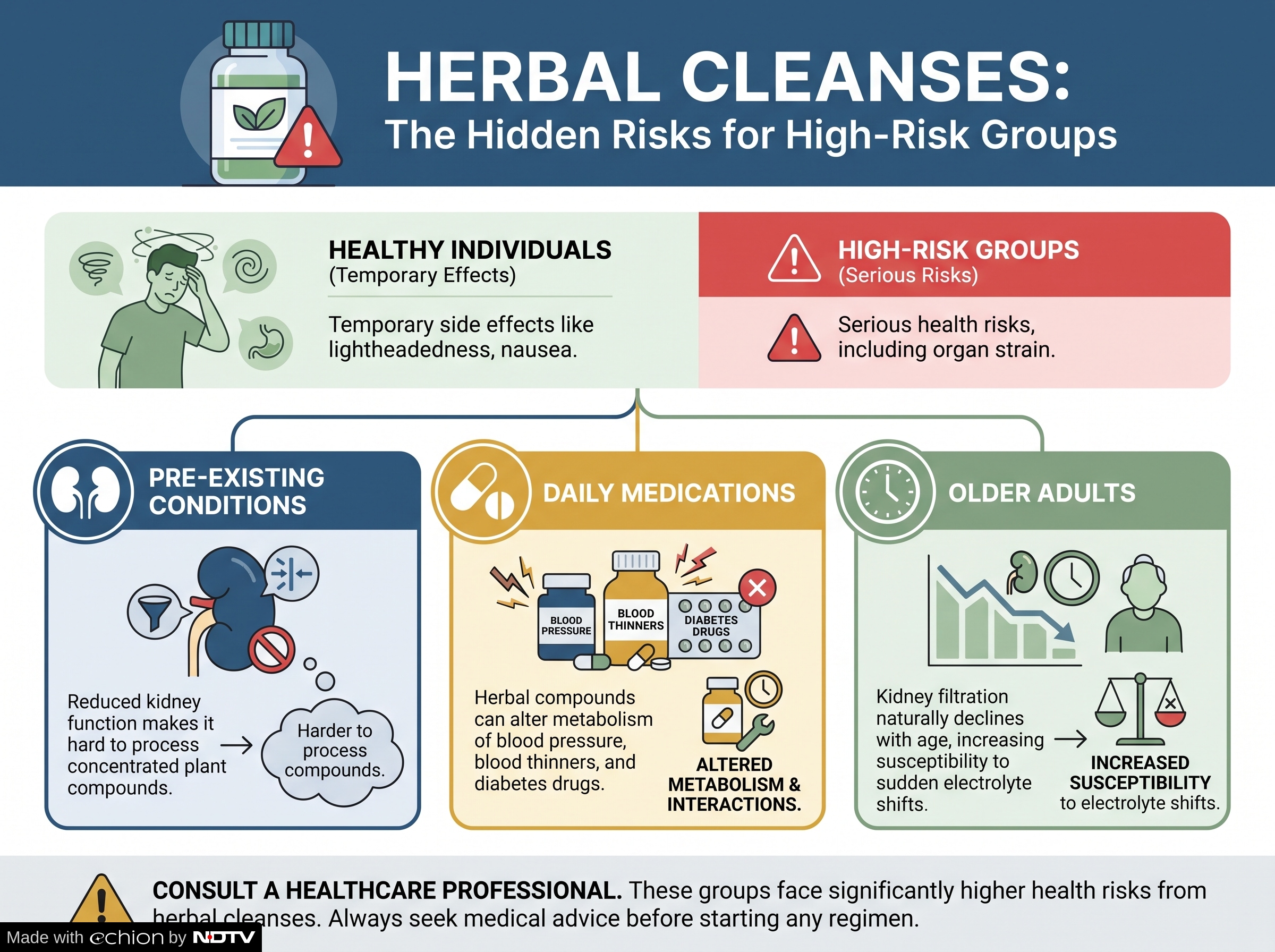
While healthy individuals may experience temporary side effects like lightheadedness or nausea, herbal cleanses pose serious risks for:
- Individuals with Pre-Existing Conditions: Any underlying reduction in kidney function makes it harder to process concentrated plant compounds.
- People on Daily Medications: Herbal compounds can interact with blood pressure drugs, blood thinners, and diabetes medications, altering how these medicines are metabolised.
- Older Adults: Kidney filtration efficiency naturally declines with age, increasing susceptibility to sudden electrolyte shifts.
Doctor-Approved Ways To Support Kidney Health
Dr Jatin Ahuja, Consultant, Infectious Diseases, Apollo Hospitals, Indraprastha Delhi, shares ways to support kidney health. These ways can be:
- Maintain Adequate Hydration: Drinking sufficient water throughout the day is the simplest way to aid natural renal filtration.
- Monitor Sodium Intake: Excess salt increases systemic blood pressure, a primary driver of long-term kidney stress.
- Avoid Overusing Over-the-Counter NSAIDs: Frequent, unchecked use of painkillers like ibuprofen can compromise kidney blood flow.
- Focus on Balanced Nutrition: Prioritise whole, unprocessed foods over restrictive liquid diets.
Your kidneys do not require a packaged detox tea, as they are your body's built-in detox system. Always consult a qualified physician or nephrologist before introducing high-potency herbal supplements into your routine.
Also Read: Best Diet Plan For Muscle Gain: Nutritionists Share What To Eat Every Day
Disclaimer: This content including advice provides generic information only. It is in no way a substitute for a qualified medical opinion. Always consult a specialist or your own doctor for more information. NDTV does not claim responsibility for this information.