

Stiffness in the shoulder and movement can make everyday tasks such as reaching above the head lifting items, putting on clothes and even sleeping feel uncomfortable. Spending hours sitting at a desk having bad posture, not moving enough and doing the same motions over and over can slowly change shoulder mobility. People who exercise regularly may also see shoulder movement if warm-ups are short, muscles are tight or strength training uses the same motions repeatedly. Shoulder mobility means the shoulder joint can move freely through its range of motion. Flexibility means the muscles and soft tissues around the shoulder can stretch and lengthen. Both shoulder mobility and flexibility are important, for keeping posture doing daily tasks comfortably and reducing extra strain when exercising. Doing stretching can help improve shoulder movement ease tight muscles and support better upper-body function. However stretches should be done gently. Never push the shoulder beyond its comfortable range. Below are seven exercises that can help improve shoulder mobility and flexibility.
1. Shoulder Rolls
Shoulder rolls are a simple exercise that can help loosen tight muscles around the shoulders and upper back. They are particularly useful for people who spend extended periods sitting at a desk or working on computers. To perform this exercise, stand or sit upright with your arms relaxed by your sides. Slowly lift both shoulders towards your ears, roll them backwards and then lower them towards the starting position. Repeat the movement in a controlled manner for 10-15 repetitions before changing direction and rolling your shoulders forwards. The exercise encourages gentle movement around the shoulder girdle and can help reduce the feeling of stiffness caused by prolonged inactivity.
READ | From Black To Pink: Can Your Lungs Recover From The Damage Caused By Air Pollution?
2. Arm Circles
Arm circles help warm up the shoulder muscles and encourage controlled movement through different ranges of motion. They can be included in a warm-up routine before strength training or other upper-body exercises. Stand with your feet shoulder-width apart and extend both arms outwards at shoulder height. Begin making small circular movements with your arms, gradually increasing the size of the circles as your shoulders become more comfortable with the movement. Continue for 15-20 seconds before reversing the direction. Avoid making sudden or excessively large circles, particularly if your shoulders are already stiff. The aim is to gradually increase movement without causing discomfort.
3. Cross-Body Shoulder Stretch
The cross-body shoulder stretch primarily targets the posterior shoulder muscles, including the rear deltoid. Tightness in this region can make certain overhead and rotational movements difficult. Stand or sit comfortably and bring your right arm across your chest. Use your left hand to gently pull the right arm closer to your body, keeping it around shoulder height. You should feel a mild stretch at the back of your shoulder. Hold the position for 20-30 seconds before switching arms. Performing this stretch regularly can help maintain flexibility in the muscles surrounding the shoulder joint. Avoid pulling the arm forcefully or placing excessive pressure on the elbow.
4. Doorway Chest Stretch
Tight chest muscles, particularly the pectoralis major and minor, can contribute to rounded shoulders and restricted upper-body movement. The doorway chest stretch helps lengthen these muscles and encourages a more open chest position. Stand in a doorway and place both forearms against the doorframe, keeping your elbows bent at approximately 90 degrees. Slowly step one foot forward and gently lean your upper body through the doorway until you feel a stretch across your chest and the front of your shoulders.
Hold the position for 20-30 seconds while breathing normally. Avoid arching your lower back or pushing your shoulders excessively backwards. This stretch can be particularly useful for people who spend long hours working at a desk.
5. Wall Angels
Wall angels are a mobility exercise that works the shoulders, upper back and muscles responsible for maintaining proper shoulder blade movement. They can also help improve awareness of posture. Stand with your back against a wall, keeping your feet slightly away from it. Position your arms against the wall with your elbows bent at approximately 90 degrees, resembling a goalpost shape. Slowly slide your arms upwards towards an overhead position and then bring them back down. Repeat the movement 8-10 times, maintaining controlled movement throughout. Try to keep your back and arms close to the wall without forcing them into position. Wall angels can help improve shoulder coordination and upper-back mobility.
6. Thread The Needle Stretch
The thread-the-needle stretch focuses on the upper back, shoulders and thoracic spine. Restricted movement in the upper back can sometimes affect how comfortably the shoulders move, particularly during overhead activities.
Begin on all fours, keeping your hands beneath your shoulders and knees beneath your hips. Slowly slide your right arm underneath your left arm, rotating your upper body until your right shoulder and the side of your head move towards the floor.
Hold the position for 20-30 seconds before returning to the starting position and repeating on the opposite side. The stretch encourages gentle upper-back rotation and can help ease tightness around the shoulder blades.
7. Overhead Triceps And Shoulder Stretch
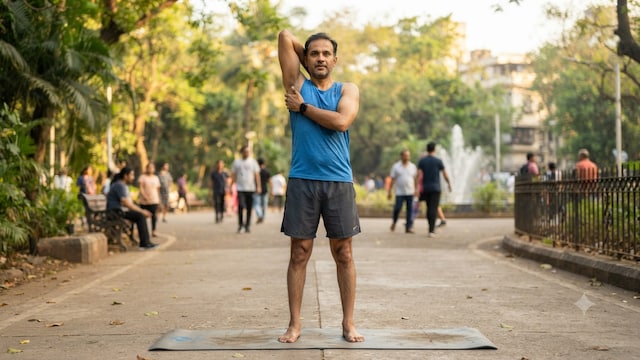
This stretch targets the triceps and surrounding muscles, which can influence how comfortably the arms move overhead. It is particularly useful for people who perform exercises such as shoulder presses, pull-ups and other upper-body movements. Stand upright and raise your right arm overhead. Bend your elbow so that your right hand moves towards your upper back. Use your left hand to gently guide the right elbow backwards until you feel a comfortable stretch along the back of your upper arm and shoulder. Hold the position for 20-30 seconds before switching sides. Keep your torso upright and avoid arching your lower back to achieve a deeper stretch.
READ | 7 Cricketers Who Suffered Serious Ligament Injuries: How Such Injuries Affect Mobility And Recovery
How Often Should You Stretch To Improve Shoulder Mobility?
Consistency matters more than intensity for your shoulder mobility. Doing gentle shoulder stretches for five to ten minutes almost every day can keep your movement smooth and slowly boost your flexibility. Those who exercise often can add moves like arm circles and shoulder rolls into their warmup. Static stretches such as cross-body and doorway stretches work after workouts or in a separate mobility session. Remember, stretching should feel tension, not pain. If you have shoulder pain, swelling, weakness, numbness or big movement limits that keep happening see a healthcare professional of only stretching. Those healing from shoulder injuries must also ask a doctor before starting a mobility routine. Regular shoulder mobility exercises keep your flexibility, improve your movement and make everyday tasks easier. Still slow progress proper technique and consistency are key.
Disclaimer: This content including advice provides generic information only. It is in no way a substitute for a qualified medical opinion. Always consult a specialist or your own doctor for more information. NDTV does not claim responsibility for this information.