

Uterine fibroids are non-cancerous growths that develop in or around the uterus. They are common among women, especially during the reproductive years, and can vary in size and number. While some fibroids may not cause any symptoms, others can lead to heavy or painful periods, pelvic pressure, lower back pain, bloating, frequent urination and discomfort during daily activities. The symptoms can differ from one person to another depending on factors such as the size and location of the fibroids.
While yoga cannot remove or shrink fibroids, it can help manage some of the symptoms linked to them. Yoga can help relax tight muscles, improve flexibility, support better posture and reduce stress, which may make some symptoms easier to cope with. Practices that focus on the lower back, hips and pelvic area can be beneficial when they're performed comfortably. However, women with fibroids should avoid pushing through pain. Here are some of the yoga asanas that can help manage fibroid symptoms.
Yoga Asanas To Manage Fibroid Symptoms
1. Supta Baddha Konasana (Reclining Bound Angle Pose)
This pose can help relax the lower abdomen and pelvic area. Lie on your back, bring the soles of your feet together and allow your knees to fall outward. You can place cushions under the knees for better support. Stay in this position for a few minutes while breathing slowly. The relaxation may help ease pelvic discomfort and reduce stress, which can sometimes make pain feel worse.
2. Balasana (Child's Pose)
Child's Pose is an asana that can help release tension in the lower back, hips and pelvic region. Kneel on the floor, sit back towards your heels and slowly lower your upper body forward. Rest your forehead on the mat or a cushion. Keep the pose comfortable and avoid pressing the abdomen into the thighs if it causes discomfort.
3. Marjaryasana-Bitilasana (Cat-Cow Pose)
The Cat-Cow pose mobilises the spine and can help relieve stiffness in the back and hips. Start on your hands and knees. Slowly alternate between rounding your back while exhaling and gently lifting your chest and tailbone while inhaling. Keep the movements slow rather than forcing the stretch. This can be useful for people who experience lower back discomfort along with pelvic symptoms.
4. Setu Bandhasana (Bridge Pose)
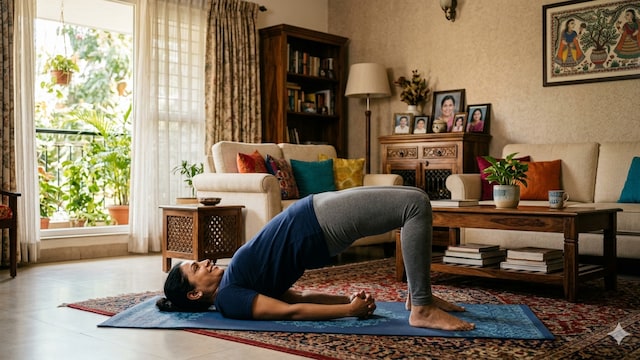
Bridge Pose strengthens the glutes and lower-body muscles while opening the front of the hips. Lie on your back with your knees bent and feet on the floor. Slowly lift your hips while keeping your shoulders and feet grounded, then lower back down. Do not hold your breath or push through pain. If the pose feels uncomfortable, stop or try a supported version.
5. Supta Matsyendrasana (Reclining Spinal Twist)
This reclining twist can help relax the lower back and hips. Lie on your back, bend your knees and allow them to slowly fall to one side while keeping your shoulders on the floor. Turn your head only if it's comfortable. The movement should be mild and pain-free. Using a cushion under the knees can make the position more comfortable.
6. Viparita Karani (Legs-Up-the-Wall Pose)
This pose involves lying on your back with the legs supported against a wall. It helps in relaxation and can ease tiredness after a long day. Stay in the position for a few minutes and breathe slowly. However, women experiencing heavy menstrual bleeding or significant pelvic discomfort should choose a comfortable resting position instead of forcing themselves to remain in the pose.
7. Anulom Vilom (Alternate Nostril Breathing)
While this is not an asana, this gentle breathing practice can complement yoga for people dealing with fibroid-related stress and discomfort. Sit comfortably with your spine supported and breathe slowly through alternate nostrils. The aim is relaxation rather than deep or forceful breathing. Regular relaxation practices may help manage stress and improve overall well-being.
Disclaimer: This content including advice provides generic information only. It is in no way a substitute for a qualified medical opinion. Always consult a specialist or your own doctor for more information. NDTV does not claim responsibility for this information.