





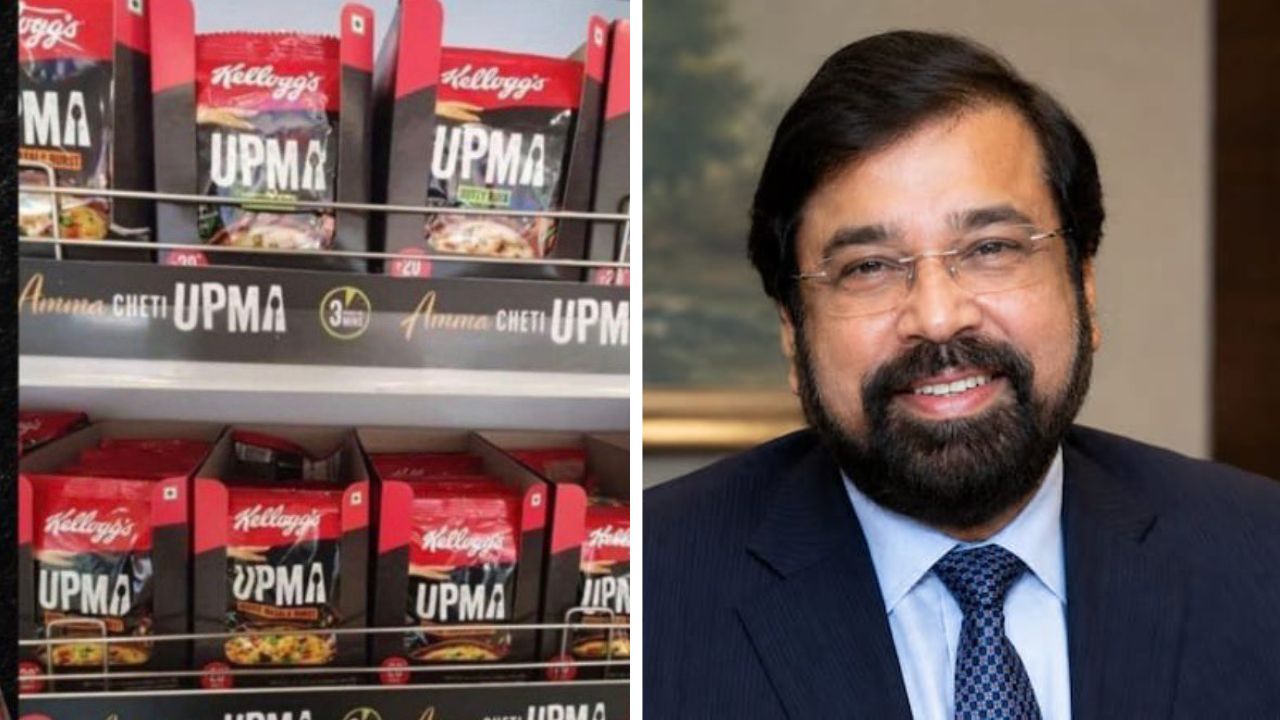
- Kelloggs entered India aiming to popularise cornflakes as breakfast
- By 2020, Kelloggs launched ready-to-eat upma tailored to Indian tastes
- The shift reflects respect for Indian food habits, and adapting to them.
A tweet by industrialist Harsh Goenka has brought back a story that Indian food lovers find genuinely amusing. He pointed out how Kellogg's, which entered India decades ago, hoping to introduce cornflakes as the new breakfast staple, now sells upma instead. "Never underestimate the power of local taste," he wrote. It's a fair observation, and one that's been made before.
Anand Mahindra had shared a similar meme back in 2021 about the same irony. It said, "Kellogg's came to India challenging that they will change the breakfast habits of all Indians. 10 years later, this happened."
Kellogg's came to India to change our breakfast habits with cornflakes. The opposite has happened. Today, Kellogg's sells Upma.
— Harsh Goenka (@hvgoenka) August 3, 2026
Business lesson: Never underestimate the power of local taste. pic.twitter.com/uHfapl1ApI
The backstory is worth revisiting. Kellogg's came to India in the 90s with cornflakes and cold milk, hoping to gradually shift breakfast habits toward something more Western. It was a long-term bet on changing consumer behaviour. But by 2020, the company had launched a ready-to-eat upma of its own - not as a one-off experiment, but as a proper product line.
The range includes variants like Nutty Rava and Veggie Masala Burst, made with real grains, cashews, peanuts and pulses. It cooks in about three minutes and costs around Rs 20 for a 48g single-serve pack.
This isn't an isolated move either. Kellogg's India lineup includes Masala Oats, Thandai Badam Corn Flakes, Kesar Pista Badam Cornflakes, and Multigrain Chhota Laddoo Chocos, among others. Over the years, the brand has steadily adapted its products to fit local preferences.
Other global brands have followed a similar path. Maggi built much of its success in India not through its original flavours but by leaning into the 'masala' variant that suited local palates. Nestle has done the same across several of its offerings, adjusting recipes to win Indians by offering them desi flavours they love.
None of this really counts as a setback for these companies. It reflects a sensible business decision, recognising that deeply rooted food habits aren't easy to change. Going by the rising popularity of these products in this age of instant meals, Indian consumers are not complaining either. But this just proves how Indians strongly love their traditional flavours, and no one can change that.
Track Latest News Live on NDTV.com and get news updates from India and around the world

