




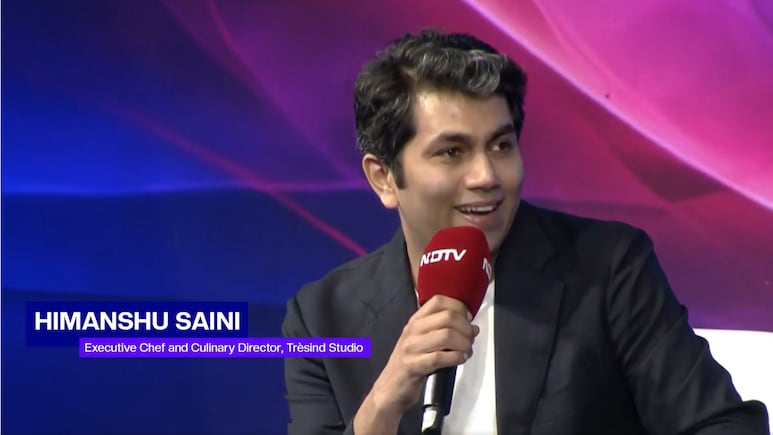
Chef Himanshu Saini, whose Dubai restaurant Tresind Studio holds three Michelin stars, attended NDTV World Summit 2026 alongside veteran journalist and food critic Vir Sanghvi and Samyukta Nair, CEO and Creative Director of LSL Capital.
During the session, "The Indian Table: How Chefs Are Changing the World's Palate," the panellists discussed the growing global presence of Indian cuisine and how chefs are reimagining traditional dishes. Saini spoke about the importance of spices, the freedom to experiment with ingredients and why Indian food must continue to evolve without losing its identity.
Also Read: NDTV World Summit 2026: Track Live Updates
"We Underestimate The Power Of Using Spices"
Speaking about his experience of cooking alongside international chefs, Saini said he had noticed that some chefs use a pinch of cumin and consider it enough to claim they are using spices. Indian cooking, he argued, offers far more possibilities.
"We can blend 20 spices together and still use them as if we are putting salt in a dish," he said.
For Saini, the point is not simply to use more spices, but to understand how to bring out their flavours and preserve the essence of Indian cuisine. Even when a dish is reimagined using contemporary techniques, he believes it should retain a distinctly Indian character.
He also stressed that presentation should not take precedence over the food itself. If a dish is altered too much, it risks losing what makes it special. For him, the balance of spices, heat and acidity allows experimentation without taking a dish too far from its roots.
"If You Were Not Good At Anything Else, You Became A Chef"
#NDTVWorldSummit2026 | "25 years ago, people used to say, if you are not good at anything else, you become a chef": 3-Michelin-Star Chef Himanshu Saini Vir Sanghvi (@virsanghvi), Veteran Indian Journalist, Author, Columnist, also shares his views #NDTVWorldSummit @Vedikas https://t.co/hDUN4TkZKQ
— NDTV (@ndtv) October 22, 2026
While speaking at the session, Saini said he believes one reason Indian cuisine is having a particularly strong moment is the changing perception of cooking as a profession.
"20 to 25 years ago, there was a saying that if you weren't good at anything else, you became a chef," he said.
He contrasted that attitude with the growing willingness of parents to let their children follow their ambitions. More people are now choosing the profession because they genuinely want to cook, he said, and that change is reflected in the way Indian food is being developed and presented.
Saini also pointed to chefs of his generation who have travelled beyond India and worked with ingredients and culinary traditions from around the world.
"I see the world as an open pantry," he said.
He does not believe Indian cuisine should be restricted to ingredients native to the country. Citing tomatoes and chillies, which originated elsewhere but have become integral to Indian cooking, he argued that Indian food has always adapted to outside influences.
"If I take inspiration from any ingredient which is not native to India, why not?" he said.
The important consideration, he explained, is whether an ingredient elevates a dish without compromising the flavours and soul of Indian food.
Why Chef Himanshu Saini Believes Indian Curries Must Evolve
#NDTVWorldSummit2026 | "We should not talk about modern Indian food or progressive Indian food. For me, it's more about calling it a revolution in Indian cuisine": Michelin Star chef Himanshu Saini #NDTVWorldSummit https://t.co/OGTIsLzXsD
— NDTV (@ndtv) October 22, 2026
At Dubai's Tresind Studio, Saini's approach involves reimagining Indian dishes while retaining a connection to their origins. During the discussion, he described the balance he seeks as one between "provocation and preservation".
Having lived in Dubai for the past 12 years, he said his work has involved challenging perceptions of Indian food, including the tendency to reduce it to curries and familiar restaurant preparations.
However, Saini does not believe curries should be left behind in the pursuit of contemporary cooking. Instead, he wants chefs to explore how they can be developed further.
"Why can't our curries evolve?" he asked, drawing a comparison with French mother sauces.
He believes the conversation should move beyond labels such as modern or progressive Indian food. Instead, he prefers to see it as an evolution of the cuisine, with traditional recipes providing a foundation for experimentation using new techniques, equipment and experiences gained through travel.
Some of the sauces and curries on his menu are derived from traditional preparations but have been transformed to the point where diners may not immediately recognise their origins. For Saini, the aim is to respect the past without being confined by it.
"Why Can't There Be A New Rasgulla?"
Saini also wants Indian chefs to create dishes that could eventually become classics in their own right.
During the session, he questioned why chefs should limit themselves to reinterpreting existing recipes rather than developing new dishes that could become part of India's food culture.
"Why do we stop creating new classics? Why can't there be a new rasgulla?" he asked.
His point was that innovation does not have to mean abandoning familiar food. Indian cuisine has an extensive repertoire of regional recipes, ingredients and cooking traditions, but he believes chefs should also have the freedom to create something new.
Sanghvi, who has followed Saini's work for years, offered a different perspective on the chef's emphasis on presentation. He pointed to the reimagined pani puri at Tresind Studio, describing the dramatic presentation and visual detail that accompany the food. The exchange highlighted how contemporary Indian fine dining can combine familiar flavours with new techniques and presentation.
The Indian Ingredient Saini Believes Deserves Global Attention
When asked which Indian ingredient could find a wider audience internationally, Saini chose tender coconut.
He spoke about the different ways coconut can be used, from its flesh to its first and second milk extracts. The flesh, in particular, interests him because of its versatility and the range of textures it can offer.
"If I don't tell you, you might feel its texture is similar to that of squid," he said, explaining how the ingredient can be transformed through cooking.
Saini believes coconut has the potential to find a place in kitchens around the world. His answer also reflected his broader approach to Indian cuisine: understanding an ingredient's potential, experimenting with it and finding ways to introduce it to diners without losing what makes it distinctive.
For him, the future of Indian food lies in drawing on its traditional flavours while giving chefs the freedom to explore new possibilities.
Track Latest News Live on NDTV.com and get news updates from India and around the world

