





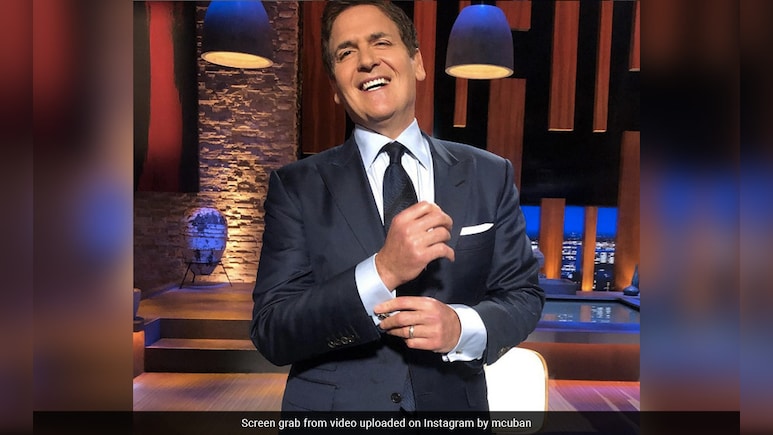
For decades, employees have built their careers by learning on the job, observing colleagues, and gaining hands-on experience. Billionaire entrepreneur Mark Cuban believes that the model is set to change dramatically in the age of artificial intelligence. AI job simulators could become the next big innovation.
In a post on X, the former Shark Tank investor predicted that the next major AI breakthrough will be "job simulators" designed to prepare employees for real-world workplace challenges. According to Cuban, AI will reduce the number of day-to-day interactions employees have with colleagues, limiting the opportunities to gain practical knowledge and develop judgement through experience. He believes companies will increasingly rely on AI-powered simulations to fill that gap.
Cuban compared the future of workplace training to the way commercial pilots and race car drivers are trained. Both professions use simulators extensively to prepare for real-life situations before entering the field.
"Much like race car drivers and pilots have software that is continually updated to enable them to experience as many scenarios as possible, trying to replicate what could happen IRL, smart companies will have their employees and stakeholders with the most domain knowledge create the simulator that takes them through every possible situation they could face and helps prepare them," he wrote on X.
"Smart companies will realize that Father Time is not only undefeated in sports , but business as well. If you are not capturing what is your business is all about from ALL of your employees , you will be challenged," he added.
See the tweet here:
The next great AI application, driven by open source, or open weights, will be a job simulator.
— Mark Cuban (@mcuban) July 24, 2026
How employees gain experience in a future AI world is going to be far different from today. Employees won't have as many touch points in the company to gain knowledge and…
Experts say the shift has already begun
Thomas Roulet, a professor of organisational sociology and leadership at the University of Cambridge, told Business Insider that many companies and business schools already use virtual reality for employee training, including areas such as unconscious bias. He said the concept is not entirely new but expects simulation-based learning to become much more common as AI advances.
"Jobs that cannot be replaced by AI require coordination, combining skills, fast analysis in space and in context," he added.
AI and humans will work together
The idea could extend across professions. Newly qualified lawyers could practice depositions, court hearings, and settlement negotiations in AI-powered simulations before handling real cases.
Similarly, trainee doctors could prepare by interacting with AI patients, assisting in virtual surgeries, and responding to simulated medical emergencies. If these scenarios are built using the knowledge of experienced professionals, they could offer realistic, hands-on training without real-world risks.
Cuban has repeatedly argued that while AI will reshape industries, it still lacks human qualities such as emotional intelligence and the ability to "read the room". He believes the greatest value will come from combining AI's productivity with human judgment and real-time decision-making, rather than replacing people altogether.
Track Latest News Live on NDTV.com and get news updates from India and around the world

