





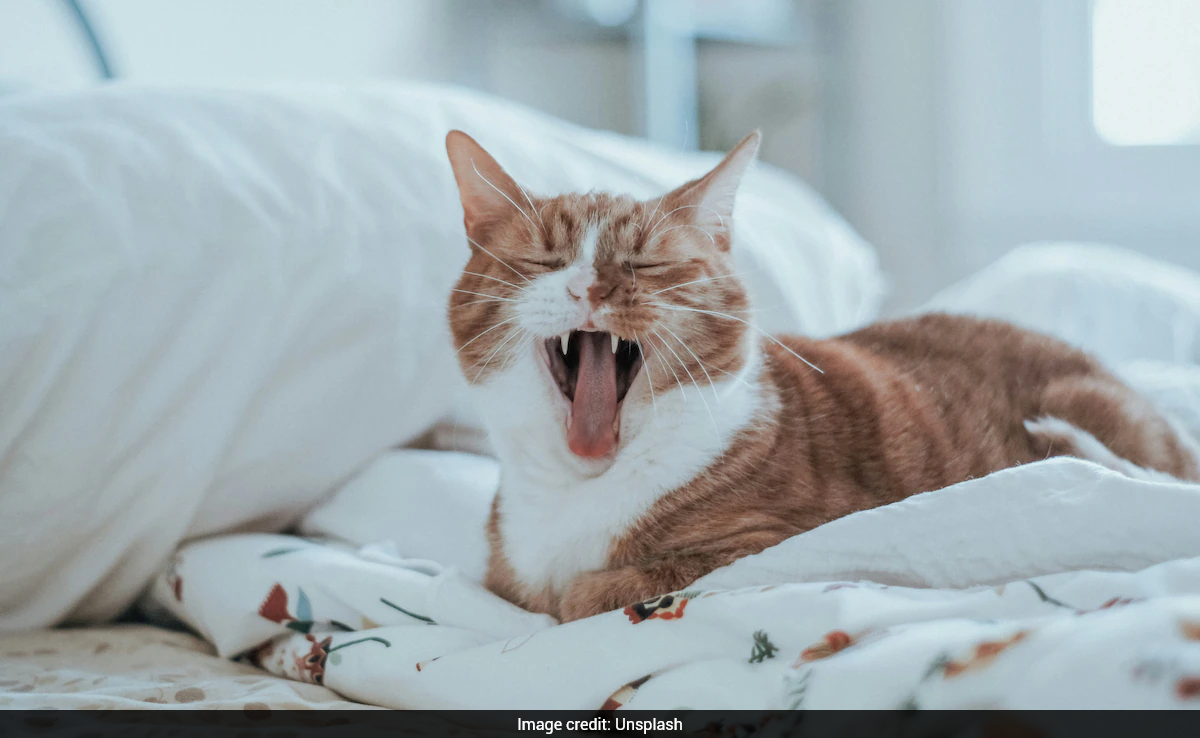
Cats are intriguing creatures, with a difficult-to-understand behaviour. A recent study has attempted to uncover a mystery of the feline, but there's still a lot more to know. The study, conducted by researchers from Ankara University in Turkey, revealed that cats meow significantly more at men than women, leaving many to wonder why this feline behaviour occurs.
The researchers analysed the behaviour of 31 cats and their owners, finding that cats vocalised an average of 4.3 times in the first 100 seconds when greeting men, compared to just 1.8 times when greeting women, as per a report by The New York Times.
Also Read | Interstellar Comet 3I/ATLAS Turns Green Ahead Of Closest Approach To Earth
But why this discrimination? Why do cats meow more at men? The study suggests that men may be less attentive to their pets, prompting cats to "amplify" their signals to attract attention. Women, on the other hand, tend to give cats more attention and are better at assessing their emotions, which might reduce the need for vocalisation.
The researchers used 22 behavioural measures and explored how these behaviours related to one another during the greeting sessions, which were monitored. They also tested demographic factors that influenced the amount of greeting behaviour expressed by household cats.
Also Read | "Delhi NCR Is Cooked": User Lists 6 Reasons To Argue Why Delhi NCR No Longer Liveable, Internet Reacts
"Our results showed that cats vocalized more frequently toward male caregivers, while no other demographic factor had a discernible effect on the frequency or duration of greetings," write the researchers in their published paper.
"Correlational analyses revealed two interrelated behavioral patterns: affiliative and displacement-like behaviors. These findings suggest that cat greetings are multimodal, may reflect different motivational or emotional states, and can be modulated by external factors such as caregiver sex."
The study highlights the importance of understanding feline communication and behaviour. The findings might help the owners to strengthen their bond and improve their relationship by recognising and responding to their cats' needs.
Track Latest News Live on NDTV.com and get news updates from India and around the world

