





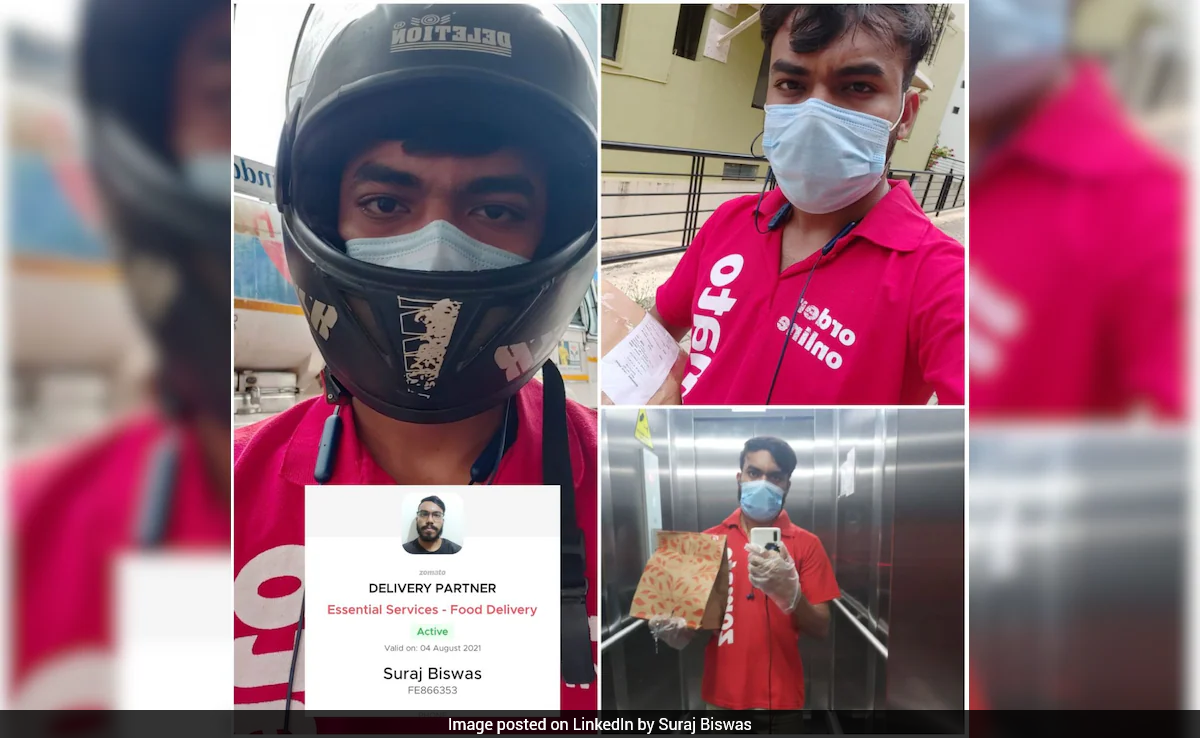
Suraj Biswas, the founder and CEO of deep-tech startup Assessli, has expressed support for Deepinder Goyal and Zomato, drawing from his own experience as a former delivery partner to highlight how gig platforms can empower individuals economically. In a LinkedIn post, Biswas shared that he worked with Zomato in Bengaluru during 2020-21, before launching Assessli and fully diving into his college education. He shared how his time as a Zomato delivery partner helped him pay his college fees, remain financially independent, and eventually build his own company.
During that time, Biswas said he consistently earned around Rs 40,000 a month and also knew other delivery partners who were making as much as Rs 80,000 to Rs 90,000 monthly. He noted that platforms like Zomato have created accessible income opportunities for students, migrants, and newcomers to the workforce.
"I stand with Zomato. I stand with Deepinder. And I say this as someone who has lived this life. In 2020–21, before college really took off and before I started Assessli. I was a Zomato delivery partner in Bangalore. Not a story for sympathy," he wrote in the post.
See the full post here:
Addressing the ongoing discourse around quick commerce and delivery models, he cautioned against equating gig work with exploitation. He argued that enforcing fixed-salary, exclusive roles could harm the flexibility and viability of the current system. He also opposed calls to ban quick-delivery models or "romanticise" protests without understanding the on-the-ground context.
"About the current outrage on 10-minute delivery. Let me say this clearly, from first-hand experience: this was independent gig work, not forced labour. Most delivery partners are NOT full-time; more than 50% of riders work on 2–3 platforms simultaneously (I've seen it, lived it)...Loyalty in gig work is flexibility-driven, not contract-driven," he added.
Biswas further shared that during his time as a delivery partner, he encountered "food snatching and life-threatening situations" and Zomato stepped in to support him. He emphasised that loyalty in gig work stems from flexibility, not contracts, and argued that bans or public outrage are not sustainable solutions. Instead, he advocated for more tech-driven platforms that provide economic opportunities, especially for individuals without formal education.
"So yes, unapologetically—I stand with Zomato. I stand with Deepinder. And I stand for systems that create opportunity, not entitlement. If you've lived this life, you'll understand. If you haven't, maybe listen to those who have," he wrote, concluding the lengthy post.
His post sparked a lively discussion online. While many praised his grounded perspective and first-hand experience, others disagreed, saying the conversation must also address deeper issues like wage security, healthcare, and social protection for gig workers.
Track Latest News Live on NDTV.com and get news updates from India and around the world

