





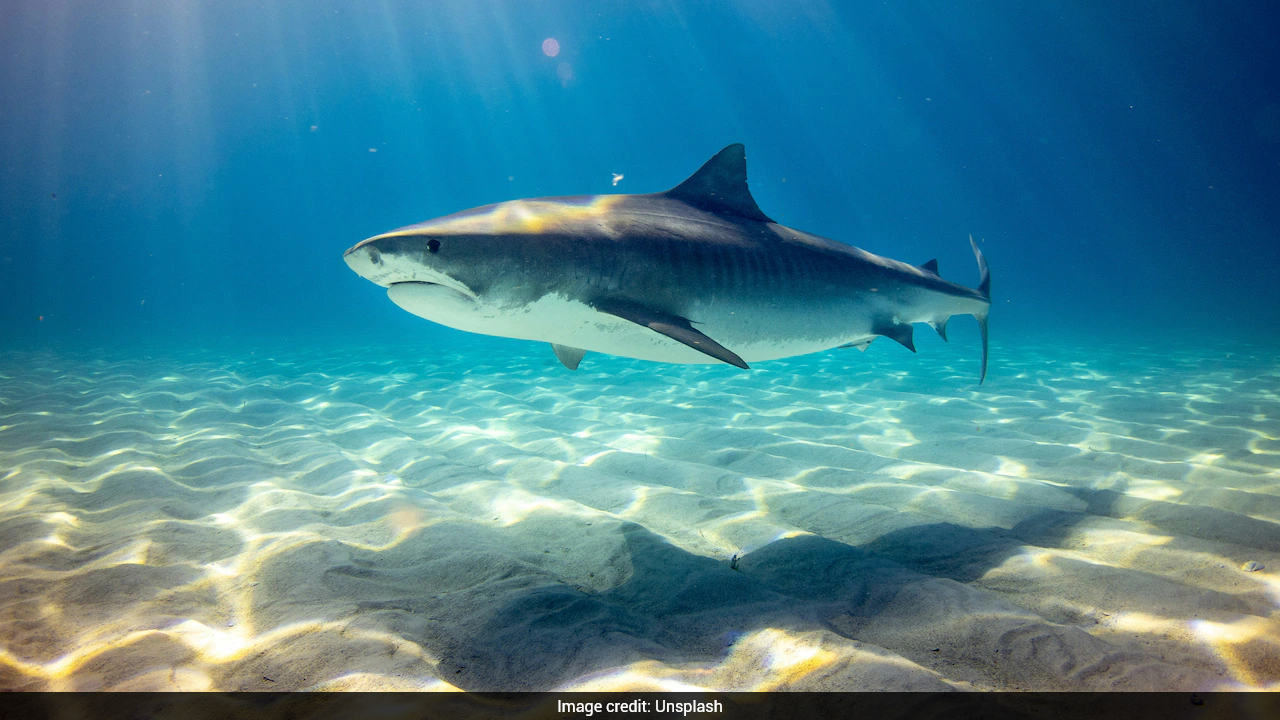
The conservationists and fishers are clashing over Greenland sharks as the latter compete for halibut and cod. This growing conflict between fishing fleets and one of the ocean's oldest living creatures has sparked an intense debate over marine conservation, The Guardian reported. Local authorities in northern Greenland recently considered a controversial plan to offer bounties for killing Greenland sharks, which can survive for centuries.
"When I accidentally catch a shark, I bring it to my dogs," Henrik Jensen, a 27-year-old from Greenland's west coast, said as quoted by the media outlet. "I don't let it back down because [the sharks] bully me and cut my lines."
"This year I've lost around 6,000 hooks in total. Sometimes we lose 30,000 Danish krone a day," Jensen added.
Though the local government temporarily put a stop to the proposed cull over legal questions, the clash highlights the economic pressure on northern coastal communities. In coastal towns like Ilulissat, commercial fishing drives nearly a quarter of Greenland's economy.
Also read | Why A 1960 Research Paper Predicted 'Doomsday' On November 13, 2026
Fishermen targeting valuable species like Greenland halibut and Atlantic cod rely on longline fishing gear, strings holding thousands of baited hooks dropped into cold, deep waters.
But the sharks frequently attempt to feed on hooked fish, tearing apart expensive fishing gear and escaping with thousands of hooks at a time. Local fishers say they lose thousands of dollars in damaged lines and lost workdays.
"Our longlines are expensive - one costs 1,599 krone. When the sharks cut our lines, we cannot finish fishing. We have to spend more money and buy new gear," Timotheus Petersen, who is the chair of the fishing association in Kullorsuaq, said as quoted.
The local Avannaata municipality addressed this and offered to ease the financial strain on fishers. They proposed a bounty system offering 300 Danish krone (about $44 USD) per harvested shark heart, aiming for a target cull of 1,000 animals.
"We need to safeguard the income of fishermen and the catch so that we can continue to eat the foods that we have relied on for generations," Lars Erik Gabrielsen, mayor of the municipality, said, as quoted by the media outlet.
Also read | Scotch Whisky Heads To Space As Scientists Test Ageing In Zero Gravity
The decision sparked debate
According to the report, the marine conservation group Oceans North Kalaallit Nunaat (ONKN) claimed that culls do not resolve the issue. They also highlighted the migratory nature of the species. "Sharks removed in north-west Greenland would quickly be replaced by individuals arriving from other regions," ONKN warned as quoted in the report.
"Greenland sharks are extremely long-lived, highly migratory, and important predators in the Arctic and deep North Atlantic," Dr Julius Nielsen, a Greenland shark expert, said in a statement. He has studied sharks in Greenland for more than a decade.
"Initiating a bounty system of this magnitude is a risky path - especially if this type of management spreads to other Arctic regions, as it could have an impact on a population which is likely still recovering from the big commercial harvest in the last century," Nielsen stresses that any regulation should be based on scientific advice.
Track Latest News Live on NDTV.com and get news updates from India and around the world

