





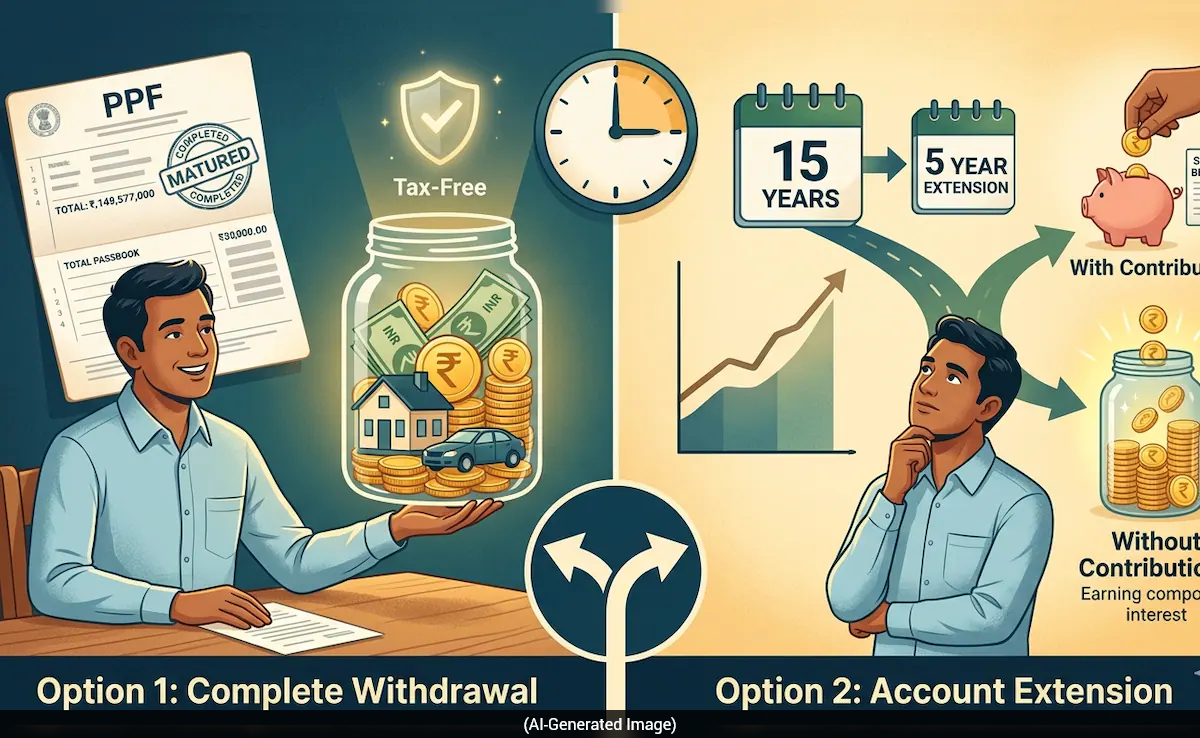
As many Public Provident Fund (PPF) accounts complete their 15-year tenure, investors face a key decision: withdraw the full amount or extend the account. Experts say the choice depends on your financial goals, liquidity needs and tax planning.
What happens at maturity
A PPF account matures after 15 years, after which you can withdraw the entire balance with interest and close the account. Importantly, the scheme follows the Exempt-Exempt-Exempt (EEE) model, meaning investment, interest and maturity proceeds are fully tax-free.
Option 1: Withdraw the full amount
Withdrawing at maturity gives you complete liquidity and zero tax liability. This may suit those needing funds for major expenses such as home purchase or retirement planning.
Option 2: Extend your PPF account
You can extend your PPF in blocks of five years, with no limit on the number of extensions. There are two ways to extend:
With contributions: Continue investing up to Rs 1.5 lakh annually and keep claiming tax deductions under Section 80C.
Without contributions: Let the existing corpus earn tax-free interest, but no fresh tax benefit is available.
Withdrawal rules after extension
According to The State Bank Of India, if you extend with contributions, withdrawals are limited to 60 percent of the balance over five years. Without contributions, you can withdraw once every financial year with more flexibility.
Which option is better?
Financial planners suggest extension is ideal if you do not need funds immediately and want continued tax-free compounding. Withdrawal is better if you need liquidity or want to rebalance investments.
Track Latest News Live on NDTV.com and get news updates from India and around the world

