





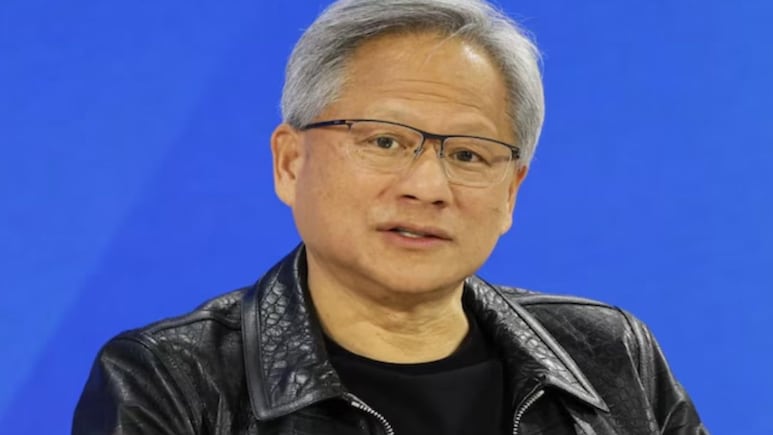
NVIDIA CEO Jensen Huang has pushed back against Anthropic boss Dario Amodei's comments that selling AI chips to China was like selling nukes to North Korea, calling the analogy "lunacy." In a wide-ranging interview with podcaster Dwarkesh Patel, Huang argued that "victimising" China or treating the nation as an "enemy" was a flawed strategy. He emphasised that China already possesses the domestic capacity and computing power to be a major player in the AI race, suggesting that isolationist policies might be counterproductive.
Following intense lobbying by Huang, the Trump administration authorised sales of NVIDIA's H-200 chips to China, reversing earlier Biden-era national security restrictions. The approval permits sales of these high-end, yet older-generation, processors, provided that the US government receives a 25 per cent fee on all sales.
-

-
 Will Deliver 3,200 Engines Over Next Decade: CEO Of GE Aerospace South Asia To NDTV
-
 India's Global Moment: How Should New Delhi Navigate A Changing West?
-
 "India Greatly Supported Us": Sri Lankan Minister On "Difficult Years"
-
 How Chef Himanshu Saini Handles Pressure Of Running 3-Michelin-Star Restaurant
-
 "Indian Food Is Not Just Butter Chicken": Samyukta Nair At NDTV World Summit
-
 "AI Chatbots Horrible For Learning": Andrew Ng At NDTV World Summit
-
 Has Indian Cuisine Finally Arrived On The Global Stage?
-
 Chatbots Could Be Damaging Adult Learning Too: Andrew Ng
-
 Swami Sarvapriyananda Asks On AI Alignment; Andrew Ng Flags Risks Of Overhyping AI Fears
-
 "Keep Learning New Skills, Jobs Will be There": Andrew Ng On 'AI Jobapocalypse' Fear At NDTV World Summit
Playing the 'devil's advocate', Patel asked Huang what would happen in the hypothetical scenario if China, using the chips supplied, were able to train models on par with Claude Mythos, which might threaten US national security and corporate dominance.
"First of all, Mythos was trained on fairly mundane capacity, and a fairly mundane amount of it. By an extraordinary company. The amount of capacity and the type of compute it was trained on is abundantly available in China. So you just have to first realise that chips exist in China," said Huang.
"Victimising them, turning them into an enemy, likely isn't the best answer. They are an adversary. We want the United States to win. But I think having a dialogue and having research dialogue is probably the safest thing to do."
The Jensen Huang episode.
— Dwarkesh Patel (@dwarkesh_sp) April 15, 2026
0:00:00 – Is Nvidia's biggest moat its grip on scarce supply chains?
0:16:25 – Will TPUs break Nvidia's hold on AI compute?
0:41:06 – Why doesn't Nvidia become a hyperscaler?
0:57:36 – Should we be selling AI chips to China?
1:35:06 – Why doesn't Nvidia… pic.twitter.com/ezDkUmoFWM
Amodei's Analogy
Speaking at the World Economic Forum in Davos in January, Amodei said selling the chips to China was like "selling nuclear weapons to North Korea".
"It would be a big mistake to ship these chips. I think this is crazy. It's a bit like selling nuclear weapons to North Korea," said Amodei.
Responding to the analogy, Huang replied: "Comparing AI to anything that you just mentioned is lunacy. It's a lousy analogy. It's an illogical analogy."
During the tense exchange, Huang also addressed concerns about whether exporting Nvidia chips to China would undermine America's competitive edge.
"The premise that even if we competed in China, that we're going to lose that market anyways. You're not talking to somebody who woke up a loser. That loser attitude, that loser premise makes no sense to me," said Huang.
Track Latest News Live on NDTV.com and get news updates from India and around the world

