





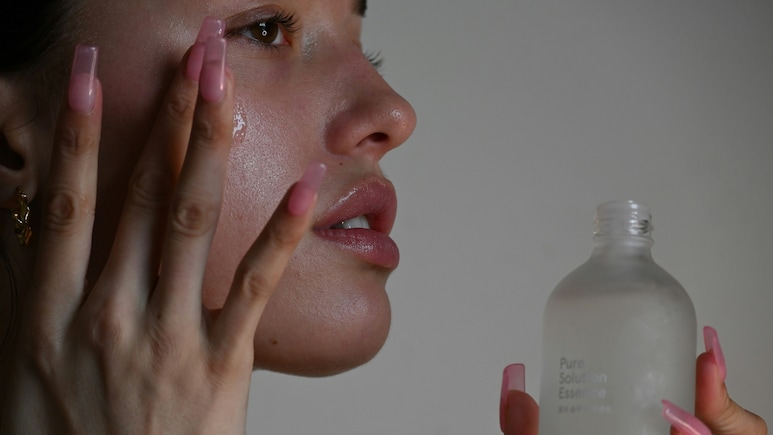
The popular 'glass skin' trend may promise a clear, smooth and deeply hydrated complexion, but new research has raised concerns about the accuracy and safety of skincare advice being shared on social media. Nearly 95 per cent of viral Korean skincare and 'glass skin' videos analysed in a new study contained at least one potentially misleading claim, while basic safety information was largely missing, researchers said. The findings were presented at the European Academy of Dermatology and Venereology (EADV) Congress 2026.
Notably, 'Glass skin' refers to an extremely smooth, clear and hydrated complexion that appears almost reflective, like glass. The trend, which originated in Korean beauty culture, has gained worldwide popularity, particularly on TikTok, where skincare routines can reach millions of viewers. Influencers often promote elaborate, multi-step routines involving double cleansing, toners, essences, serums, sheet masks and moisturisers. Some routines also involve combining several active ingredients, such as exfoliating acids, retinoids and vitamin C.
Researchers analysed popular Korean skincare and 'glass skin' videos in May 2026. To reduce the impact of personalised algorithms, they used a neutral account with no previous engagement history and screened the top videos appearing under five Korean skincare-related search terms.
After exclusions, 38 videos were assessed for dermatological claims, safety information, quality and reliability.
The researchers found that 95 per cent of the videos contained at least one potentially misleading claim. About 84 per cent did not take different skin types into account, while 45 per cent promoted combinations of multiple active ingredients without adequate safety advice. Another 32 per cent promised instant results.
None of the videos cited an external scientific source or reference. All were classified as unreliable or less reliable using established assessment tools.
"What surprised us most was how consistently basic safety information was absent. Only one of the 38 videos mentioned irritation risk, only two addressed sun protection, none mentioned contact dermatitis risk and none recommended consulting a dermatologist," noted lead author Dr Maria Lucia Paysano.
Most of the videos, around 82 per cent, were created by non-physician influencers. Beauty brands accounted for 11 per cent, while other beauty content creators made up about 8 per cent. None of the videos analysed had been produced by dermatologists.
"Our findings show a clear gap between the popularity of this content and the quality of the information provided. Following these routines without individualised guidance may contribute to irritation, over-exfoliation, acne flares or skin barrier disruption, particularly when multiple active ingredients are combined," said Dr Paysano.
Researchers stressed that Korean skincare itself is not the concern. Practices such as gentle cleansing, hydration and protecting the skin barrier can be beneficial. The problem, they said, arises when these principles are turned into one-size-fits-all routines and promoted without proper safety information.
"Consumers should be cautious about social media content that promises instant or universal results", Paysano said.
A separate study presented at the congress also highlighted the possible consequences of following viral skincare advice. Researchers examined 94 patients who developed a new skin condition or experienced a worsening of an existing condition after following skincare advice found on social media.
Chemical exfoliants containing alpha-hydroxy acids (AHAs) or beta-hydroxy acids (BHAs) were the products most frequently linked to these reactions, accounting for 34 per cent of cases. They were followed by over-the-counter retinoids at 27 per cent, vitamin C serums at 14 per cent and niacinamide-containing products at 11 per cent.
Nearly half of the patients, or 48 per cent, said social media had encouraged them to start an entirely new skincare routine. Around 63 per cent were using more than three active skincare ingredients. Irritant contact dermatitis was the most common reaction, affecting 42 per cent of patients. This was followed by acne at 28 per cent, rosacea or rosacea-like dermatitis at 12 per cent, post-inflammatory hyperpigmentation at 11 per cent and superficial chemical burns at 7 per cent.
Researchers warned that combining several active ingredients can put excessive stress on the skin barrier, particularly when products have overlapping irritating effects.
Track Latest News Live on NDTV.com and get news updates from India and around the world

