





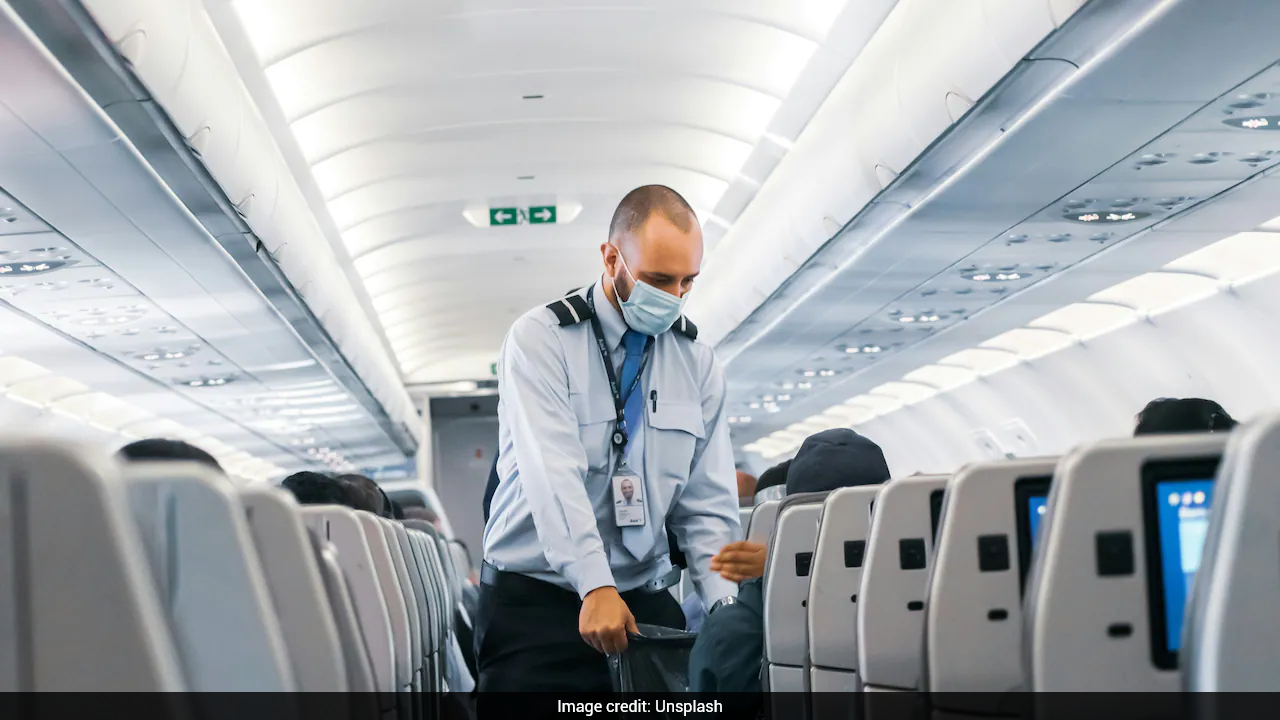
Pilots and flight attendants apparently are among the professionals who suffer certain types of cancer more, as compared to people from other professions. According to a study published on Monday (Aug 17), this happens because of prolonged exposure to cosmic radiation at high altitudes.
While passengers flying occasionally face negligible health risks, airline employees spend hundreds of hours every year high in the atmosphere, where Earth's protective air barrier is significantly thinner. And as a result, the crew members absorb higher lifetime doses of ionising radiation.
"Aircrew members receive the largest mean annual effective dose of ionizing radiation of any occupational group in the US, primarily due to cosmic rays encountered at commercial flight altitudes," researchers noted in JAMA, the peer-reviewed medical journal published by the American Medical Association. "Potential health consequences of this exposure, including cancer risk, have become a priority for public health experts and federal agencies."
Also read | "Completely Different World": Zimbabwe Man Praises India's Education And Culture, Internet Reacts
According to the US-based health agency, the Centers for Disease Control and Prevention, ionising radiation is a powerful form of energy that can alter the body's cells and DNA if absorbed at high levels.
As per details published by People magazine, the study was carried out between 2020 and 2024 to examine the potential risks of "radiation-related cancer mortality" among pilots and flight attendants as "compared with other occupations".
The Harvard Medical School stated that records from around 14,000 pilots and 7,000 flight attendants were used in the study.
The researchers screened for breast cancer, central nervous system cancers, multiple myeloma, leukaemia, among other cancers, as they compared the pilots and flight attendants to non-flying workers. The researchers also considered factors like age, race, education, and marital status.
They studied more than 500 occupations, and found that pilots and flight attendants are at greater risk.
Also read | "Miraculous": Tiny Field Mouse Rescued After Escaping Devastating Wildfire In UK
"Aircrew accrue an estimated 3 to 6 millisieverts per year of cosmic radiation (depending on flight paths), an order of magnitude above the estimated 0.4 millisieverts received annually by an average air traveler taking 10 cross-country round-trip flights per year," Harvard Medical School noted, citing the CDC.
Why does it happen?
At ground level, Earth's thick atmosphere shields living organisms from space-borne radiation. However, high-altitude flight routes reduce that natural barrier, exposing planes to higher background radiation levels.
Long-haul international flights and polar flight routes expose crew members to elevated radiation levels due to Earth's magnetic field strength near the poles.
Researchers emphasise that aviation workers require clearer safety guidelines, regular medical screenings, and better monitoring of overall flight hours to help lower health risks.
Track Latest News Live on NDTV.com and get news updates from India and around the world

