
From contract relationships and secret kidnappings to inheritance wars and elaborate family cover-ups, Korean dramas have made falling in love with a chaebol heir an industry of its own.
Netflix's Take Charge of My Heart knows the formula is familiar. It also knows audiences aren't quite ready to let it go.
-

-
 Is AI Bubble Waiting To Burst? Nikhil Kamath Warns Of Tougher Months Ahead
-
 "We Don't Have 5 Years": Celebrated American General Sounds Alarm On War
-
 "There Will Be Issues Between Big Countries": S Jaishankar On India-China
-
 Neha Goyal Makes Stunning Asian Games Gold Revelation At NDTV World Summit 2026
-
 Big NDTV Summit Impact: RBI Governor's Tata Sons Listing Remark Makes Top Newspaper Headlines
-
 "Certainty Is A Problem": Nikhil Kamath On Marriage, Children And Future
-
 "High Inflation Is Like Tax On Everyone": RBI Governor At NDTV World Summit
-
 RBI Governor Sanjay Malhotra's Big Hint On Tata Sons Listing Row At NDTV World Summit
-
 The Mystery Of A Bare Nail In Ashwini Vaishnaw's Office
-
 To PM Modi's "Failed Product" Jab At Rahul Gandhi, A Shashi Tharoor Counter
There are two kinds of people in K-dramas: those who have a perfectly reasonable job, a modest apartment and an ordinary set of romantic problems, and those whose grandparents own half the city, whose family dinners double as succession meetings, and whose love lives somehow end up involving corporate espionage, childhood trauma and at least one person threatening to ruin the family business.
The latter, naturally, are far more interesting to watch.
In the world of Korean dramas, being rich is rarely just about having money. It means living in a house with more rooms than emotional stability, having parents who consider marriage a corporate merger, and discovering that the person you love is somehow connected to a family secret buried 20 years ago. It means that even a simple confession of love might have to compete with a boardroom coup.
And yet, we keep watching. We watch the impossibly handsome heir fall for the overworked employee, the cold executive discover his softer side, and the ordinary woman find herself at the centre of a family empire she never asked to enter. We know the tropes. We can often predict the next misunderstanding before it happens.
Still, when Netflix releases another K-drama featuring a wealthy heir and a romance complicated by his family's money, power and secrets, the familiar formula finds another audience.
Take Charge of My Heart, which premiered on Netflix on October 9 and released all 10 episodes at once, arrives with a rather amusing awareness of this phenomenon. The fantasy romantic comedy, starring Kim Young-kwang and Chae Soo-bin, not only participates in the chaebol romance tradition but also acknowledges the question viewers have been asking for years: how many times can we watch the same kind of rich heir fall in love?
The answer, apparently, is one more time. Provided, of course, that his heart runs on a battery and the woman he loves can recharge it with her touch.
'Isn't This Story Getting A Little Old?' Even K-Dramas Are Asking The Same Question
In Take Charge of My Heart, Na Bo-bae (Chae Soo-bin) is a screenwriter struggling to write a convincing romance. Her own life has hardly offered her a useful reference point. After being struck by lightning as a child, she develops the ability to emit electric currents, making physical contact with other people potentially dangerous.
Holding hands, hugging and kissing are not ordinary romantic milestones for her, they are things she has spent years being unable to experience.
For her latest project, Bo-bae is writing a story about a wealthy heiress who falls in love with her bodyguard. The premise is familiar enough to anyone who has watched Korean television for a while. It is also precisely the kind of story that her love interest, Baek Ho-rang (Kim Young-kwang), questions.
Ho-rang, a third-generation chaebol heir with an artificial heart that needs recharging, essentially asks Bo-bae why writers keep returning to rich-heir romances when the genre has been done so many times before.

Bo-bae's response is a refreshingly straightforward defence of popular storytelling: perhaps the premise is familiar, but audiences still enjoy it. They want to see these characters fall in love, they want the fantasy, and they want the emotional payoff. A story does not necessarily lose its appeal simply because its basic ingredients have been used before.
It is a neat exchange because it acknowledges the genre's repetition without pretending that repetition automatically makes it worthless. The show knows that the wealthy heir is a well-worn K-drama character. It also knows that the appeal of watching two people find each other does not disappear just because their romance begins in a familiar setting.
There is, of course, a difference between recognising a trope and executing it well. Take Charge of My Heart gives the familiar arrangement a supernatural twist: Bo-bae can charge Ho-rang's artificial heart simply by staying close to him, with physical contact proving even more effective. What begins as a practical arrangement, with Ho-rang needing her help and Bo-bae needing romantic experience for her script, develops into something more intimate.
The premise is absurd in the way only a fantasy K-romance can be. But beneath the electrical currents and artificial-heart mechanics lies a recognisable emotional proposition: what happens when two people who have been unable to experience intimacy discover that they can be vulnerable with each other?
The chaebol framework is the packaging. The romance remains the product.
The Chaebol Heir: A K-Drama Institution That Refuses To Retire
The word chaebol refers to South Korea's large, family-controlled business conglomerates. In K-dramas, however, the chaebol has evolved into something larger than an economic category. It is a character type, a plot device and, at times, an entire romantic fantasy.
The chaebol heir is usually extraordinarily capable at work, emotionally complicated in private and accustomed to getting what he wants. He might be arrogant, controlling or comically out of touch with ordinary life. His family might run hotels, department stores, food companies or sprawling corporate empires. Whatever the business, the inheritance is never merely a matter of paperwork. It is a battle for power, approval and sometimes survival.
His romantic interest, meanwhile, tends to come from a different world. She may be a hardworking employee, a struggling professional or someone whose financial circumstances make the heir's lifestyle almost incomprehensible. Their differences generate comedy, conflict and the familiar question of whether love can survive the gap between their worlds.

A still from Business Proposal.
The formula has proved remarkably adaptable. In one drama, the heir might be a hotel executive who falls for an employee (King the Land). In another, he might be a CEO whose blind date turns out to be someone who works for him (Business Proposal). In a third, the wealthy woman might be the one with the family empire, while her husband struggles to find his place within it (Queen of Tears).
The circumstances change, but the central attraction remains: money gives these characters access to almost everything, except the one thing that cannot be bought or negotiated into existence. Love.
And because K-dramas rarely allow their wealthy protagonists to enjoy a peaceful relationship for too long, that love becomes entangled with family expectations, rival heirs, secret histories and the occasional criminal scheme.
The Familiar Fantasy In Different Clothes
Consider King the Land (2023), which places its romance inside a luxury hospitality empire. Gu Won (Lee Jun-ho), the heir to King Group, finds himself drawn to Cheon Sa-rang (Lim Yoon-a), a dedicated hotel employee whose cheerful professionalism initially irritates him.
Their relationship develops against the backdrop of a succession struggle involving Won's older sister, Gu Hwa-ran (Kim Sun-young).
The hotel is not merely a glamorous setting for the romance; it is also the source of the family's power struggle. Won must navigate the expectations attached to his position while discovering what he wants beyond inheriting the business.
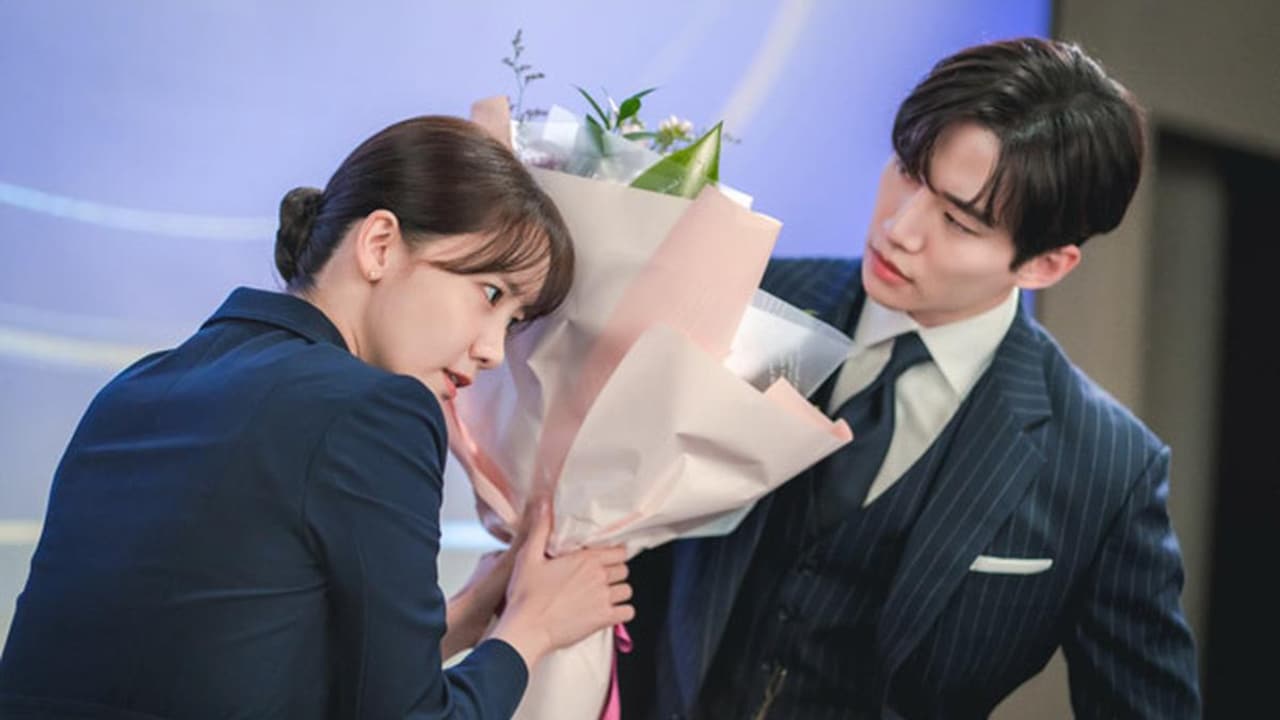
A still from King The Land.
The drama's appeal lies partly in the contrast between the world Won inhabits and the person he becomes around Sa-rang.
At work, he is the heir to a luxury empire. With her, he is a man who must learn to communicate, pay attention and earn affection rather than assume that his status will do the work for him.
Business Proposal (2022) takes the trope into more overtly comic territory. Shin Ha-ri (Kim Se-jeong) agrees to attend a blind date in place of her friend, Jin Young-seo (Seol In-ah), intending to frighten the prospective groom away. Unfortunately for her, the man sitting opposite her is Kang Tae-moo (Ahn Hyo-seop), the young CEO of her company, Go Food.
Tae-moo, pressured by his grandfather to marry, responds by turning the encounter into a contract relationship. The arrangement is supposed to solve a family problem. Instead, it creates several new ones, including the inconvenient development of actual feelings.
The premise is deliberately ridiculous. Its humour comes from watching two people attempt to control a situation that becomes increasingly impossible to manage. Tae-moo's wealth and position give him the confidence to organise other people's lives, but romance repeatedly exposes the limits of that control.

A still from Business Proposal.
There is a reason contract dating remains such a reliable K-drama device. It provides a ready-made excuse for two people to spend time together before either is prepared to admit why they want to. Add a wealthy CEO, a meddling grandfather and a secret identity, and the story has its own momentum.
Then comes Queen of Tears (2024), which turns the rich-heir romance into something more emotionally fraught. Hong Hae-in (Kim Ji-won), an heiress and CEO of Queens Department Store, is married to Baek Hyun-woo (Kim Soo-hyun), a lawyer from a rural family who has risen to become the group's legal director.
Unlike the early stages of a conventional Cinderella romance, their story begins with a marriage already in crisis. The differences between their backgrounds have become entangled with resentment, family pressure and the emotional distance that has developed between them. Hae-in's serious illness forces Hyun-woo to reconsider the divorce he has been contemplating, while Yoon Eun-sung (Park Sung-hoon), a former Wall Street analyst with a history involving Hae-in, becomes entangled in the family's struggle for control.
Here, the chaebol setting does more than manufacture romantic obstacles. It magnifies them. The family's wealth makes every personal conflict consequential, while its hierarchy leaves little room for the characters to separate their private desires from their public responsibilities.

A still from Queen Of Tears.
Queen of Tears also demonstrates why the trope can survive a change in gender dynamics. Hae-in is not simply the prize at the end of a wealthy man's romantic pursuit. She is the powerful heiress, the executive and the person whose family world shapes the marriage. Hyun-woo's position beside her complicates the conventional rich-man-poor-woman arrangement, allowing the drama to explore pride, vulnerability and the unequal distribution of power within a relationship.
The chaebol romance, in other words, is not a single story. It is a framework that can accommodate comedy, heartbreak, workplace romance, marriage drama and family melodrama.
When Being Rich Comes With A Childhood Kidnapping Cover-Up
If King the Land and Business Proposal demonstrate the lighter side of the genre, What's Wrong with Secretary Kim? (2018) shows how quickly a seemingly straightforward romance can become a family mystery.
Lee Young-joon (Park Seo-joon), the vain but highly capable vice-chairman of a major company, is thrown into a crisis when his secretary, Kim Mi-so (Park Min-young), announces that she wants to resign after nine years. His immediate solution is not to consider her professional ambitions. Instead, he decides that she should marry him.
That is already a spectacularly self-centred response to a resignation letter. But the drama's deeper plot reveals a childhood kidnapping that Mi-so witnessed and a family secret that has shaped the brothers' lives for years.
As Mi-so investigates what happened, she begins to realise that Young-joon was the boy who was abducted, not his older brother, Lee Sung-yeon (Lee Tae-hwan), who has spent years believing he was the victim. Their parents allowed the false account to persist, believing they were protecting their sons from further trauma.

A still from What's Wrong With Secretary Kim.
A secretary's resignation, then, becomes the entry point into a story involving childhood memories, mistaken identity and an elaborate family cover-up.
This is one of the genre's most entertaining habits: it refuses to let a wealthy protagonist have an ordinary problem. A disagreement becomes a corporate crisis. A family dinner becomes an interrogation. A childhood memory becomes a mystery that threatens to rearrange everyone's understanding of the past.
The chaebol setting allows personal relationships to acquire the scale of corporate intrigue. The family's power makes it possible to conceal the truth, control the narrative and protect its reputation. Wealth is not simply a backdrop; it becomes part of the machinery that keeps the secret alive.
And once viewers have invested in the central couple, the revelation gives them another reason to stay. They are no longer watching only to discover whether the two leads will end up together. They want to know what happened, who knew and what the truth will cost.
When The Romance Comes With A Side Of Revenge
The darker side of the chaebol genre is built on the idea that a family empire is never entirely secure. Someone is always waiting to inherit it, someone else believes they deserve it more, and a third person may be prepared to destroy the family to get what they want.
In Take Charge of My Heart, Ho-rang's artificial heart is only one of his vulnerabilities. His position within TS Group makes him a target in a succession struggle, particularly for his cousin Choi Do-yoon (Jung Jae-kwang), who wants to become the group's successor.
The family conflict reaches back into childhood. Do-yoon's resentment and insecurity are connected to the accident that killed Ho-rang's parents. Years later, that history feeds into his determination to eliminate Ho-rang as a rival. Knowing that Bo-bae is Ho-rang's priority, he has her kidnapped during the group's anniversary celebration. Ho-rang, whose drink has also been tampered with, collapses when his artificial heart loses power.
Bo-bae's attempt to save him becomes the culmination of the show's central fantasy: the woman whose touch has kept her isolated from others uses her powers to bring the man she loves back from the brink. The rescue, however, comes with a cost, as she is told that touching Ho-rang again could endanger his newly replaced artificial heart.
It is an escalation that combines the genre's familiar ingredients - inheritance, betrayal, family trauma and a life-threatening crisis - with the series' more unusual supernatural premise.

A still from Take Charge Of My Heart.
There is something almost comical about how much danger a chaebol heir can attract simply by existing. Yet the stakes also serve a narrative purpose. The family's wealth and influence create the conditions for conflict, while the romance gives the protagonist something more personal to lose than his position in the company.
The succession battle matters because it threatens Ho-rang's future. The kidnapping matters because it puts Bo-bae in danger. The artificial heart matters because it turns their emotional connection into a matter of life and death.
When the elements work together, the melodrama feels less like a collection of random twists and more like an extension of the central relationship. When they do not, the plot can become crowded with complications that distract from the couple viewers came to watch.
That distinction matters when asking whether the genre is overstuffed. It is not necessarily the presence of another inheritance war or family secret that makes a drama feel repetitive. It is whether those elements give the characters something meaningful to overcome.
Why Do We Keep Falling For Men Who Have Everything?
Perhaps the most obvious answer is escapism. Chaebol romances offer viewers access to a world of extraordinary luxury: sprawling houses, designer wardrobes, private cars, expensive restaurants and workplaces that look suspiciously glamorous for somewhere people are supposed to be working.
But the appeal cannot be explained by wealth alone. If it were, any story about a handsome billionaire would do.
The more enduring fantasy is that someone who has everything will still find something in another person that money cannot provide. The heir can buy the company, secure the position and hire the best people to solve a problem. He cannot simply purchase trust, emotional intimacy or the certainty that someone loves him for reasons unrelated to his surname.
In Business Proposal, Tae-moo can organise a contract relationship, but he cannot dictate how it develops. In King the Land, Won's position gives him authority at work, but Sa-rang's affection requires him to become a more attentive partner. In Queen of Tears, Hae-in's wealth and professional standing cannot protect her marriage from emotional distance or illness.
The fantasy is not simply that a rich man chooses an ordinary woman. It is that the rich man, despite his privilege, must eventually confront the limits of that privilege.
For viewers, this can be a satisfying reversal. The person who appears to hold all the power discovers that love is the one area in which status offers no guarantee of success. He may have an entire conglomerate behind him, but he still has to make the phone call, apologise for the mistake, show up when it matters and risk being rejected.
There is also the pleasure of watching a guarded character become softer without losing the qualities that made him compelling in the first place. The cold executive who remembers a small detail, the arrogant heir who learns to listen, the emotionally distant man who begins to make room for someone else's needs: these are familiar transformations, but they remain effective when the writing gives them room to unfold.
Of course, the genre can also romanticise possessiveness, class inequality and the idea that a woman's life will improve simply because a wealthy man has entered it. Not every controlling gesture becomes charming just because the man making it has a beautiful face and a penthouse.
The better dramas understand that romance requires more than grand gestures and expensive gifts. It requires the characters to change, and that change has to mean something beyond winning the person they desire.
The Real Appeal Of Take Charge Of My Heart Is Not The Money
What makes Take Charge of My Heart an interesting addition to this conversation is that its most distinctive romantic device has little to do with wealth.
Bo-bae has spent much of her life unable to touch another person without hurting them. Ho-rang, meanwhile, is living with a heart that cannot function independently of an extraordinary external source of power. Their circumstances turn physical closeness into a practical necessity before it becomes an expression of affection.
The arrangement gives the show a way to dramatise a familiar romantic question: how do two people who are used to protecting themselves learn to let someone else in?
Bo-bae's inexperience is not simply a convenient source of comedy. Her condition has denied her the ordinary experiences through which many people learn about intimacy. She has to navigate a relationship she has largely encountered through fiction, even as she attempts to write a convincing romance herself.

A still from Take Charge Of My Heart.
Ho-rang, for all his wealth and professional competence, also has a vulnerability that his position cannot erase. His artificial heart places a limit on the control he exercises over the rest of his life. The woman who can help him survive is also someone whose own desires and ambitions cannot be reduced to his needs.
Their contract brings them together, but it does not automatically make them compatible. They must still discover what they mean to each other once the practical arrangement begins to develop into something more personal.
The show's story-within-a-story adds another layer. Bo-bae is writing a romance about a wealthy heiress and her bodyguard, reversing the familiar gender and class arrangement. Her fictional heroine occupies the position usually reserved for the chaebol male lead, while her real-life romance with Ho-rang follows a different configuration.
That reversal is a reminder that the genre's appeal need not depend on reproducing the same relationship in precisely the same form. A familiar framework can still offer room to change who holds the power, whose perspective matters and what the characters want from one another.
The challenge is to ensure that the fantasy premise, the family politics and the romantic development reinforce each other rather than compete for attention.
Are Viewers Tired Of The Trope, Or Simply Tired Of Seeing It Done Badly?
There is a difference between a genre becoming familiar and an audience losing interest in it. The chaebol romance has been repeated often enough for viewers to recognise its vocabulary: the grand entrance, the contract relationship, the hostile family member, the rival suitor and the emotionally repressed protagonist who eventually falls in love.
That familiarity can be comforting, but it can also expose a drama that relies too heavily on convention without giving its characters enough depth.
Take Charge of My Heart illustrates both sides of the debate. Audience reactions to the series have reflected different expectations, with some viewers enjoying the chemistry between its leads and its playful fantasy premise, while others have questioned its rushed resolution and unanswered plot points.

A still from Take Charge Of My Heart.
Neither response is surprising. Viewers drawn to romantic tension and an escapist fantasy may be willing to overlook a few implausibilities. Those expecting the family rivalry to receive as much attention as the central romance may be less forgiving when the story rushes through its conflicts.
Perhaps audiences are not tired of the chaebol heir so much as they are becoming more discerning about what a drama does with him. Wealth alone cannot make a character compelling, just as a succession battle or a family secret cannot automatically create meaningful conflict. Even the familiar contract relationship needs to develop into a romance that feels earned rather than inevitable.
The chaebol formula remains versatile enough to accommodate workplace comedies, troubled marriages and elaborate family melodramas. Its appeal lies in the opportunity to explore class, ambition, family expectations and the gap between public success and private vulnerability. But familiarity is both its greatest strength and its biggest risk: the conventions draw viewers in, while predictable storytelling can push them away.
Take Charge of My Heart makes this contradiction part of its own premise. Through Ho-rang, it questions why the industry keeps returning to rich-heir romances. Through Bo-bae, it offers a straightforward answer: audiences still enjoy watching them.
And perhaps the reason is simpler than the elaborate family histories and corporate power struggles suggest. The chaebol romance promises that even someone who seemingly has everything can be vulnerable, lonely and uncertain when it comes to love. Money can secure an empire, but it cannot guarantee affection or trust.
The next K-drama may give its heir a different company, a more complicated family secret or another improbable reason to move in with the woman he loves. The formula may be familiar, but when the characters and their emotional journeys feel fresh, viewers may still be willing to give it another chance.
We may complain that we have seen it all before. And then we may press play anyway.
