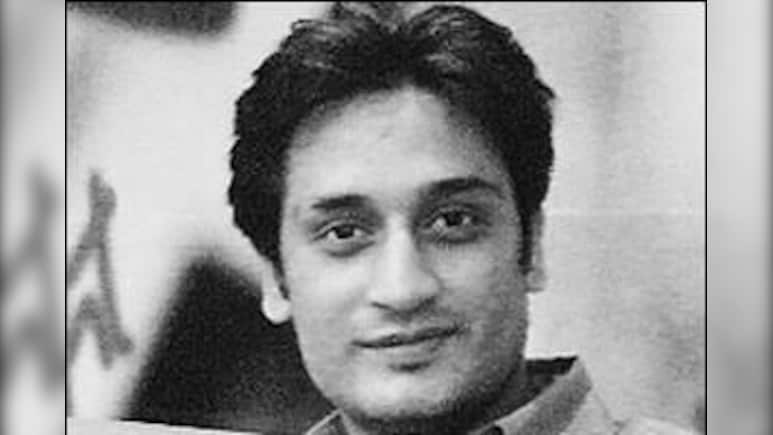
On paper, it was just another missing-person complaint; in reality, it was the beginning of one of Mumbai's most chilling murder stories, starring a TV insider, a hopeful actress and a naval officer driven by suspicion.
When television executive and casting director Neeraj Grover stopped answering calls in May 2008, his worried family approached the police. They suspected a woman friend might know more about his disappearance.
That woman was Maria Susairaj, an aspiring actress Grover had been helping find work in Mumbai. She told investigators that Grover had left her Malad apartment around midnight to attend a party in Andheri.
He had not.
According to investigators, Grover was already dead. His body had been cut into pieces, packed into bags, driven out of Mumbai and set on fire in a forest. What appeared to be a missing-person case was about to expose a killing fuelled by suspicion, followed by a desperate attempt to erase nearly every trace of it.
The Actress, The TV Insider And Her Naval Officer Fiance
Neeraj Grover worked with Synergy Adlabs, a Mumbai-based production house. Friends and colleagues knew him as someone who often helped newcomers find their way into the entertainment industry.
Maria Susairaj was one of them. The small-time Kannada actress was trying to break into television, and Grover had reportedly arranged auditions and helped her make industry contacts.
Maria was also in a relationship with Lieutenant Emile Jerome Mathew, a naval officer based in Kochi. The two reportedly intended to marry.
According to investigators, Maria had told Jerome that Grover had a crush on her, though she did not share his feelings. By early May 2008, Grover was helping her move into a rented apartment in Mumbai's Malad area.
On the night of May 6, he arrived at the flat to help her unpack. Later that night, Jerome called Maria and reportedly heard a man's voice in the background.
Maria told him Grover was there and would leave after dinner.
But Grover stayed the night.
A Doorbell Rang At 7.30 In The Morning
Without telling Maria, Jerome boarded a flight from Kochi to Mumbai. At around 7.30 am on May 7, the doorbell rang.
Maria later recalled, "I found Emile at the door. He directly entered the house, and I followed him inside. Neeraj also woke up."
According to the prosecution, Jerome entered the bedroom and found Grover there. A confrontation began almost immediately.
"Emile started raining blows on Neeraj. Both started fighting with each other. I could not control them," Maria alleged in her confession.
She further claimed, "I saw that Emile had stabbed Neeraj with a knife from my kitchen. I tried to hold the knife. I sustained an injury on my right palm."
The prosecution alleged that Jerome stabbed Grover to death during the fight.
Maria also alleged that Jerome threatened her, threw her on the bed and raped her while holding the knife. Her defence would later argue that she was "a victim of circumstance" who acted out of fear.
What happened in the hours after Grover's death, however, became central to the case against both of them.
Shopping After The Killing
Investigators alleged that Maria went shopping later that morning on Jerome's instructions. The list was anything but ordinary: bags, curtains, bed sheets, room freshener and another knife.
"After 11 am, Emile dragged the body of Neeraj into the bathroom. Then he told me to purchase bags, curtains, a knife and some room freshener," Maria said.
When she returned, she claimed Jerome told her to stay out of the bathroom and clean the bloodstained hall.
By then, investigators alleged, Grover's body had been dismembered.
Maria contacted her friend Kiran Shreyas and borrowed a Hyundai Santro. She and Jerome then collected the car and stopped at a petrol pump, where Jerome allegedly bought plastic cans and five litres of petrol.
"He put all the pieces of the body into two big bags and put them in the car. He asked me to drive," Maria said in her confession.
According to police, the pair drove towards Manor and took a rough road leading to a forest near Amgaon village. Jerome allegedly removed the bags, poured petrol over them and set them on fire.
They then returned to Maria's apartment, where investigators said efforts were made to remove the remaining bloodstains.
For years, reports claimed that Grover's body had been chopped into 300 pieces. The trial court later rejected that claim as "far from the facts on record", observing that it had unnecessarily inflamed public outrage.
The facts established in court were already disturbing enough.
The Phone Call That Gave Them Away
The attempt to make Grover disappear was elaborate, but it was not flawless.
One of the biggest breaks came from Grover's mobile phone. While travelling towards Manor, Maria accidentally answered an incoming call on it. She disconnected almost immediately, but investigators traced the phone's location.
It was nowhere near Dadar, where she had claimed to be shopping.
Maria also initially gave police false information about the borrowed Santro. She claimed it belonged to Jerome's friend Jitesh, but investigators discovered that he was away on naval duty. She later admitted that the car belonged to her friend Kiran.
On another occasion, one of Grover's friends called his number. Maria reportedly answered and claimed Grover had stepped out without taking his phone.
Investigators also found that Jerome had called Maria nearly 1,000 times between May 7 and May 20. The calls, the car and the mobile-phone location began pulling apart their version of events.
After allegedly misleading investigators for nearly 10 days, Maria revealed what had happened inside the Malad apartment.
"I Made A False Statement"
Maria claimed she had remained silent because Jerome threatened to kill her and then take his own life.
She said Grover's friends had asked her to accompany them to the police station after he vanished.
"I went with them to Malad police station. I made a false statement, as directed by Emile," she said.
"All the while, he was threatening me not to tell anything to the police; otherwise he would kill me and also kill himself. I say that Emile killed Neeraj in front of me."
The investigation still attracted criticism. The alleged murder weapon, said to have been thrown into a garbage chute, was not immediately recovered. Police also failed to promptly verify Jerome's claim that he had travelled to Mumbai for naval training.
Investigators reportedly overlooked a freshly painted wall inside Maria's apartment as well. Prosecutors later alleged that it had been painted to conceal bloodstains.
A Verdict That Left Grover's Family Furious
In July 2011, more than three years after Grover was killed, a Mumbai sessions court delivered its judgment.
Maria was acquitted of murder but convicted of destroying evidence. She was sentenced to three years in prison, the same period she had already spent in custody during the trial, and was released soon afterwards.
Jerome was convicted of culpable homicide not amounting to murder and destruction of evidence. He received a 10-year sentence for the killing and three years for destroying evidence, with both terms running concurrently.
Explaining why Jerome had not been convicted of murder, Judge N.W. Chandwani observed, "When he entered the room he was calm. This showed he did not have the intention to murder. Obviously, for a fiance, in a situation where he finds a stranger with his partner, would upset a prudent man and he would lose control."
The court also directed Jerome and Maria to pay Rs 50,000 each as compensation to Grover's family.
The verdict triggered anger across the country. Many believed the punishment did not match the brutality of the crime or the lengths taken to destroy the evidence. Grover's family said they had not received justice.
Years later, the Neeraj Grover case is still remembered not simply because a young television executive vanished after visiting an actress's apartment, but because of what lay behind that first missing-person complaint: a body in a bathroom, shopping bags bought after a killing, a borrowed car, five litres of petrol and one accidental phone call that helped expose it all.
