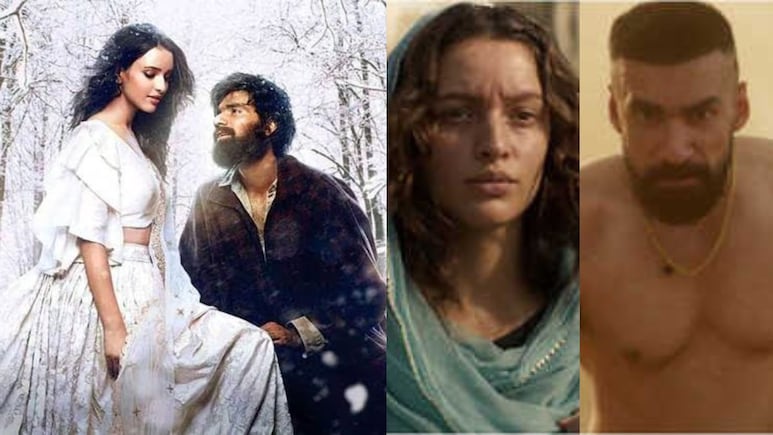
Some love stories don't end. They echo. They reincarnate. They return with different names, different wounds, different weapons. And sometimes, they return only to kill each other again.
Between Laila Majnu and O'Romeo lies a haunting symmetry: one where Avinash Tiwary dies twice, and both times, Triptii Dimri is the reason.
Once she dies, he cannot survive her absence.
The second time, she lives, and she ends him herself.
It feels less like a coincidence and more like destiny rehearsing itself in parallel universes.
The Beginning Of A Curse
In Laila Majnu, Avinash Tiwary's Qais begins as a reckless romantic - charming, obsessive, certain that destiny will bend for love. Triptii Dimri's Laila is fire and defiance, caught between patriarchy and passion.
Their love collapses under ego, misunderstanding, and familial warfare. When Qais crashes Laila's wedding and begs her to run away with him, she refuses, citing family duties. Devastated, he tells her he's done chasing her, and she must now seek him out.
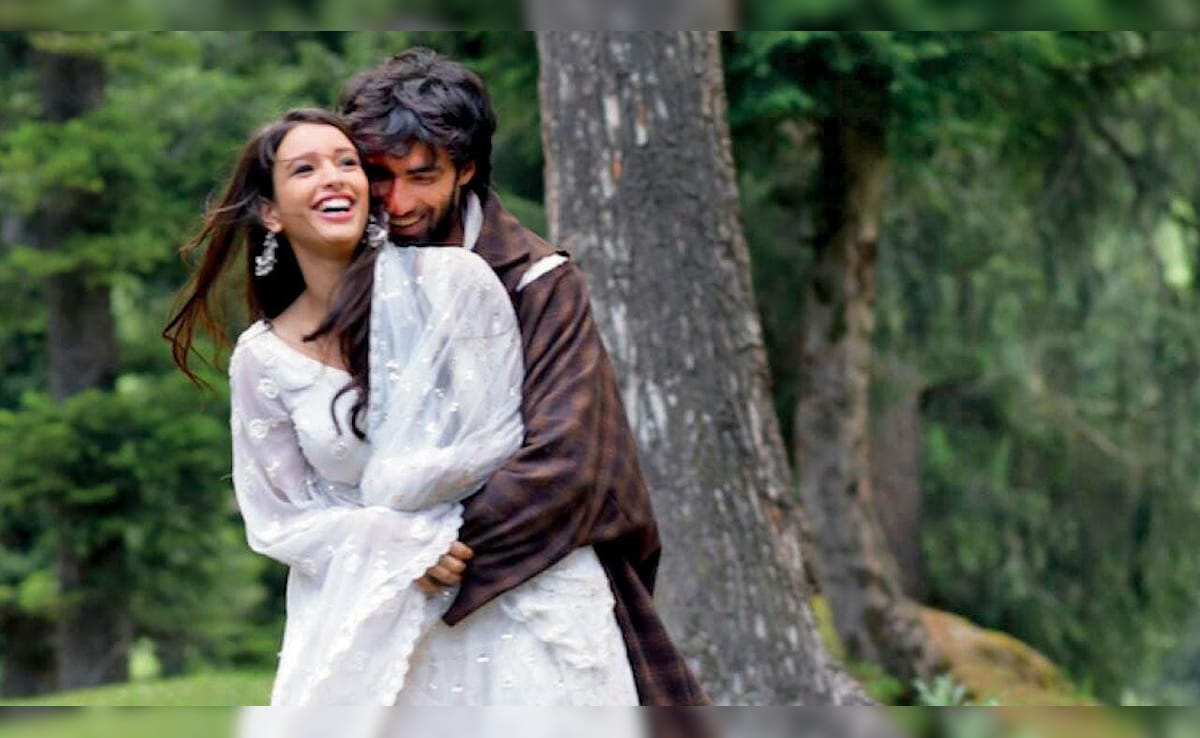
A still from Laila Majnu.
In that moment, Qais says the line that would later feel prophetic, "Jaa, main nahi aata. Ab tu hi dhoond mujhe."
He stops chasing. He waits.
Years pass. Qais returns, mentally unravelled, love fermenting into madness. Laila, trapped in abuse, still believes in them. She asks him to wait. Again. And again.
But love delayed becomes love distorted. Qais drifts into hallucination. He begins to see Laila everywhere: not as a woman, but as a presence.
And then comes the most devastating inversion of pursuit.
Laila dies.
Holding the very note Qais once gave her: "If you want me, you'll have to come find me." She reaches him, but through death. Qais, now fully Majnu, runs toward the mountains and collapses on her grave. He hits his head. He dies.
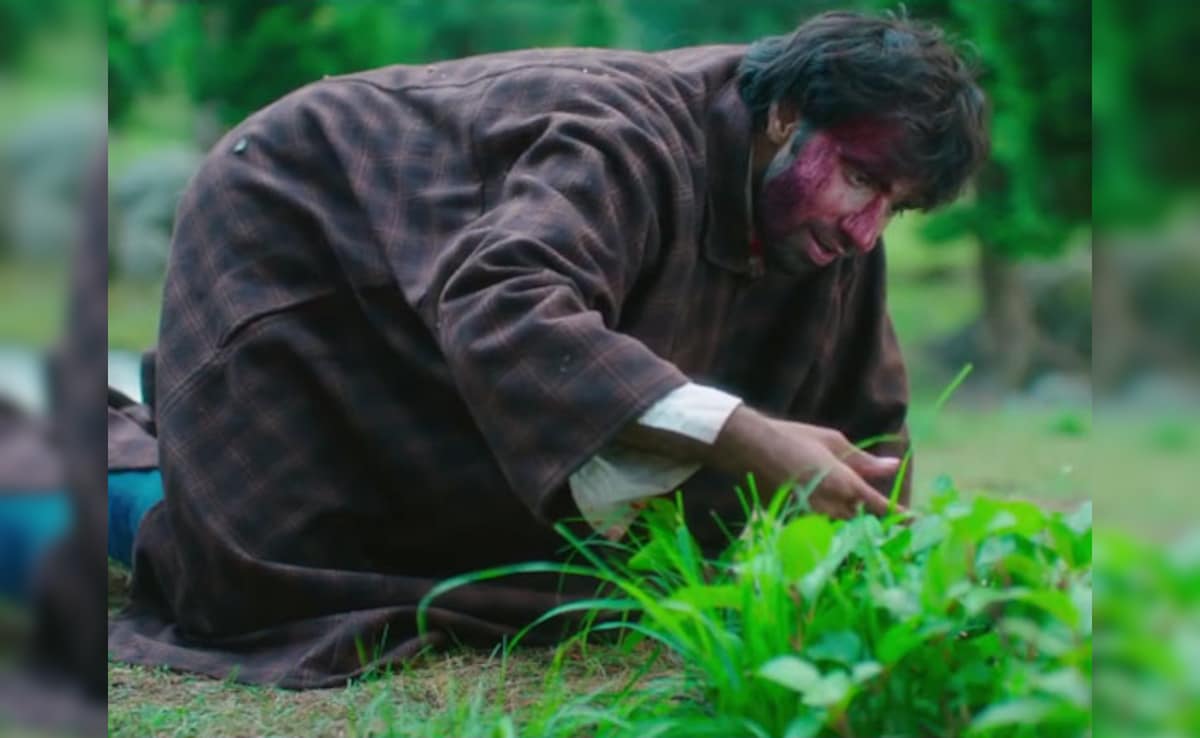
His last vision? Laila calling to him from the mountaintop.
The film ends with the ironic whisper: "They lived happily ever after, which is both ironic and true."
In this universe, she becomes his cause of death by dying first. He cannot exist without her.
How O'Romeo Rewrites Fate
Fast forward to the latest release, O'Romeo, directed by Vishal Bhardwaj. The dynamic has shifted, but the emotional residue remains.
Avinash Tiwary is no longer the lover. He is Jalal, a mafia overlord ruling from Spain. Calculated. Ruthless. The orchestrator of Mehboob's (Triptii's husband, played by Vikrant Massey) murder.
Triptii Dimri's Afshan begins as a widow scorched by grief. She hires Ustara (Shahid Kapoor) to kill the men responsible. But revenge is not outsourced. It is intimate.
And this time, she goes searching.
Remember Qais' words? "Ab tu hi dhoond mujhe."
In O'Romeo, Afshan literally travels across continents. She reaches Spain. She infiltrates Jalal's world. She marries strategically. She kills methodically. She becomes something colder, sharper.
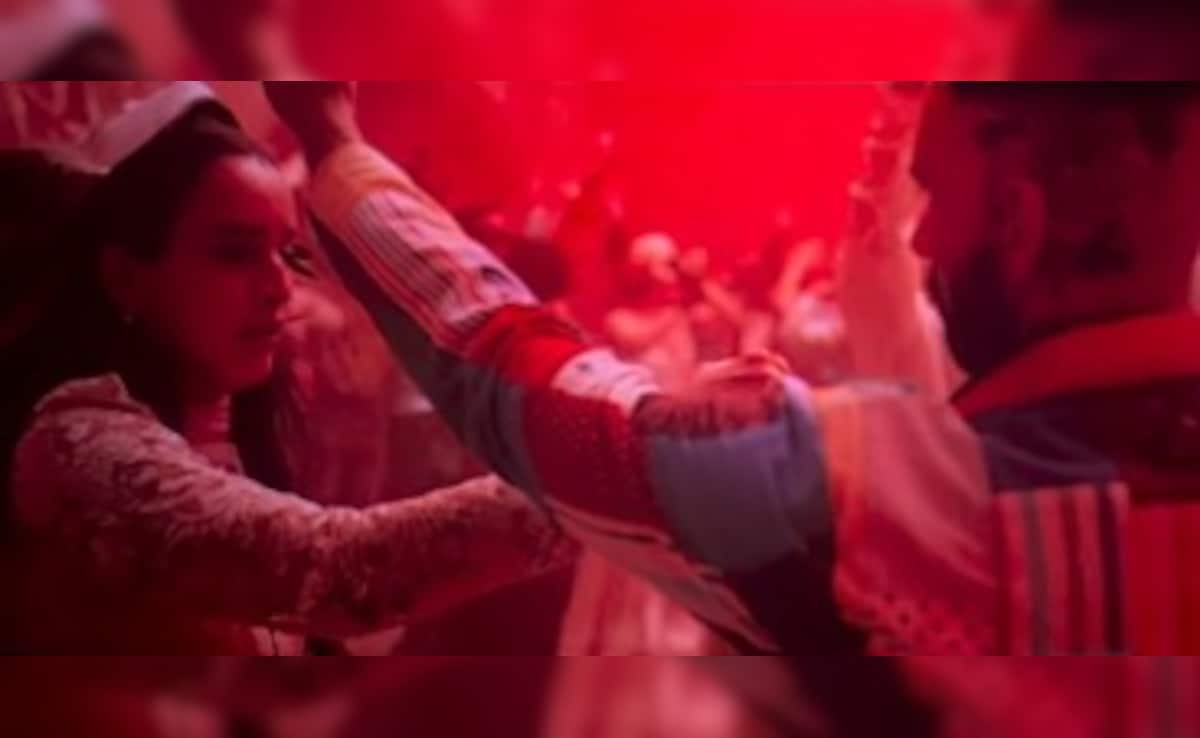
A still from O'Romeo.
Jalal himself once says, "Jalal ki toh mohabbat bhi mehengi hai... aur tumne ranjish khareed li... yahan se keval ek dhad wapas jaayega - ya toh tera, ya phir mera."
Only one heartbeat will return.
It doesn't.
In the final confrontation, Ustara defeats Jalal, but does not kill him. He lets Afshan finish it. And she does. She stabs Jalal with a sword.
Unlike Laila Majnu, where she dies, and he follows, here she lives, and she chooses his death.
The Masquerade Of Memory
There's a scene in O'Romeo: dimly lit, masked, almost theatrical.
Avinash holds Triptii's arms. He removes his mask. Then hers.
For anyone who has watched Laila Majnu, it is impossible not to flash back.
In Laila Majnu, Qais chases Laila playfully, cornering her, removing his mask in a similar moment of charged intimacy. That scene wasn't about menace. It was flirtation, destiny teasing them forward.
In O'Romeo, the gesture feels darker. History lingers in the air. It's as if two souls recognise each other but are bound to opposite ends of fate.
Fans have called it a "Laila and Majnu in a parallel universe."
Posts from the bollyblindsngossip
community on Reddit
"Ta Umr Zinda Rahega Ishq Humara..."
One of the most enduring lines from Laila Majnu is: "Ta umr zinda rahega ishq humara, har ek ishq ke afsane mein zikr hoga mera ya tumhara. (Our love will live forever; in every love story, there will be a mention of me or you)".
That line feels eerily literal now.
In one universe, love consumes him.
In another, revenge ends him.
But in both, she defines his fate.
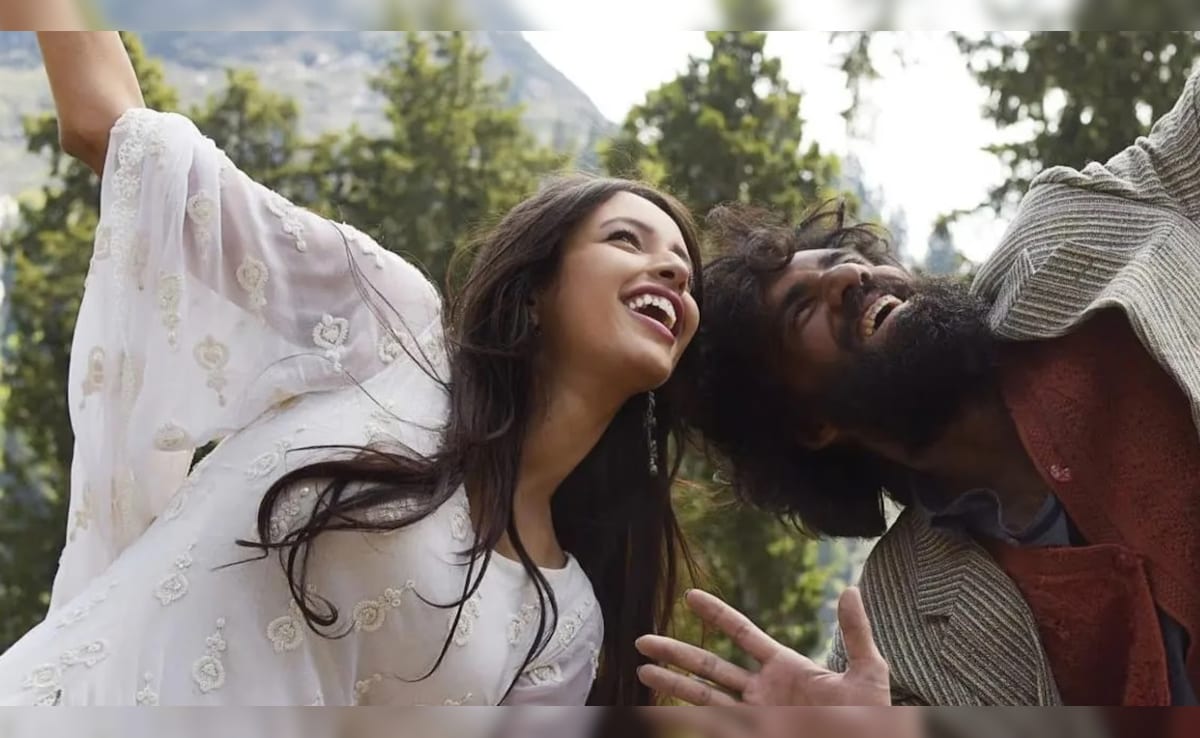
A still from Laila Majnu.
Even the idea of searching, of one lover telling the other to find them, becomes fulfilled differently.
In Laila Majnu, she reaches him in death.
In O'Romeo, she reaches him in Spain with a needle.
Either way, she finds him.
Before Spain, There Was Bengal
Between these two films sits Bulbbul. Here, the dynamic shifts yet again. Here, they are not lovers undone by passion or enemies bound by revenge. They are childhood companions who had feelings for each other but never confessed.
Triptii Dimri's Bulbbul transforms from an abused child bride to a supernatural avenger, the chudail punishing men who harm women.
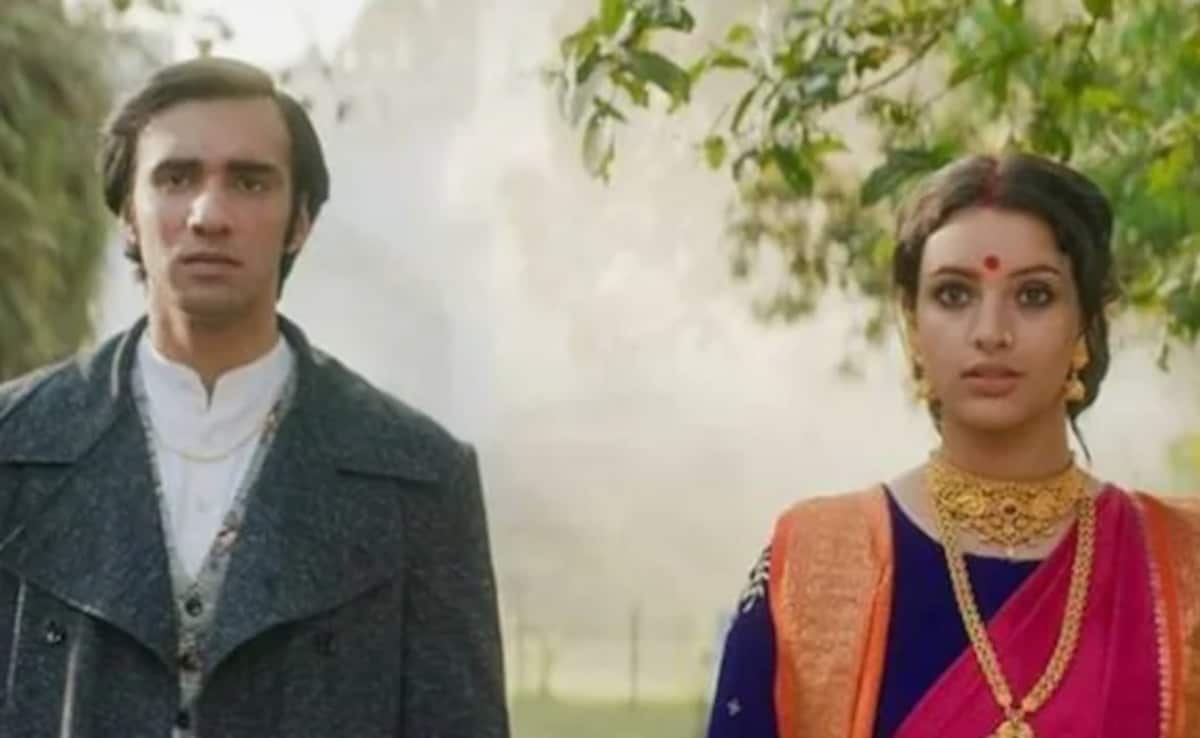
A still from Bulbbul.
Avinash Tiwary's Satya returns from London only to discover that the woman he once knew has become something mythic, untouchable, almost divine.
In an attempt to kill the 'chudail', he sets fire to the jungle and discovers that Bulbbul is the chudail. He breaks down crying in pain as Bulbbul sits on a tree, slowly engulfed by the flames.
Even here, the pattern persists. One of them becomes the reason for the other's death.
"I Will Find You In Every Universe"
Across these three films, what emerges isn't repetition. It's evolution.
In Laila Majnu, she is love.
In Bulbbul, she is vengeance shaped by trauma.
In O'Romeo, she is calculated retribution.
Avinash Tiwary's characters orbit her transformation each time: lover, bystander, villain. And each time, the outcome is fatal in some emotional or literal sense.
Some stories are about lovers who find each other. Theirs feels like a saga about lovers who find each other only to undo one another, again and again.
Perhaps that is their version of "happily ever after."
Ironic.
And somehow, true.
