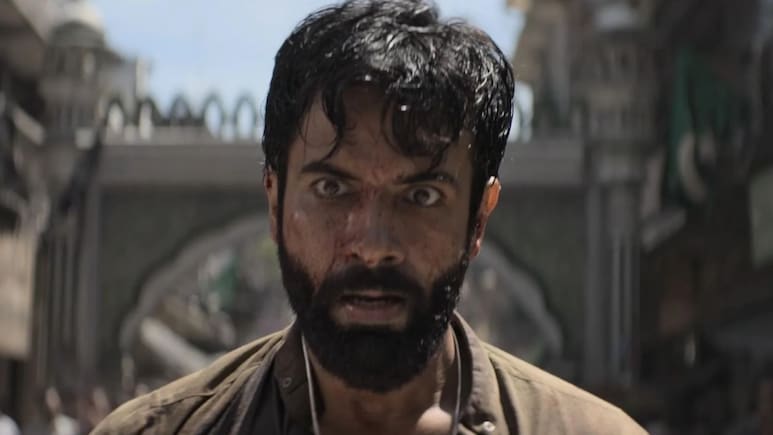
With the massive success of Dhurandhar and its sequel under his belt, Danish Pandor has quickly become one of the most compelling faces on social media and cinema screens alike. Currently making waves in Imtiaz Ali's partition drama Main Vaapas Aaunga, Danish is proving that impact matters far more than screen time.
In an exclusive chat with NDTV, the actor opens up about transitioning between different characters, working under the tutelage of industry stalwarts Aditya Dhar and Imtiaz Ali, and the 15-year struggle that ultimately paved his way to success.
The Roar of the Audience for Main Vaapas Aaunga
When asked about the kind of feedback he has been receiving so far for his performance in Main Vaapas Aaunga, Danish sounded genuinely thrilled by the overwhelming reception from both audiences and industry peers.
He told us, "Feedback has been great. I have been receiving so many messages on Instagram. I've been receiving calls and messages from my friends and people from the fraternity who have seen it, and it was a surprise for them to see me in Main Vaapas Aaunga as well. There are so many people messaging me saying that the moment Afzal (Danish in Main Vaapas Aaunga) comes on screen, the whole theatre starts hooting, 'Oh, Uzair! That's Uzair!' (Danish in Dhurandhar and Dhurandhar 2), and then everyone's face lights up."
The Shift from Uzair to Afzal
Danish's transition from the authoritative yet vulnerable Uzair in the Dhurandhar franchise to the cold Afzal in Main Vaapas Aaunga required a complete psychological shift. He broke down the stark contrasts between the two personas, noting how the characters belong to opposite sides of a historical timeline.
Talking about the contrast between the characters, Danish said, "It was completely different. If you take Uzair, for example, he belongs to Pakistan. The characterisation was completely different. He was very vulnerable and very emotional. In this case, Afzal is very calm, very composed, and very authoritative, which is somewhat similar to Uzair only in that aspect."
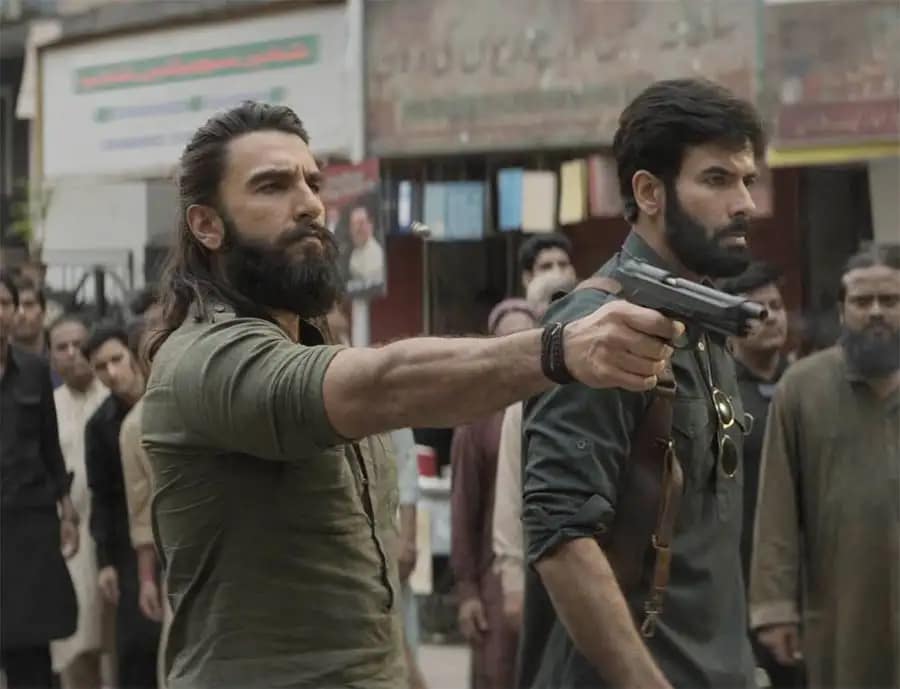
Danish Pandor in Dhurandhar.
"But the thing is, Uzair is not so calculative. On the other hand, Afzal is calculative. At the same time, there are a lot of other things happening. Afzal belongs to this side of the country, that is India, before the partition, when Sargodha was part of India and later became part of Pakistan."
Mindful of the lingering impact of his previous role, Danish worked consciously to ensure that audiences would eventually see Afzal as an entirely distinct entity.
He said, "Both are completely different for me, from my perspective. I tried to put my best foot forward so that people do not imagine Uzair in that persona. A lot of times what happens is that the energy has not yet faded from Dhurandhar, and when you see Afzal on screen, people relate that to Uzair. But as the film progresses, they understand that Uzair and Afzal are entirely different entities. I'm not boasting, but I was able to justify that, and people have appreciated it."
On Uzair's Tragic Fate and Sympathising with a Gangster
Following the release of Dhurandhar 2, social media was flooded with fans lamenting that Uzair was dealt an unfair hand, demanding a more conclusive arc. Danish, however, defended the open-ended trajectory as the ultimate poetic victory.
He said, "For me, I was extremely satisfied with the end. There has to be something left open-ended. Interpretations are open for people - that's what they are doing. If Uzair had been given a definite ending, the whole charm of the character would have been ruined. Something should be left open-ended and kept intact. Sometimes that is very beautiful."
"When people saw what happened to Uzair in Dhurandhar: The Revenge, it was as if he was a scapegoat planted by Hamza, and he was completely oblivious to it. Despite being a gangster, people related more with Uzair. That justifies everything. They wanted more because they developed too much fondness for the character and wanted a proper ending. But I was completely satisfied with how it was shown, so that people sympathise with the character more than anything else," added the actor.
Reflecting on the rare feat of eliciting deep empathy for an antagonist, he added with a smile, "Imagine! That's a victory for an actor. Being a gangster, being a negative character, and still people are empathising with him. What else do you need?"
The Whirlwind of Social Media Stardom
With back-to-back prominent roles making him a constant fixture on social media feeds, Danish shed light on what this sudden wave of adoration feels like after years of struggle.
He said, "It feels great. You work so hard for it. After 15 years of struggle, running from pillar to post, when things start working in your favour, you feel extremely grateful.
And the most important thing is that people are showering so much love on all the characters I have played, from Chhaava to Dhurandhar. In Chhaava, the part was not very significant, but it was still enough to be noticed. Dhurandhar had more screen time and was one of the most pivotal parts of the film. In Main Vaapas Aaunga, it is less screen time, but the part is very impactful and significant."
"When things start working in your favour, you feel extremely blessed and grateful. There are so many fans messaging, saying they want to see me as a lead in more films, in romantic dramas, and in different genres. It feels great that people are rooting for you and want to see you on screen," added Danish.
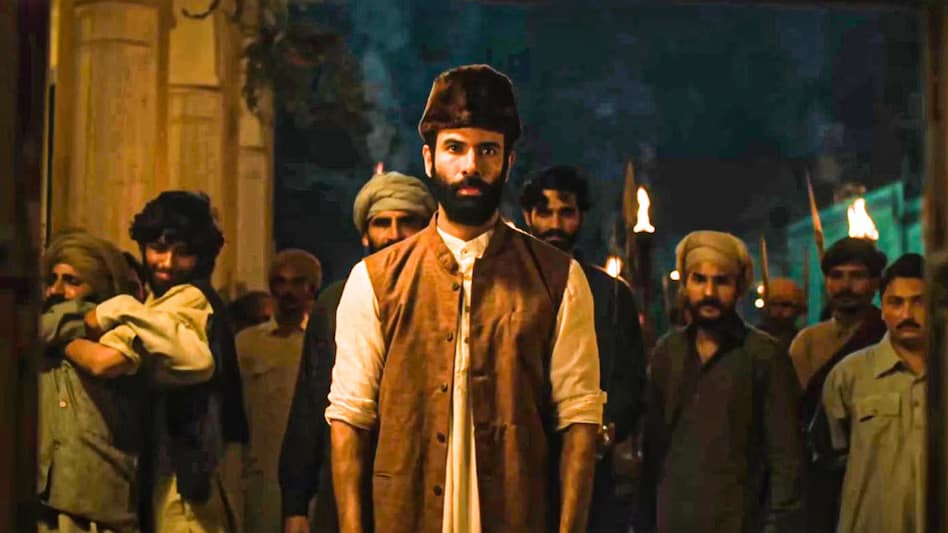
Danish Pandor in Main Vaapas Aaunga.
Prioritising Character Impact Over Screen Time
Danish signed Main Vaapas Aaunga just before Dhurandhar hit theatres. Asked whether he would still have taken on the project after Dhurandhar's release, given the shorter length of the role, he emphasised his philosophy of choosing meaningful characters.
Danish said, "For me, the first prerogative was that after finishing Dhurandhar, I tested for the part and got it. The casting was done by Mukesh Chhabra for this film as well. I really wanted to work with Imtiaz Ali. Secondly, when I read the part, the character showed impact despite having less screen time. The film is more about an ensemble cast. We have four primary characters, but many others are pushing the story forward. My character comes in at a very triggering time when things are going haywire, and he is responsible for the turn of events around the partition."
The actor continued, "For me, it's not about screen time. It's about whether your character has significance. People should remember your character when they leave the cinema hall. I will always choose characters based on their impact, not their length. You can have massive screen time and still be insignificant. What matters is whether people remember you."
Learning from the Masters: Aditya Dhar and Imtiaz Ali
Having worked under two major directors back-to-back, Danish described the experience as an invaluable learning curve.
He said, "It was a great learning experience. Working with Aditya Dhar and then Imtiaz Ali - two big institutions with different filmmaking processes but the same intent: to serve the audience and deliver a cinematic experience. Both are extremely well-versed, with a clear vision. They know exactly what they need from actors and from the frame. It helps you understand many aspects of filmmaking and the nuances of performing a scene. An actor dreams of such opportunities."
When asked about the major differences, Danish commented, "For me, both are very similar in their approach. Both are extremely calm on set - you hardly realise they are there. They are deeply involved and passionate about filmmaking. They narrate each scene with intricate detail, explaining the crux and motivation, so you are already imagining the scene even before blocking. Creative liberty was given in both cases. A strong and positive intent is important for any filmmaker, and both of them share that. That is why they excel."
Surviving the Mumbai Struggle Without a Plan B
Long before his breakthrough, Danish navigated years of rejection. He credits his support system and single-minded focus for keeping him going.
"You need people around you who constantly motivate you. I'm extremely blessed to have my family and close friends supporting me. At the same time, I never had a plan B. I didn't know anything apart from acting. I have a degree in business management, but I was never meant for a 9-to-5 job. I just kept working on my craft, believing something would eventually work out. You have to trust the process and keep going, like a horse with blinders, focused only on the path ahead."
And today, with both audience love and critical acclaim on his side, Danish hopes to deliver many more remarkable performances that leave a lasting impact on viewers.
Also Read: Ram Charan Calls Ranveer Singh's Dhurandhar A 'Terrific Film': 'It Has Brought The Country Together'
