

A Jawaharlal Nehru University (JNU) professor has developed a Braille model to teach chemistry to visually-challenged students. Talking about his research, professor BS Balaji said he had developed a simple lock-and-key model to teach chemistry concepts to visually-impaired students.
He added that owing to the current limitations in science education for blind students, he had designed the model to address these shortcomings.
-

-
 AI Could Be Humanity's 4th Great Humiliation, Says Swami Sarvapriyananda
-
 Swami Sarvapriyananda Explains Why AI Agents Should Be Treated Like Humans
-
 "You've Got A Long Day At Anthropic": Monk On "Spooky" Chat With Claude
-
 Bassist Mohini Dey At NDTV World Summit 2026: 'Fortunate To Be Born In India '
-
 From Indian Roots To Global Stages: Mohini Dey Shares Her Musical Philosophy
-
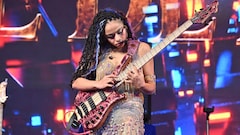 'I Was Born And Brought Up In Mumbai': Mohini Dey At NDTV World Summit
-
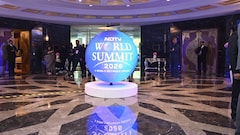 NDTV World Summit 2026 Begins: India At The Centre Of A World Between Orders
-
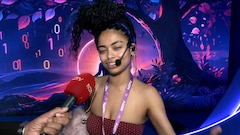 'We Like To Spread That Magic': Mohini Dey Ahead Of NDTV World Summit Performance
-
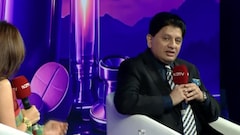 Live: Lilavati Trustee Rajiv Mehta Talks About Healthcare, Community Resilience
-
 Who Is Rajiv Mehta? Lilavati Hospital Trustee To Speak At NDTV World Summit 2026
In the model, professor Balaji has included normal letters along with Braille so that students with a normal eyesight can also learn from it while teachers are not required to be experts in Braille.
The lock-and-key model for teaching chemistry was created using 3D printing technology with biodegradable polymers.
"We have included both Braille and alphanumeric letters in our model. The model cards are like puzzle cards. We have six categories to represent various chemical notations," the professor said.
The models include letters (representing elements), numbers, arrows, signs (plus, minus etc.), superscript and subscript.
"With these six categories, we can make various representations of chemical concepts. We can create ions both positive and negative, we can create chemical equations," professor Balaji said.
He said he was looking for support to implement the model on a large scale and will approach the National Council of Educational Research and Training (NCERT), NGOs and various state and central government entities.
Click here for more Education News
(Except for the headline, this story has not been edited by NDTV staff and is published from a syndicated feed.)