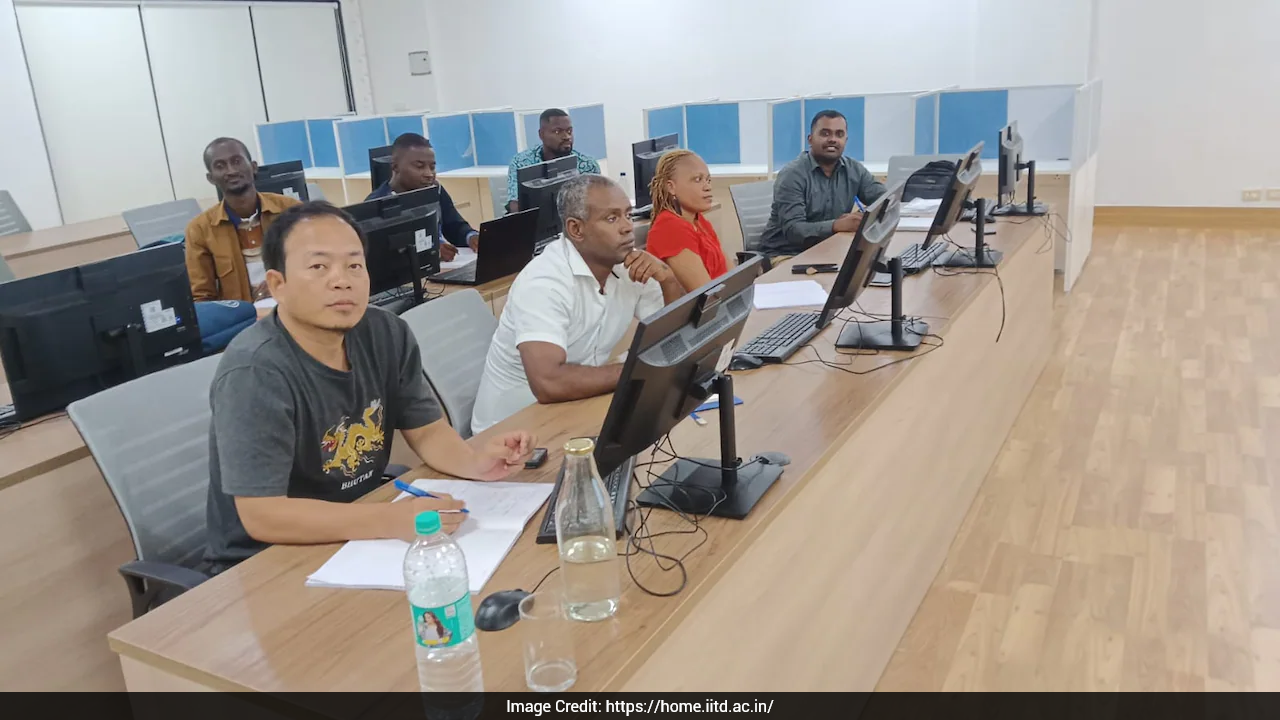

The Indian Institute of Technology Delhi (IIT Delhi) has started its first academic programme at its Sonipat campus with the launch of a one-year Postgraduate Diploma in Solar Systems and Management.
The programme began on September 3 with nine international fellows from eight countries. It is being offered by IIT Delhi's Department of Energy Science and Engineering in collaboration with the International Solar Alliance (ISA) and France's Institut National de l Energie Solaire (INES). The programme is sponsored by the United Nations Industrial Development Organization (UNIDO).
-

-
 "US Protecting Its Interest": S Jaishankar On Trump's Oil Deal With Russia
 -
 S Jaishankar's 'Indira' Reminder After Rahul Gandhi's Marco Rubio Jibe
 -
 Best Of NDTV World Summit 2026 | Defining Conversations, Big Ideas
 -
 PM Modi Says 'Parasite' Congress Hurts 'Honest' Dissent Movements
 -
 "Some Dreaming Of Disorder": PM Modi's Dig At Rahul Gandhi
 -
 "World That Relied On India's Brainpower Now Trusts Its Mindpower": PM Modi
 -
 Non-Oil Trade With India Went Up 50% In 3 Years: UAE Minister At NDTV Summit
 -
 "Some Dreaming Of Disorder": PM's "Failed Product Of Congress" Jibe At Rahul Gandhi
 -
 'Viksit Bharat Not Just For Us': PM Modi's Top Quotes At NDTV World Summit
 -
 Has Indian Cuisine Arrived At The Global Stage? What Vir Sanghvi Believes
IIT Delhi Solar Course: What Will Fellows Learn?
The programme has been designed as a hands-on course focused on solar technology and its applications. Participants will receive training from IIT Delhi faculty members, academic experts and industry professionals.
The main aim is to build skills in solar energy and prepare participants to support the use of solar technologies in ISA member countries. The programme is part of a wider effort to strengthen renewable-energy education and training.
One-Month Internship In Europe
One of the key features of the programme is the international exposure. After successfully completing the one-year postgraduate diploma, the ISA fellows will undertake a one-month internship in Europe focused on applied solar technologies.
After the internship, the fellows will be assigned to Solar Technology Application Resource Centres (STAR-C) in their respective home countries. These centres are aimed at building technical skills and supporting the wider use of solar energy.
First Physical Teaching Programme At Sonipat Campus
The launch is also significant for IIT Delhi's Sonipat campus as it marks the first teaching programme with physical classes at the campus.
Professor Somnath Baidya Roy, Professor-in-Charge of the Sonipat campus, said the institute plans to introduce more academic programmes there in the coming years.
The programme follows a broader collaboration between IIT Delhi and the International Solar Alliance focused on renewable energy, capacity building, academic cooperation and human-resource development.
