





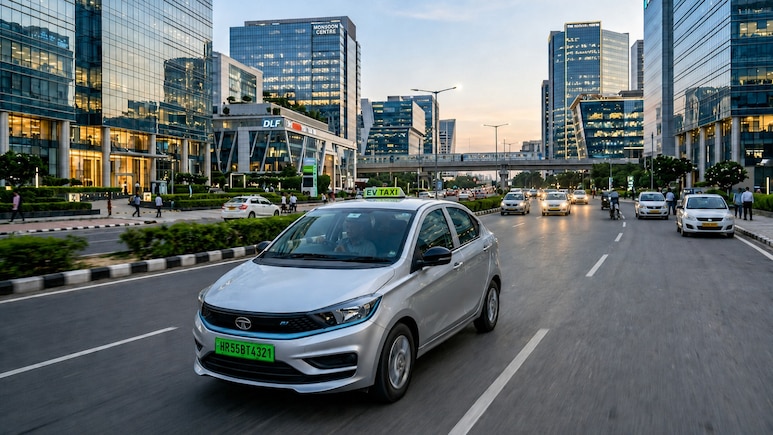
Your next cab ride in Delhi-NCR may not look very different. But the vehicle picking you up could.
In a major push towards cleaner mobility, the Haryana government has approved a new framework that bars cab aggregators, delivery platforms and e-commerce companies from adding new petrol and diesel vehicles to their fleets in NCR districts. Going forward, new vehicles joining these fleets will have to run on cleaner fuels such as electricity, CNG, battery power or other low-emission alternatives.
The move follows directions from the Commission for Air Quality Management (CAQM) and places Haryana among the first states in the region to aggressively steer commercial mobility towards cleaner transportation.
For ordinary commuters, however, the biggest question is simple: Will rides become more expensive? Or better?
The answer is a bit of both.
Why Your Cab Ride Could Get Costlier?
The transition to electric mobility is not free.
Fleet operators must invest in new vehicles, charging infrastructure, technology systems and financing arrangements. Many smaller operators that currently depend on petrol and diesel vehicles may face the biggest adjustment.
Hari Krishna, Founder and CEO of Green Drive Mobility, says commercial mobility is often the first segment to adopt such changes because vehicles are used extensively and operators are constantly looking for ways to improve efficiency.
However, he points out that the shift requires significant investment in vehicle procurement, charging infrastructure and fleet management systems. Smaller fleet owners may face challenges initially because electric vehicles still involve higher upfront costs.
Tarun Jain, Co-founder of LetzRyd, echoes a similar concern. According to him, operators upgrading to EV fleets will have to absorb vehicle replacement costs, financing expenses and infrastructure investments. In the near term, some of these costs could find their way into cab fares, especially during periods of peak demand.
For commuters, that means ride prices could see some pressure during the transition phase.
Nikhil Anand Khurana, Managing Director and CEO of Folks Motor, also notes that businesses cannot ignore rising operating costs. If the transition requires heavy investment in vehicles and charging infrastructure, some fleet operators may eventually revise fares to protect profitability.
But The Long-Term Picture Looks Different
While upfront costs are higher, EVs are significantly cheaper to run.
Fuel is one of the biggest expenses for cab operators. Petrol and diesel prices have remained volatile for years, eating into margins and forcing operators to constantly manage costs.
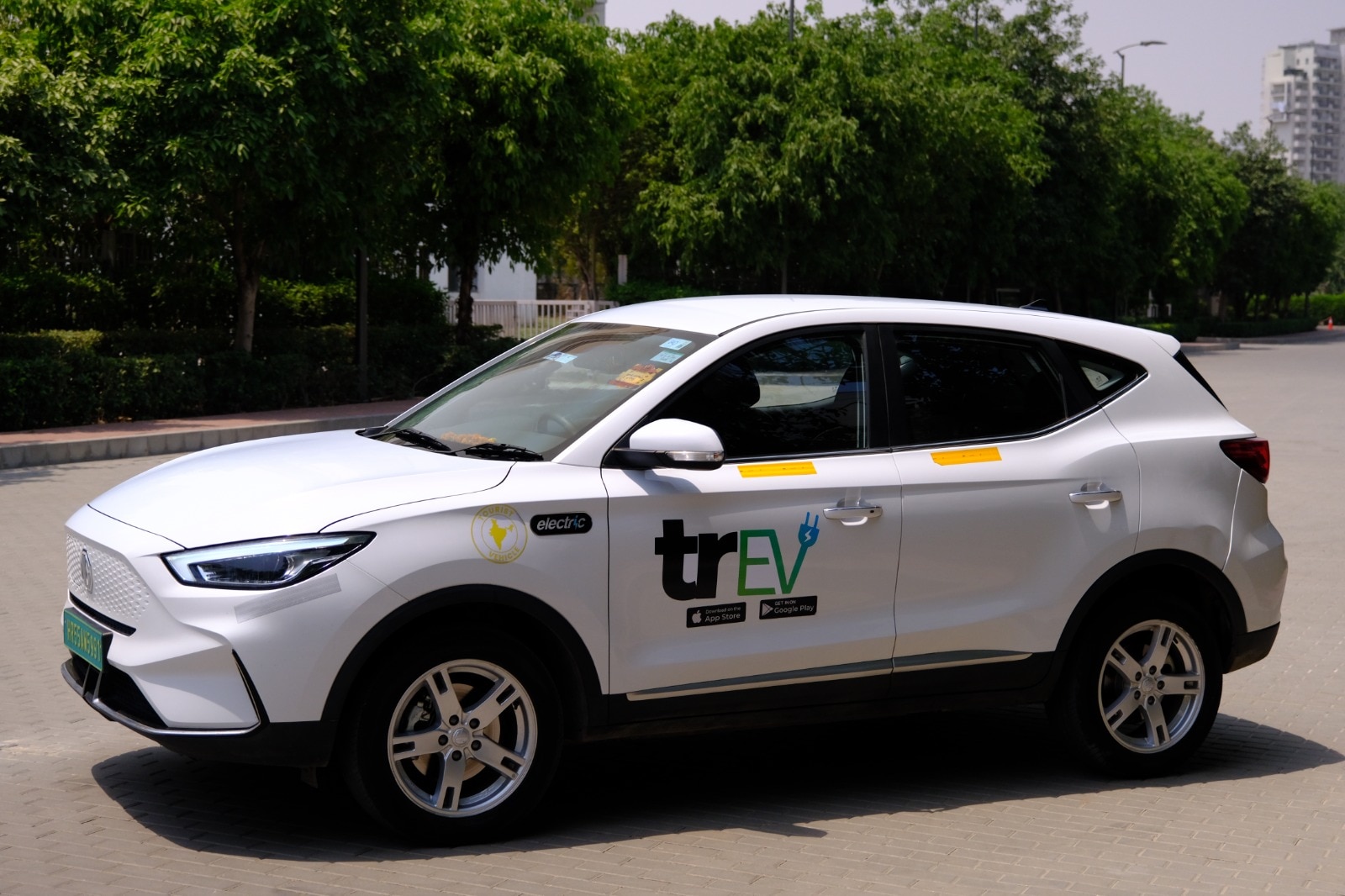
Every vehicle shifted from petrol or diesel to electricity can have a disproportionately larger impact on emissions.
Hari Krishna says businesses are increasingly evaluating mobility solutions based on total operating cost rather than simply looking at the vehicle's purchase price. As charging networks expand and the ecosystem matures, operating costs are expected to become more predictable and efficient.
That could eventually help stabilise ride prices.
Sahil Jindal, Co-founder of Trevel, believes the shift is bigger than just replacing one type of vehicle with another. According to him, lower running costs allow operators to invest more in vehicle maintenance, service quality and customer experience.
In other words, commuters may eventually get cleaner rides, better-maintained vehicles and potentially more reliable service.
Better Rides, Quieter Journeys
There is another benefit many commuters may notice immediately. Electric vehicles are quieter.
They accelerate smoothly, generate less vibration and generally offer a more refined ride experience.
Naveen Gupta, Founder of Trev Mobility, says increased EV adoption in fleet mobility can significantly improve travel comfort. Electric vehicles offer smoother acceleration and quieter cabins compared to conventional internal combustion engine vehicles.
For passengers spending hours in NCR traffic every week, that could be a welcome change.
The policy's primary objective remains environmental. Commercial vehicles cover far greater distances than privately owned cars. As a result, every vehicle shifted from petrol or diesel to electricity can have a disproportionately larger impact on emissions.
According to Naveen Gupta, large-scale electrification of commercial fleets can play an important role in reducing urban emissions, improving air quality and lowering noise pollution.
Sahil Jindal argues that the policy also serves a larger national purpose. India imports a substantial portion of its crude oil requirements, making electrification not only an environmental priority but also an economic and energy-security consideration.
For NCR residents who regularly battle hazardous air quality levels, the shift could eventually contribute to cleaner urban environments.
What About Ride Availability?
One concern often associated with EV adoption is whether charging requirements could reduce cab availability. Industry executives believe that is unlikely if infrastructure develops alongside vehicle adoption.
Naveen Gupta says maintaining ride availability will depend on how effectively charging infrastructure scales with growing EV fleets. Operators will need better charging schedules, route planning and fleet management systems.
As battery technology improves and charging networks become more widespread, he believes customers are unlikely to notice any major difference in availability.
In fact, several large mobility and logistics companies have already begun preparing for an EV-led future.
Delivery Apps May Not See Major Disruptions
The new policy does not impact cab operators alone. Delivery platforms and e-commerce companies are also covered. Here too, industry leaders expect minimal disruption for consumers.
Naveen Gupta notes that EV penetration is already relatively high in logistics, especially among two-wheelers and three-wheelers used for last-mile deliveries. Large operators have been preparing for this transition for years.
As a result, customers ordering groceries, food or online purchases are unlikely to notice major changes in delivery timelines in large cities.
The bigger challenge lies in Tier-2 and Tier-3 markets, where charging infrastructure and service networks still need significant expansion.
Therefore, almost every stakeholder agrees on one point. The transition cannot succeed without charging infrastructure.
Fast chargers at airports, business districts, highways, commercial hubs and logistics centres will be critical. The ecosystem must also include reliable power supply, battery servicing, financing support, technical expertise and digital fleet management systems.
Nikhil Anand Khurana believes broader mobility support systems, including retrofitment solutions, financing mechanisms and enabling policies, will be necessary to make clean transportation affordable for businesses and consumers alike.
Similarly, Naveen Gupta says collaboration between policymakers, vehicle manufacturers, energy providers, charging companies and mobility operators will determine how smoothly the transition unfolds.
What Should Commuters Expect Now?
For most people, nothing changes overnight. Existing petrol and diesel cabs are not disappearing from roads tomorrow. The restriction applies to new vehicles being added to commercial fleets in Haryana's NCR districts.
But the direction is clear.
Over the next few years, commuters are likely to see more electric cabs, quieter rides and cleaner fleets. There may be some short-term pricing pressure as operators absorb transition costs. Yet the industry largely believes that lower operating expenses, better technology and a mature charging ecosystem could eventually offset those concerns.
Haryana's decision may have started with commercial fleets. But it could become a blueprint for how urban transportation evolves across India.
Track Latest News Live on NDTV.com and get news updates from India and around the world

