





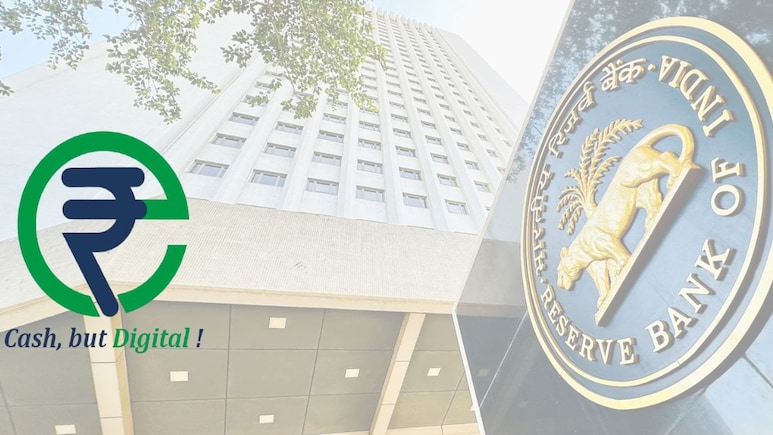
- Retail Digital Rupee is RBI-backed digital cash equal in value to physical currency
- It aims to modernize payments and increase transparency and efficiency in transactions
- The digital rupee supports offline use, smart contracts, and programmable payments
India's Retail Digital Rupee (widely called e₹) is a new form of money. It is the digital version of the Indian rupee, issued and backed by the Reserve Bank of India (RBI). It carries the same value as notes and coins, but exists in digital form.
It's not crypto. It's sovereign money you can hold in a digital wallet. Most major banks now support these e₹ wallets. Follow Markets Live Updates
Experts say it's not just another payment option. It's part of India's plan to modernise money itself.
Retail Digital Rupee: Industry Experts See Global Role
Akshat Garg, Head, Research & Product at Choice Wealth, says the Retail Rupee is RBI's digital cash. It works like normal money, but online. He believes it can speed up transactions, cut settlement risks, and add transparency to finance. For investors, this means better efficiency and less friction. Garg also notes future features like programmable payments and offline use could boost digital adoption across India.
He points out its global role too. As India tests cross-border Central Bank Digital Currency use, the digital rupee could cut dependence on dollar-based systems and make remittances easier.
Paramdeep Singh, Founder of Long Tail Ventures, calls the Retail Rupee part of RBI's big vision for India's digital financial system. India already has huge digital payment volumes thanks to UPI. But Singh notes the digital rupee isn't meant simply to rival UPI. Instead, it could become a quiet foundation beneath the entire payment world.
He highlights the real challenge: behaviour. People and merchants will adopt the Retail Rupee only if it feels clearly better than what exists now. Singh believes its power lies under the surface -- in infrastructure for offline pay, smart contracts and faster clearing -- not in flashy competition with UPI.
Gaurav Maheshwari, CFO at Alankit Limited, offers a balanced view. He explains the Retail Digital Rupee gives fast, secure and regulated digital cash backed by the Indian government. By March 2025, circulation had passed Rs 1,016 crore with millions of wallets already in use.
Maheshwari says it could expand digital payments to remote areas, especially once offline use works well. It could also make government programmes like subsidies and welfare payments more efficient. But he warns about risks: cybersecurity, privacy concerns and the fear of government monitoring. He also notes India already has an excellent digital system with UPI, so everyday users might not feel an immediate benefit.
Retail Digital Rupee: Why It Matters Now
The Retail Rupee is no longer just a pilot project. According to recent reports, it has crossed Rs 34,000 crore in transactions nationwide, and RBI is building advanced features like programmability and cross-border use.
In 2026, more banks are offering digital rupee wallets. The RBI has expanded the rollout beyond a handful of pilot cities to many states and user segments.
Importantly, the Retail Rupee works differently than UPI. UPI moves money between bank accounts. The e₹ itself is money -- a direct digital token of RBI.
Retail Digital Rupee: What Comes Next
Many analysts say the digital rupee's everyday use will grow slowly. For now, UPI remains dominant. But if features like offline payments and programmable funds mature, the Retail Rupee could start solving problems no other system can.
Over time, it could:
- Make digital cash easier in remote areas.
- Improve delivery of government benefits.
- Support faster, cheaper international payments.
- Strengthen India's financial infrastructure.
This is why many see the Retail Rupee as the future of money in India -- even if the change is quiet at first.
Track Latest News Live on NDTV.com and get news updates from India and around the world

