




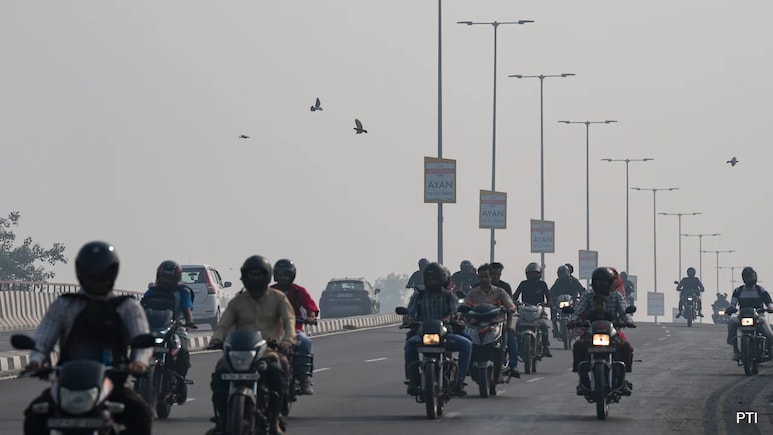
Every time an employee walks into an office coughing, struggling with a headache or feeling unusually tired, the cost of air pollution may already be showing up in the company's balance sheet.
It may not appear as a separate expense. There may be no medical bill charged directly to the employer or a sick leave application to flag the problem. But when workers struggle to perform at their best, businesses pay a price.
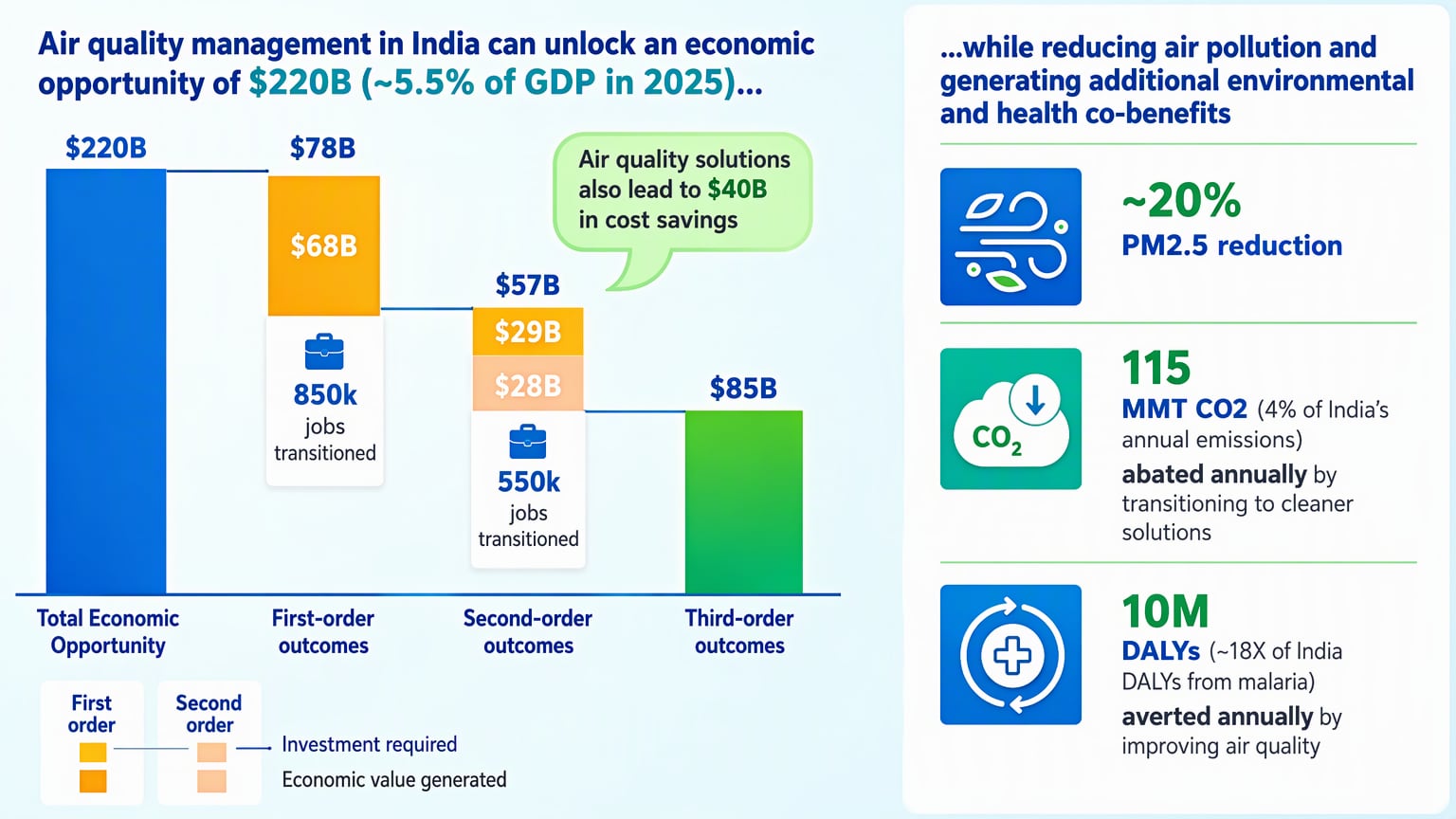
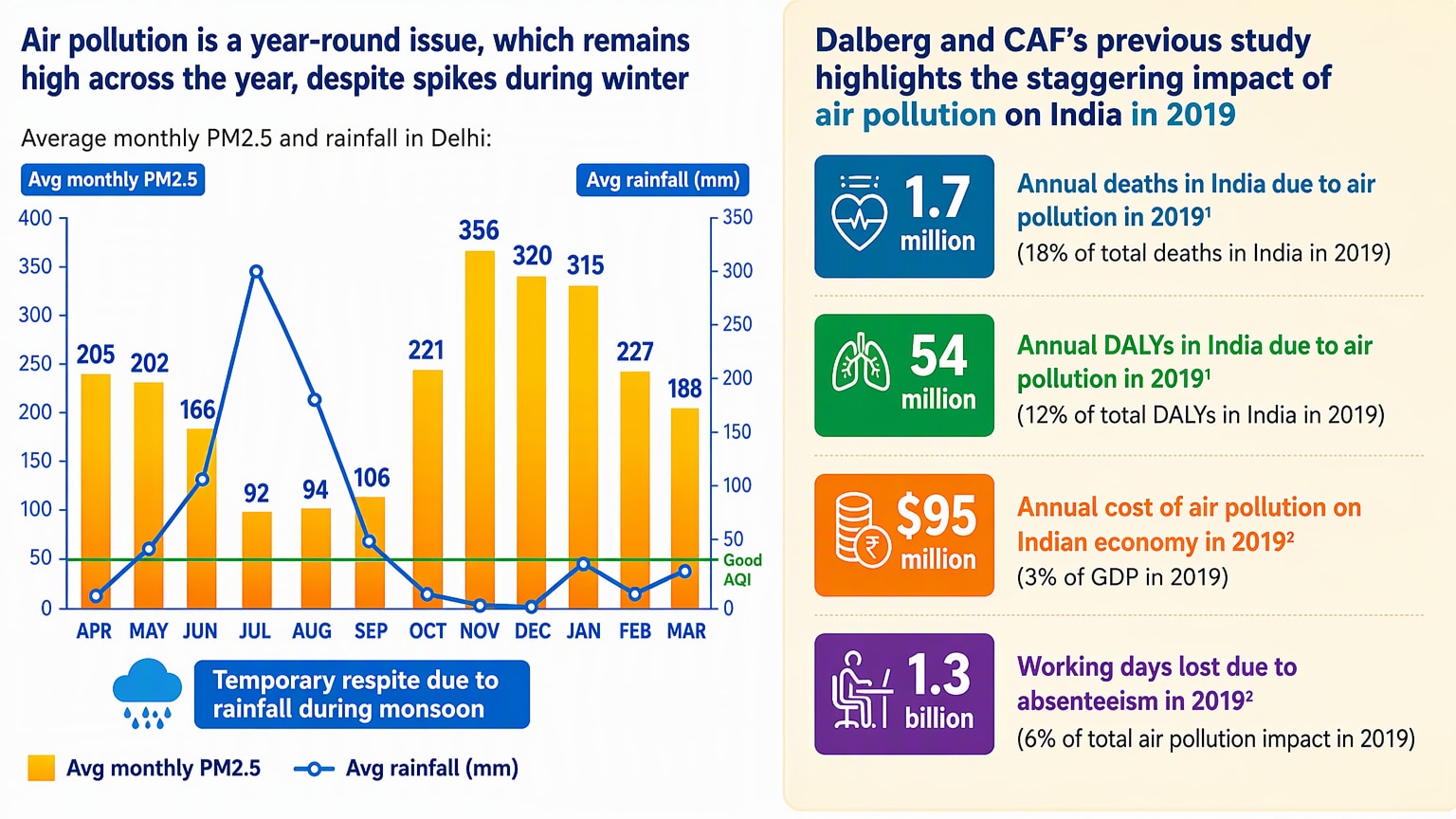
India's air pollution crisis is increasingly becoming a productivity problem. And the economic cost is staggering. A new report by Dalberg Advisors and the Clean Air Fund estimates that reducing air pollution by around 20 per cent could help India avert nearly $85 billion in annual economic losses by 2030.
Also Read | Layoffs Are Rising In Tech, But These Skills Are Helping People Unlock Better Pay
The damage is not restricted to hospitals, healthcare expenses or days lost to illness. It also includes the work employees continue to do despite feeling unwell, often without delivering their usual output.
The Invisible Cost Of Working Through Smog
Air pollution affects businesses through five major channels: presenteeism, absenteeism, premature mortality, healthcare expenditure and reduced consumer spending.
Of these, presenteeism is particularly difficult to measure. It refers to employees turning up for work despite being ill or experiencing health problems that affect their performance. Unlike absenteeism, which shows up in attendance records, presenteeism can remain largely invisible.
An employee dealing with breathing difficulties, persistent coughing, headaches or fatigue may continue working. But their concentration, efficiency and ability to complete tasks can suffer. Dr Gowri Kulkarni, Director of Doctor Relations and Head of Medical Operations at MediBuddy, told NDTV, "We tend to notice when an employee takes sick leave, but what about someone who comes to work every day while dealing with a cough, breathing difficulties, headaches or constant fatigue? Their presence does not necessarily mean they can perform at their full potential."
The Dalberg-Clean Air Fund report estimates that presenteeism accounts for the largest share of India's economic losses linked to air pollution. This makes the problem particularly relevant for industries that depend on skilled workers, concentration and consistent output. Even small productivity losses across a large workforce can translate into substantial economic damage.
$260 Billion: The Cost Of Dirty Air
The report estimates that air pollution cost the Indian economy around $260 billion in 2024, equivalent to roughly 6 per cent of GDP. The figure covers losses arising from reduced worker productivity, premature deaths, healthcare expenditure, absenteeism and declining consumer activity.
Healthcare expenses alone accounted for an estimated $12.3 billion in 2024. This includes costs borne by governments, households and private health insurers. Absenteeism also takes a toll. Pollution-related illnesses result in employees missing work, disrupting schedules and increasing the pressure on colleagues who have to cover their responsibilities.
But the broader economic damage goes beyond workplaces.
When pollution levels rise, people tend to avoid shopping, dining out and travelling. This hurts businesses dependent on customer footfall, including retailers, restaurants and tourism operators.
The report estimates that reduced consumer spending and tourism activity cost India around $74 billion in 2024.
Can Cleaner Air Save Businesses $85 Billion?
According to Dalberg Advisors and the Clean Air Fund, reducing India's PM2.5 pollution by around 20 per cent could help avert approximately $85 billion in annual economic losses by 2030.
The biggest gains would come from improving worker productivity and restoring consumer activity. Lower healthcare spending and fewer pollution-related absences would provide additional relief.
The report also estimates that achieving safe PM2.5 levels could unlock around $260 billion in annual economic gains over the longer term.
Employees working in construction, logistics, delivery services and other outdoor occupations face prolonged exposure to polluted air. Unlike office workers, they often cannot shift their responsibilities indoors or work remotely.
"Protective measures need to cover both indoor and outdoor workplaces. Better ventilation, HEPA-filter air purifiers, well-fitted N95 or N99 masks for field employees, regular health check-ups and access to medical advice can help reduce exposure and identify respiratory problems early," Dr Gowri added.
Track Latest News Live on NDTV.com and get news updates from India and around the world

