





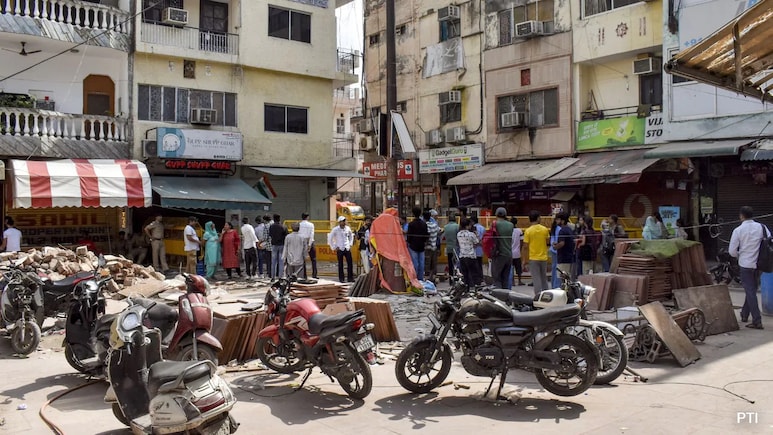
Every year, lakhs of students and young professionals arrive in Delhi from small towns, other states, and even other countries, chasing a college seat or a first job. Almost none of them own a home here. So, they rent one room, sometimes half a room, in a paying guest (PG) set-up.
Walk through Munirka, Satya Niketan, Kalu Sarai, or Laxmi Nagar on any evening and you'll see the machine at work. Narrow buildings, five or six floors, bunk beds stacked in tiny rooms, a mess downstairs, WiFi routers on every landing. Landlords converted homes into hostels years ago, and demand never stopped rising.
-

-
 Is AI Bubble Waiting To Burst? Nikhil Kamath Warns Of Tougher Months Ahead
 -
 "We Don't Have 5 Years": Celebrated American General Sounds Alarm On War
 -
 "There Will Be Issues Between Big Countries": S Jaishankar On India-China
 -
 Neha Goyal Makes Stunning Asian Games Gold Revelation At NDTV World Summit 2026
 -
 Big NDTV Summit Impact: RBI Governor's Tata Sons Listing Remark Makes Top Newspaper Headlines
 -
 "Certainty Is A Problem": Nikhil Kamath On Marriage, Children And Future
 -
 "High Inflation Is Like Tax On Everyone": RBI Governor At NDTV World Summit
 -
 RBI Governor Sanjay Malhotra's Big Hint On Tata Sons Listing Row At NDTV World Summit
 -
 The Mystery Of A Bare Nail In Ashwini Vaishnaw's Office
 -
 To PM Modi's "Failed Product" Jab At Rahul Gandhi, A Shashi Tharoor Counter
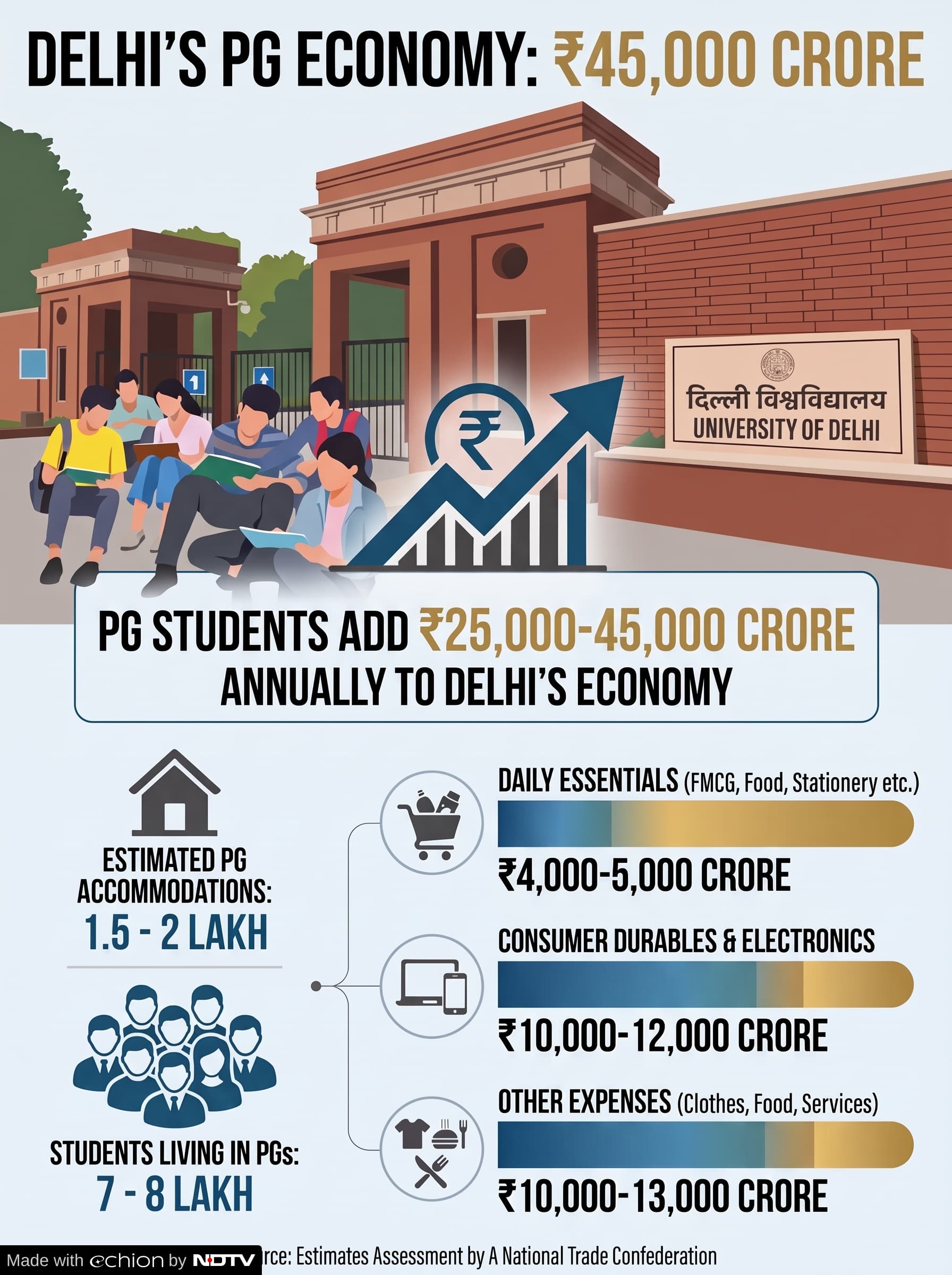
Students pay anywhere between Rs 8,000 and Rs 20,000 a month for a shared bed. Multiply that across hundreds of thousands of tenants, and the scale becomes obvious. This isn't a side hustle for property owners anymore. It's a parallel economy, quietly bigger than many formal industries in the city. According to the National Trade Confederation, students living in rental accomodations in Delhi drive Rs 45,000 crore into the market.
Also Read | Layoffs Are Rising In Tech, But These Skills Are Helping People Unlock Better Pay
A Collapse That Changed Everything
On September 6, a five-storey building in south Delhi's Satya Niketan came down. It was operating as a boys' PG. Seven people died.
For students living in similar buildings across the city, the tragedy hit close to home. Many started looking at their own rooms differently -- the damp patch on the ceiling, the wobbly staircase, the room partition that was clearly added after the building was approved. Students who spoke to reporters this week described cracked walls, water seeping in during the monsoon, and rents that kept climbing anyway.
One uncomfortable question is now doing the rounds in every PG WhatsApp group in the city: do I actually know if this building is safe?
Why Students Have No Real Choice
Here's the part that rarely makes headlines. Delhi University colleges simply don't have enough hostel seats. Thousands of students arrive every year from outside Delhi, and only a small fraction get a bed on campus. Some hostels that do exist are shut for repairs. Former Delhi University Teachers' Association (DUTA) leaders have pointed out that colleges keep adding new academic buildings, funded through loans, while existing hostel infrastructure is left to rot.
So students go private. PG owners know this. And when supply is tight and demand is desperate, landlords don't need to compete on safety. They compete on location, and sometimes not even that.
What Tenants Actually Want Now
Rents in Delhi are not just about proximity to college anymore. According to real estate advisor Dipesh Garg, Co-Founder of SouthDelhi1, the market itself is shifting.
"Delhi's student housing market is at an interesting inflexion point. With an estimated Rs 11,000-15,000 crore being spent annually on PG rentals only, the scale of this demand clearly shows that student housing is no longer a peripheral segment of the city's residential market," Garg said.
He points out that this isn't just a PG problem. It's a bigger shift in how residential property gets used across the city.
"The challenge is not just a PG issue but it signifies the transition of residential property usage across the city. Well established South Delhi places such as Greater Kailash, Defence Colony, Panchsheel Park, Hauz Khas, and Vasant Vihar have rents that benefit from their location for being well connected and having access to facilities of social connectivity and commercial and education centres. With the demand of students and young professionals increasing continuously, these conditions may continue," he told NDTV.
"Tenants today are looking beyond just location and affordability. Building quality, ventilation, security, amenities, maintenance and compliance are becoming important parts of the housing proposition," he added.
He also has a message for landlords sitting on old, converted properties. "For landlords, this opens up an opportunity to invest in structurally sound and legally compliant properties that command greater tenant trust and rental price. In the longer term, the rental market of Delhi needs to move towards more structured housing where security and quality are integral to the offering rather than added on at a later date," Garg said.
Delhi Government Is Finally Moving
The Satya Niketan collapse has pushed the Delhi government into action. Urban Development Minister Ashish Sood has outlined a plan to regulate PGs properly for the first time. Under the proposed rules, every PG operator would need a formal operating licence, along with police and municipal verification before they can even open.
The Municipal Corporation of Delhi is also expected to bring in periodic structural audits and mandatory safety certifications. No certificate, no operation. There's also talk of relaxing Floor Area Ratio norms so hostels can be legally rebuilt with more capacity, instead of owners cramming more beds into the same illegal footprint.
It's a start. But critics point out that Delhi's own Master Plan for 2047 left PG regulation vague, restricting these set-ups in some colonies without ever building a proper framework around them. Rules on paper haven't stopped unsafe buildings from filling up with tenants who have nowhere else to go.
For now, thousands of students are still climbing the same narrow staircases every night, hoping the building holds. Delhi's PG economy isn't going anywhere. It's too big, too essential, and too profitable.
(With inputs from Nilesh Kumar)
Track Latest News Live on NDTV.com and get news updates from India and around the world

