






The story of UC Browser stands out as a compelling saga of ambition, innovation, and eventual retreat. Developed by UCWeb, a subsidiary of China's Alibaba Group, UC Browser emerged as a formidable player in India's mobile browser market, briefly challenging giants like Google Chrome, before vanishing from the scene in 2020.
UC Browser, launched globally in April 2004 as a Java-based application, was designed to deliver fast, data-efficient browsing on low-end mobile devices - a perfect fit for emerging markets like India, where internet access was often constrained by slow networks and budget hardware. UCWeb, founded in 2004 by Chinese entrepreneurs Lei Yongxiang and Liang Jianfeng, was acquired by Alibaba in 2014, giving UC Browser the financial muscle to compete globally. In India, UC Browser made its debut in 2011, a pivotal moment when the country's internet user base was expanding rapidly, fuelled by affordable feature phones and the advent of smartphones. By 2011, India had approximately 100 million internet users, a number that would grow exponentially over the next decade, driven by falling data costs and widespread mobile adoption.
-

-
 "We Don't Have 5 Years": Celebrated American General Sounds Alarm On War
 -
 "There Will Be Issues Between Big Countries": S Jaishankar On India-China
 -
 Neha Goyal Makes Stunning Asian Games Gold Revelation At NDTV World Summit 2026
 -
 Big NDTV Summit Impact: RBI Governor's Tata Sons Listing Remark Makes Top Newspaper Headlines
 -
 "Certainty Is A Problem": Nikhil Kamath On Marriage, Children And Future
 -
 "High Inflation Is Like Tax On Everyone": RBI Governor At NDTV World Summit
 -
 RBI Governor Sanjay Malhotra's Big Hint On Tata Sons Listing Row At NDTV World Summit
 -
 The Mystery Of A Bare Nail In Ashwini Vaishnaw's Office
 -
 Paris Setback, Asian Games Glory: Lovlina Borgohain's New Perspective
 -
 To PM Modi's "Failed Product" Jab At Rahul Gandhi, A Shashi Tharoor Counter
During UC Browser's launch in India, the country's internet connectivity was predominantly reliant on 2G networks, with 3G just beginning to roll out. In 2011, 2G networks, offering speeds of 50-100 kbps, were the backbone of India's mobile internet, sufficient for basic browsing and messaging but sluggish for multimedia. 3G, introduced commercially in 2010 by operators like Airtel and Reliance, promised speeds of 1-7 Mbps but was limited to urban areas and expensive, with plans costing ₹250-₹1,200 per month for 1-5 GB of data.
Rural users, who formed the bulk of India's population relied on 2G due to spotty coverage and affordability issues. UC Browser's cloud-based data compression technology, which reduced web page sizes by up to 90%, was a game-changer in this context. It allowed users to load pages in about 2.5 seconds on 3G and slightly slower on 2G, compared to Chrome's heavier footprint, which often struggled on low-end devices with limited RAM and storage.
UC Browser's lightweight design (31 MB versus Chrome's 125 MB) and features like multi-part downloading, ad-blocking, and offline video playback resonated with India's mobile-first users. By 2015, UC Browser had captured a staggering 54.42% of India's mobile browser market, surpassing Chrome's 29.30%, according to StatCounter. By 2017, it held over 50% market share, with 100 million monthly active users, peaking at 130 million by January 2018. India became UC Browser's largest overseas market, accounting for 20% of its global user base of 430 million and contributing 45% of its revenue, estimated at $180 million in 2024. The browser's portal-like interface, bundling news, videos, and cricket updates, kept users engaged, reducing the need to switch apps. Its data-saving capabilities, cutting consumption by up to 60%, were a boon in a country where data plans were pricey relative to incomes.
UC Browser's meteoric rise posed a direct challenge to Google Chrome, which, despite being pre-installed on most Android devices, trailed with a 30% market share in 2017. Google's 98% dominance in India's mobile search market remained intact, as UC Browser relied on Google for search queries, but its browser market gains threatened Chrome's ecosystem. UC Browser's ad-blocker, which contributed to 94% of global mobile ad-blocking in Asia-Pacific, per PageFair, potentially dented Google's ad revenue, a critical concern given Google's $200 billion ad business.
In response, Google launched lightweight apps like Google Go and YouTube Go under its Android Go initiative in 2017, targeting low-end devices. These efforts, combined with Chrome's integration with Android, helped Google claw back market
share, reducing UC Browser's lead to 43.2% by December 2017, while Chrome rose to 35.5%.
Despite its success, UC Browser's dominance was short-lived, culminating in its ban from India on June 29, 2020, alongside 58 other Chinese apps, including TikTok and WeChat. The Indian government cited national security and data privacy concerns, triggered by escalating geopolitical tensions following the 2020 China-India border skirmishes.
UC Browser's privacy issues were well-documented. A 2015 Citizen Lab report revealed that it transmitted unencrypted user data, including search queries and geolocation, to Chinese servers. In 2017, India's Centre for Development of Advanced Computing (C-DAC) found that UC Browser sent user data to China and retained control over device DNS post-uninstallation, raising fears of surveillance. A 2019 Doctor Web report exposed vulnerabilities allowing potential remote code execution via unsecured HTTP downloads, though no exploits were confirmed. These concerns, amplified by India's push for digital sovereignty under the Atmanirbhar Bharat initiative, led to UC Browser's removal from Google Play and Apple App Stores, effectively halting its operations in India.
The ban was a death knell for UC Browser's India business. UCWeb announced the closure of its Gurgaon office, laying off over 100 employees, citing 'uncertainty and business losses' after failed negotiations with the government. By July 2024, UC Browser's market share in India had plummeted to 1.35%, down from 5.15% in January 2021, as users migrated to alternatives like Chrome (66.17%), Safari (23.28%), and Indian browsers like Bharat Browser.
The ban's impact was profound, given UC Browser's 170 million monthly active users in India at its peak, representing a significant loss for Alibaba's global ambitions.
UC Browser's disappearance left a void, but it also underscored India's growing emphasis on data privacy and local innovation. Bharat Browser, launched in 2020 by Bengaluru-based BlueSky Inventions, emerged as a homegrown alternative, crossing 50,000 downloads in a month. However, Chrome's ecosystem, bolstered by Android's 95% smartphone market share and Google's localized features like nineteen-language support and AI-driven Search Generative Experience, quickly filled the gap. Google's ad revenue and infrastructure investments dwarfed Indian startups, ensuring Chrome's dominance.
Reflecting on UC Browser's journey, its rise was fuelled by a perfect alignment with India's early internet realities - slow 2G/3G networks, low-end devices and a hunger for localised content. Its fall, however, was equally inevitable, driven by privacy scandals and geopolitical shifts. UCWeb's failure to address security concerns, coupled with India's assertive regulatory stance, sealed its fate. Today, accessing UC Browser in India requires a Virtual Private Network (VPN) - which encrypts personal data, masks IP addresses and lets users avoid website blocks and firewalls on the internet - but legal risks loom as the government enforces strict measures against banned apps.
UC Browser's legacy is bittersweet. It showed that a lightweight, user-centric browser could challenge Google in a mobile-first market, but it also highlighted the perils of neglecting privacy in a data-conscious world.
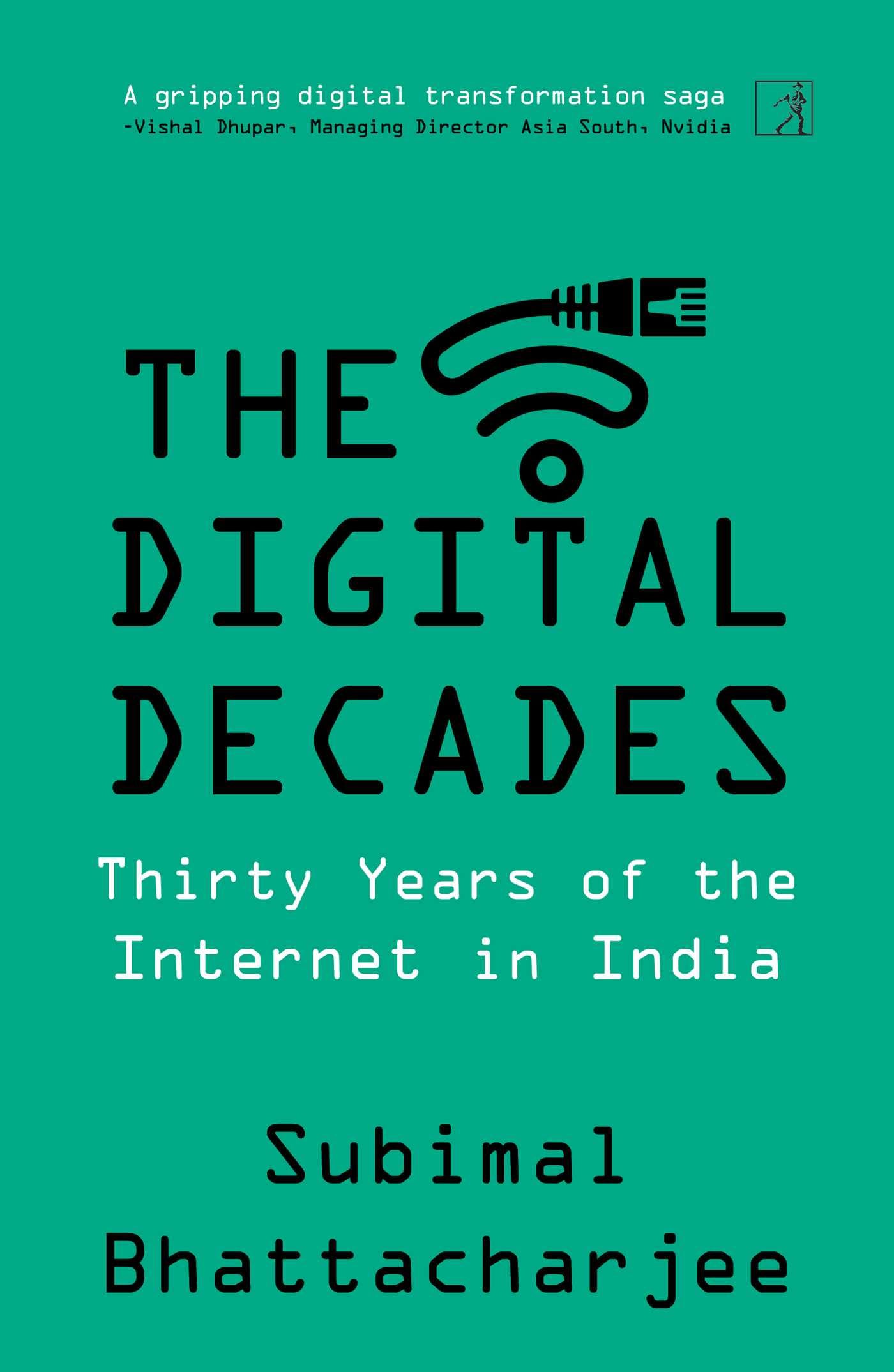
(The above is an excerpt from The Digital Decades by Subimal Bhattacharjee. Published with permission from Simon & Schuster India)

