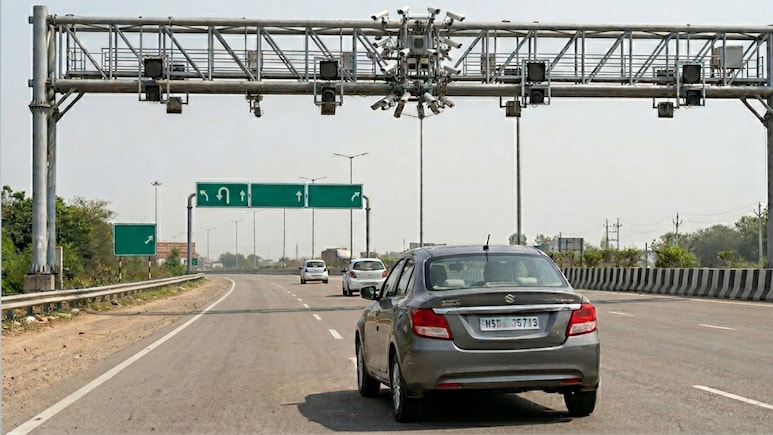
National Highways Authority of India (NHAI) recently inaugurated India's second and Delhi's first barrier-less toll plaza at the Mundka-Bakkarwala stretch on UER-II. It eliminates the need for vehicles to stop to pay tolls. However, the camera-based system is already facing challenges, with several commuters reportedly finding ways to evade toll charges, raising concerns for the authority.
How Barrier-Less Tolls Work?
The barrier-less toll plaza uses high-performance RFID readers and automatic number plate recognition. It is executed by the use of AI-enabled cameras placed overhead, allowing seamless vehicle identification. Once the number plate and RFID are recognised, the amount of toll is automatically deducted from the FASTag wallet linked to a vehicle. It is aimed at making movement smooth at toll plazas, ultimately reducing travel time.
How Users Are Dodging Toll Payments?
The Multi-Lane Free Flow (MLFF) system relies on accurate identification of number plates. To evade toll payments at the barrier-less toll plaza, commuters are tampering with the High Security Registration Plates (HSRP). It is worth mentioning that obscured number plates or the use of non-standard number plates impairs the tolling system.
Also Read: Uber Introduces 'Drift' Experience In Japan With JDM Cars: Here's How To Book
In other cases, users do not have FASTags placed on the windscreen, which makes toll payments impossible. Based on TOI's report, the amount of such vehicles is less than 1 per cent. However, NHAI has highlighted the need to fix the gaps in enforcement.
How Users Are Illegally Dodging Speed Cameras?
Some car owners are using illegal practices to confuse the Automated Number Plate recognition (ANPR) system. For instance, some use mechanisms to flip number plates while driving, while others use slight deviations in the formatting of numbers and letters to cause temporary misreads. Another method used by such offenders involves the use of reflective coatings and films, which distort images captured by the cameras.
