





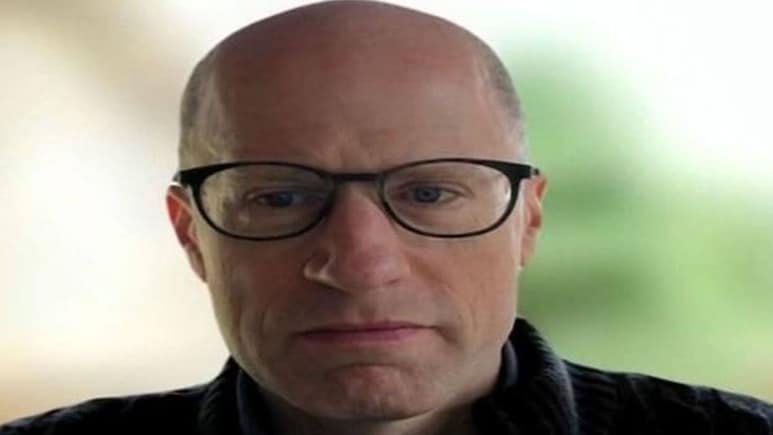
Swedish philosopher and former Oxford professor Nick Bostrom believes humans could live up to 1,400 years.
"If you think about what our life expectancy would be if we weren't aging, it's something on the order of 1,200, maybe 1,400 years or so," he said in a recent podcast, while discussing the potential benefits of successfully developing superintelligent AI.
That would be more than 11 times the age of the oldest verified human. The oldest verified human in recorded history, Frenchwoman Jeanne Calment, lived to 122 years and 164 days and died in 1997.
Watch our quick take:
So, 1,400 years, how exactly?
Because that totally sounds like Hollywood science fiction - think Adaline (The Age of Adaline) , Captain America, Wolverine. So, Bostrom's 2026 working paper, Optimal Timing for Superintelligence, lays out the assumption behind the calculation.
The idea mathematically revolves around the fact that if scientists could eliminate the biological process of ageing, people might no longer face the sharply rising risk of death associated with growing older. That way, their annual risk of dying could remain closer to that of a healthy young adult.
Bostrom uses the annual mortality rate of healthy people aged 20-25 in developed countries, which he puts at approximately 0.05-0.08 per cent.
He uses 0.07 per cent as an illustrative figure. If that risk remained constant throughout a person's life, the expected remaining lifespan would be approximately 1,400 years.
"If mortality were held constant at this rate throughout life, expected remaining lifespan would be approximately 1/0.0007 = 1,400 years," Bostrom explains in his paper.
To be sure, this is a mathematical projection based on a hypothetical scenario in which ageing is eliminated and the annual risk of death remains very low. It also does not mean people would be immune to accidents, violence or other causes of death.
Bostrom's argument is that superintelligent AI could accelerate scientific discovery, particularly in biology, medicine and anti-ageing research.
His working paper imagines a future in which AI could help scientists:
Develop treatments for diseases that are currently difficult or impossible to cure.
Reverse or repair age-related damage to cells and tissues.
Restore damaged organs and joints.
Develop more precise cancer treatments.
Tackle neurodegenerative diseases such as Alzheimer's.
"Superintelligence would be able to enormously accelerate advances in biology and medicine," he says in his working paper.
"Imagine curing Alzheimer's disease by regrowing the lost neurons in the patient's brain," he adds.
The idea is not that AI will magically discover a pill that makes people immortal. It is more about the fact that a sufficiently advanced AI system could help researchers understand complex biological processes, identify potential treatments, run simulations and accelerate experiments that might otherwise take years.
Ageing is not just wrinkles or grey hair - it involves changes at the cellular and molecular level, including accumulated damage, declining tissue function and an increased vulnerability to disease.
Where exactly are we on anti-ageing?
There is serious scientific work underway on ageing where researchers are investigating several possible ways to slow or even reverse aspects of the process.
A July 2026 review in Nature Medicine, titled Biological aging clocks in health and disease, discusses research into:
Cellular reprogramming: Attempts to reset aspects of a cell's biological state.
Senolytics: Experimental approaches aimed at removing senescent cells, which stop dividing but can contribute to inflammation and tissue dysfunction.
Thymus rejuvenation: Research into restoring aspects of the thymus, an organ involved in immune function.
Biological ageing clocks: Tools that attempt to measure how quickly a person's body, organs or tissues are ageing, rather than relying only on their date of birth.
The review explains that these clocks could eventually help researchers assess disease risk and whether interventions are changing the pace of ageing.
To be sure, these are research avenues, not proven routes to human immortality. Measuring biological age is not the same as reversing it, and showing that an intervention changes a biomarker is not proof that it extends human life.
A 2026 perspective in Nature Reviews Drug Discovery assessed the progress of AI in drug discovery and concluded that evidence of clinically relevant impact remains limited.
AI may be extremely useful in research, but translating computational discoveries into safe and effective medicines still remains a difficult process.
Could slowing AI development also cost lives?
Bostrom's comments are part of a broader argument in his working paper about the timing of superintelligence.
It's fairly common knowledge now that there are several researchers including heads of AI labs who have been arguing that the development of increasingly powerful AI systems should be slowed down until safety measures improve. Their concern is that an advanced system could behave in ways that are not aligned with human interests, potentially creating catastrophic risks.
Bostrom acknowledges the safety concern, but argues that there is another side to the calculation: the lives that could be saved if AI accelerated medical progress.
"Every year that we delay it, we have millions and millions of people dying," he says.
Bostrom is essentially raising the issue whether the risks of developing superintelligence should be weighed against the potential benefits of medical breakthroughs that could save lives today.
His paper uses a medical analogy: developing superintelligence is like a patient deciding whether to undergo risky surgery. Waiting could allow doctors to make the operation safer, but the patient remains exposed to the danger of the underlying illness.
"Developing superintelligence is not like playing Russian roulette; it is more like undergoing risky surgery for a condition that will otherwise prove fatal," the former Oxford professor says.
To be sure, his paper is explicitly labelled a working paper. The assumptions and risk calculations are part of his proposed framework, not a scientific consensus that AI should be developed faster.
The World Health Organization (WHO) says global life expectancy reached 73.3 years in 2023, while healthy life expectancy was 62.8 years. In other words, people are living longer, but they do not necessarily spend all those additional years in good health.
The WHO's October 2026 update also notes that non-communicable diseases accounted for 74 per cent of deaths globally in 2023. Dementia has become an increasingly significant cause of death.
WHO's Dr Alain Labrique says, "The next challenge is to ensure that those additional years are lived in good health."
While Bostrom's vision is extraordinary, the distance between today's medical science and a world where people live for 1,400 years is enormous.
There is no established treatment that can stop human ageing, and no evidence that current AI systems can deliver the kind of biomedical transformation he imagines.
The 1984 hit synth-pop track by the German band Alphaville seems more relevant than ever: "Heaven can wait, we're only watching the skies. Hoping for the best, but expecting the worst...
"Forever young. I want to be forever young. Do you really want to live forever?"
Track Latest News Live on NDTV.com and get news updates from India and around the world

